Business Intelligence
The Importance of Data Visualization in Business Operations: Driving Smarter Decisions with Visual Intelligence
A comprehensive guide to understanding the importance of data visualization in business operations, covering executive dashboards, operational analytics, KPI monitoring, predictive visualization, and strategic decision-making frameworks.
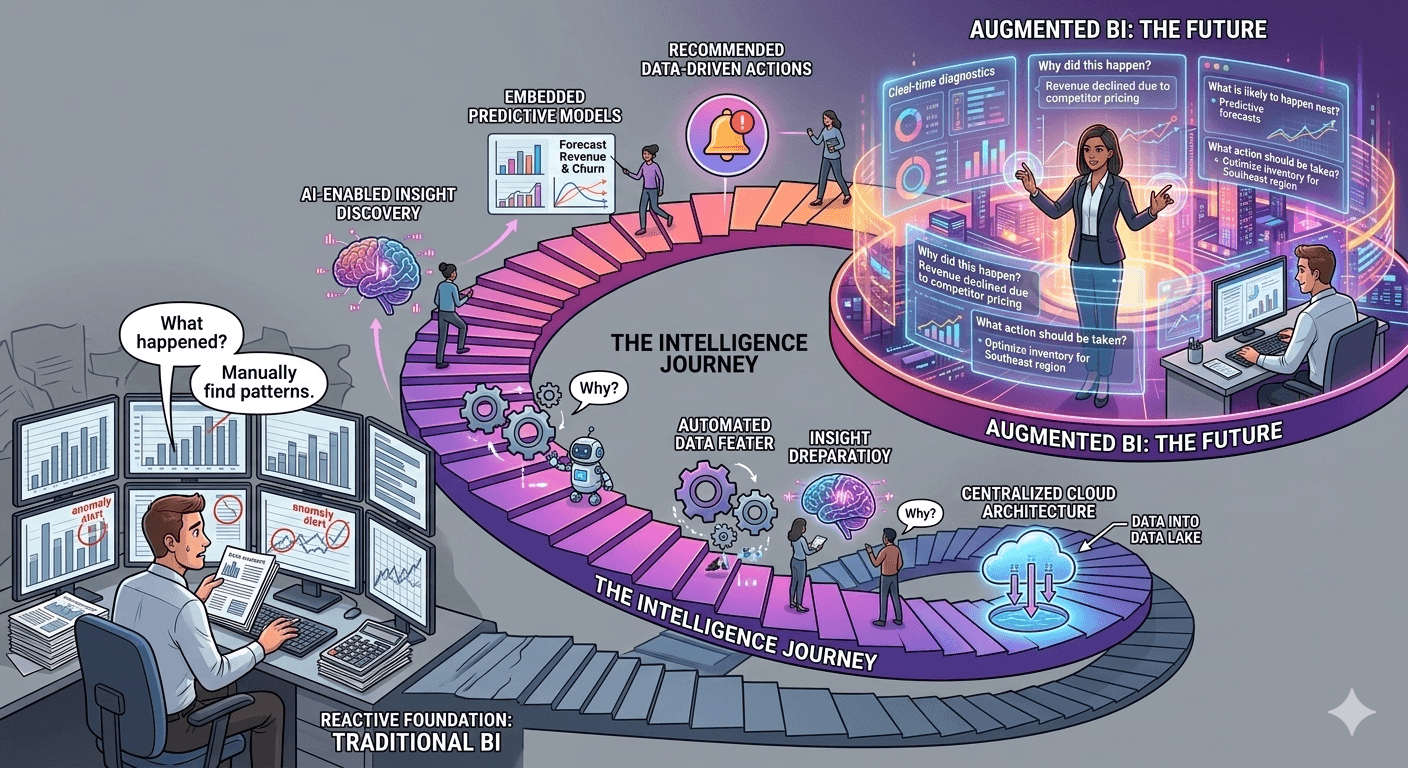
The importance of data visualization in business operations has evolved from a reporting convenience into a strategic necessity. In modern enterprises, data is generated continuously across finance, sales, marketing, supply chain, HR, and customer service systems. However, the true competitive advantage lies not in collecting data — but in interpreting it instantly and acting on it confidently.
Raw spreadsheets, disconnected reports, and static PDFs no longer serve the speed of contemporary business environments. Leaders require real-time clarity. They must identify performance gaps, monitor KPIs, anticipate risks, and adjust strategy dynamically. Data visualization transforms complex datasets into visual intelligence — enabling faster, smarter, and more confident decision-making.
What is Data Visualization in Business Operations?
Data visualization refers to the graphical representation of data through dashboards, charts, graphs, scorecards, heatmaps, and interactive analytics platforms. Rather than manually scanning rows of numerical data, decision-makers can instantly understand patterns, trends, and anomalies through visual structures.
Modern business intelligence dashboards enable organizations to:
- Track real-time performance metrics across departments
- Compare historical trends with current outcomes
- Identify operational bottlenecks early
- Monitor strategic KPIs continuously
- Integrate predictive and prescriptive analytics outputs
Visualization converts information into operational awareness.
Why Data Visualization Matters in Business Operations
Business operations are dynamic. Revenue fluctuates, supply chains experience disruptions, marketing performance shifts, and customer behavior evolves rapidly. Without visual reporting systems, organizations operate reactively rather than proactively.
Data visualization enables:
- Faster executive decision cycles
- Improved transparency across departments
- Reduced reporting latency
- Early detection of inefficiencies and risks
- Better allocation of resources
In competitive markets, clarity drives performance.
Executive Decision-Making and Strategic Clarity
C-level executives do not have time to interpret raw datasets. Executive dashboards provide consolidated, real-time summaries of revenue growth, profit margins, customer acquisition costs, operational throughput, and financial health indicators.
With structured KPI dashboards:
- Board meetings become evidence-driven
- Investment decisions rely on measurable trends
- Risk exposure becomes quantifiable
- Performance gaps are immediately visible
This transforms strategic conversations from opinion-based discussions to data-backed decision frameworks.
Operational Efficiency and Process Optimization
One of the most impactful benefits of data visualization in business operations is operational transparency. Visual analytics highlight inefficiencies that remain hidden within spreadsheets.
Examples include:
- Production bottlenecks in manufacturing workflows
- Declining sales conversion in specific territories
- Inventory overstock or supply shortages
- Rising customer support ticket resolution time
- Increasing operational costs per unit
Managers can intervene immediately rather than discovering issues weeks later.
Cross-Department Alignment Through a Single Source of Truth
Data silos are one of the biggest operational challenges in growing organizations. Finance may report one performance figure, while marketing reports another — leading to misalignment and conflicting narratives.
Unified visualization platforms eliminate fragmentation by creating a single source of truth. Shared dashboards ensure that every department interprets performance metrics consistently.
This alignment improves collaboration, accountability, and trust across teams.
Identifying Trends, Patterns, and Hidden Risks
Data visualization uncovers patterns that are difficult to detect manually. Seasonal fluctuations, revenue concentration risks, customer churn signals, and behavioral shifts become immediately visible when presented graphically.
For example:
- A gradual decline in engagement may signal churn risk
- Revenue concentration in one segment may expose dependency risk
- Recurring seasonal demand spikes may inform procurement strategy
- Abnormal operational variance may indicate process breakdown
Visualization converts abstract risk into visible indicators.
Real-Time Monitoring and Organizational Agility
Modern enterprises cannot afford to wait for monthly reports. Real-time data visualization systems allow continuous monitoring of performance indicators.
Common real-time dashboards include:
- Live revenue and sales tracking dashboards
- Supply chain throughput monitors
- Customer satisfaction and NPS dashboards
- Operational cost and productivity analytics
Real-time visual intelligence improves agility and reduces reaction time.
Integration with Predictive and AI-Driven Analytics
Modern visualization systems are no longer limited to descriptive analytics. When integrated with predictive models, dashboards can display forecasted metrics and probability-based risk indicators.
Examples include:
- Projected revenue trends
- Customer churn probability scores
- Demand forecasting insights
- Operational risk prediction models
This combination of predictive analytics and visual dashboards enables proactive strategy rather than reactive reporting.
Building a Data-Driven Organizational Culture
Data visualization fosters cultural transformation. When teams consistently rely on visual dashboards, they begin validating assumptions with evidence rather than intuition.
Benefits include:
- Reduced emotional bias in decisions
- Clear performance accountability
- Improved KPI ownership across departments
- Enhanced transparency in goal tracking
Visualization becomes embedded into daily workflows.
Common Operational Risks Without Visualization
- Slow decision-making cycles
- Manual reporting errors
- Lack of KPI clarity
- Fragmented departmental insights
- Delayed detection of performance decline
These inefficiencies directly impact profitability, scalability, and long-term growth.
Strategic Long-Term Impact
Organizations that invest in structured business intelligence dashboards gain structural advantage. Clear performance tracking supports expansion planning, cost optimization, investment prioritization, and operational scaling.
In highly competitive industries, visual intelligence becomes a strategic asset — enabling faster adaptation and more confident leadership.
Conclusion
The importance of data visualization in business operations extends beyond reporting aesthetics. It enables executive clarity, operational efficiency, cross-functional alignment, predictive insight, and cultural transformation.
Enterprises that integrate structured data visualization frameworks into their operations position themselves for sustainable growth, stronger governance, and measurable competitive advantage.
Ready to Build Intelligent Dashboards?
Syncverse Solutions designs enterprise-grade business intelligence dashboards and scalable visualization systems that convert raw data into strategic clarity.
Contact our team to implement a high-impact data visualization framework for your organization.
Build a Scalable Data Strategy for Your Business
Transform raw data into strategic intelligence with structured analytics implementation.
Book a Free Strategy CallExplore More Insights
Continue learning with practical strategies, implementation guides, and expert perspectives on analytics, CRM, and digital growth.
2024-07-28
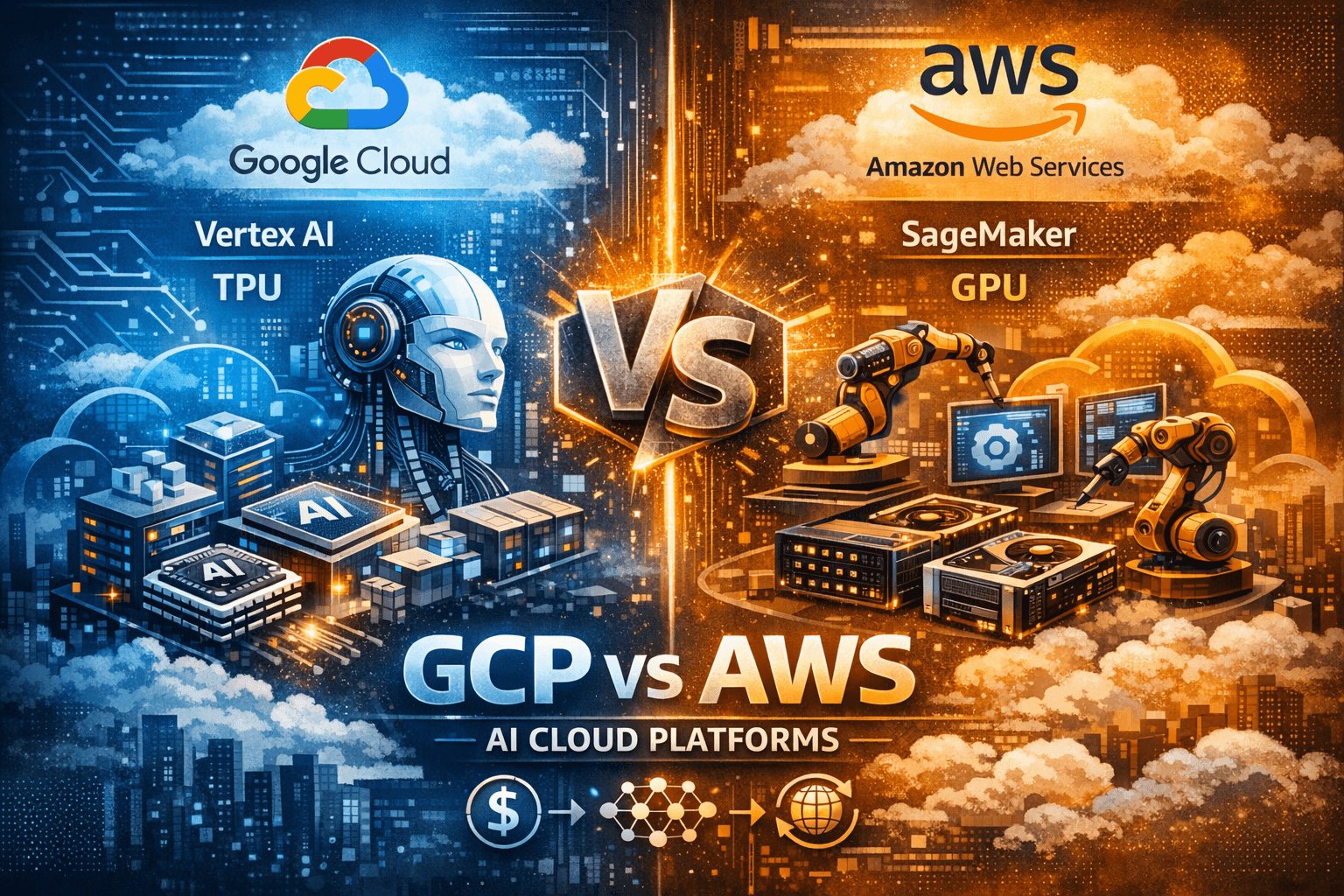
GCP vs AWS for AI Workloads in 2024: Enterprise Cloud Strategy, Cost, and MLOps Comparison
An in-depth 2024 enterprise comparison of GCP vs AWS for AI workloads. Explore Vertex AI vs SageMaker, TPU vs GPU infrastructure, AI cost optimization, scalability, MLOps maturity, and strategic cloud architecture decisions.
2024-07-20
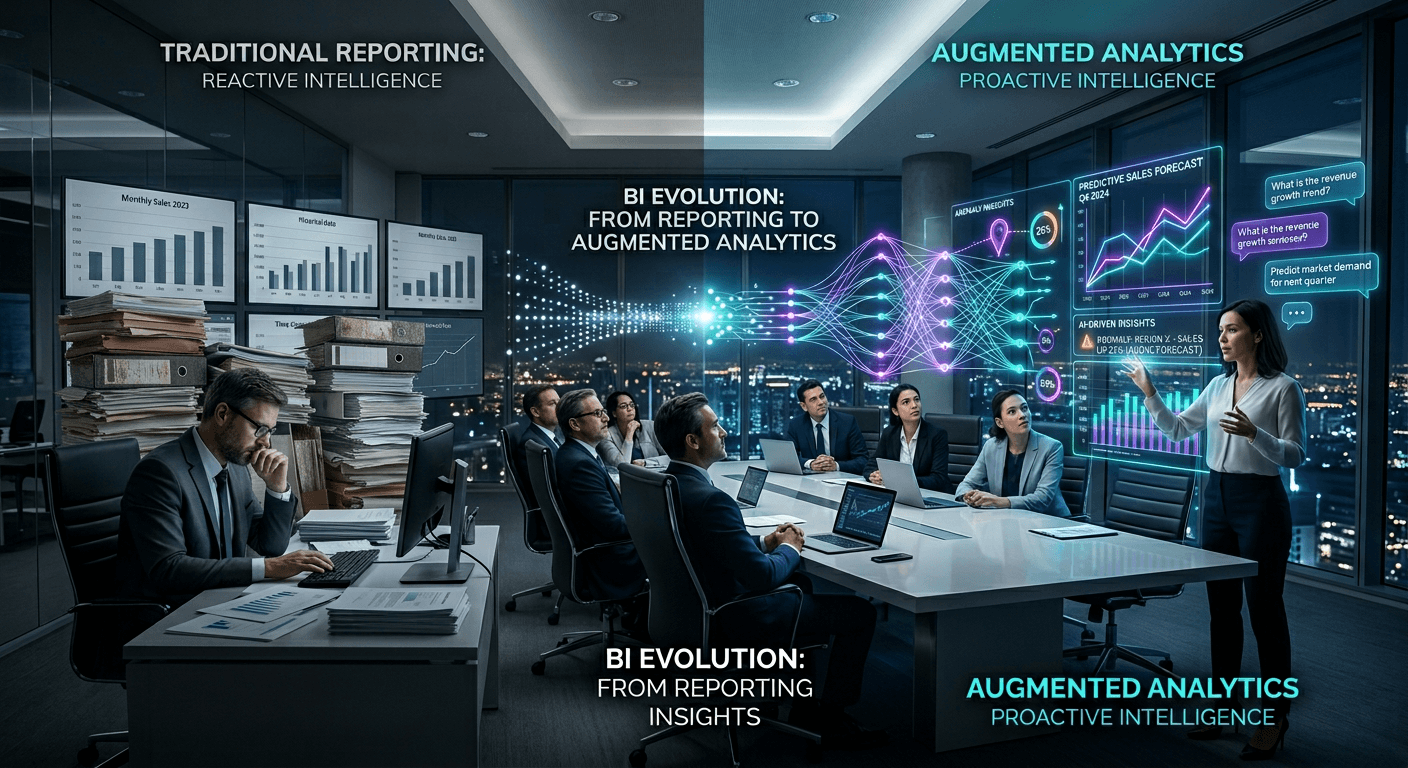
The Future of Business Intelligence is Augmented: AI-Powered Enterprise Analytics in 2024
Explore how augmented analytics is transforming business intelligence in 2024 with AI-powered insights, automated anomaly detection, predictive forecasting, NLP-driven dashboards, and enterprise data intelligence frameworks.
2024-07-15
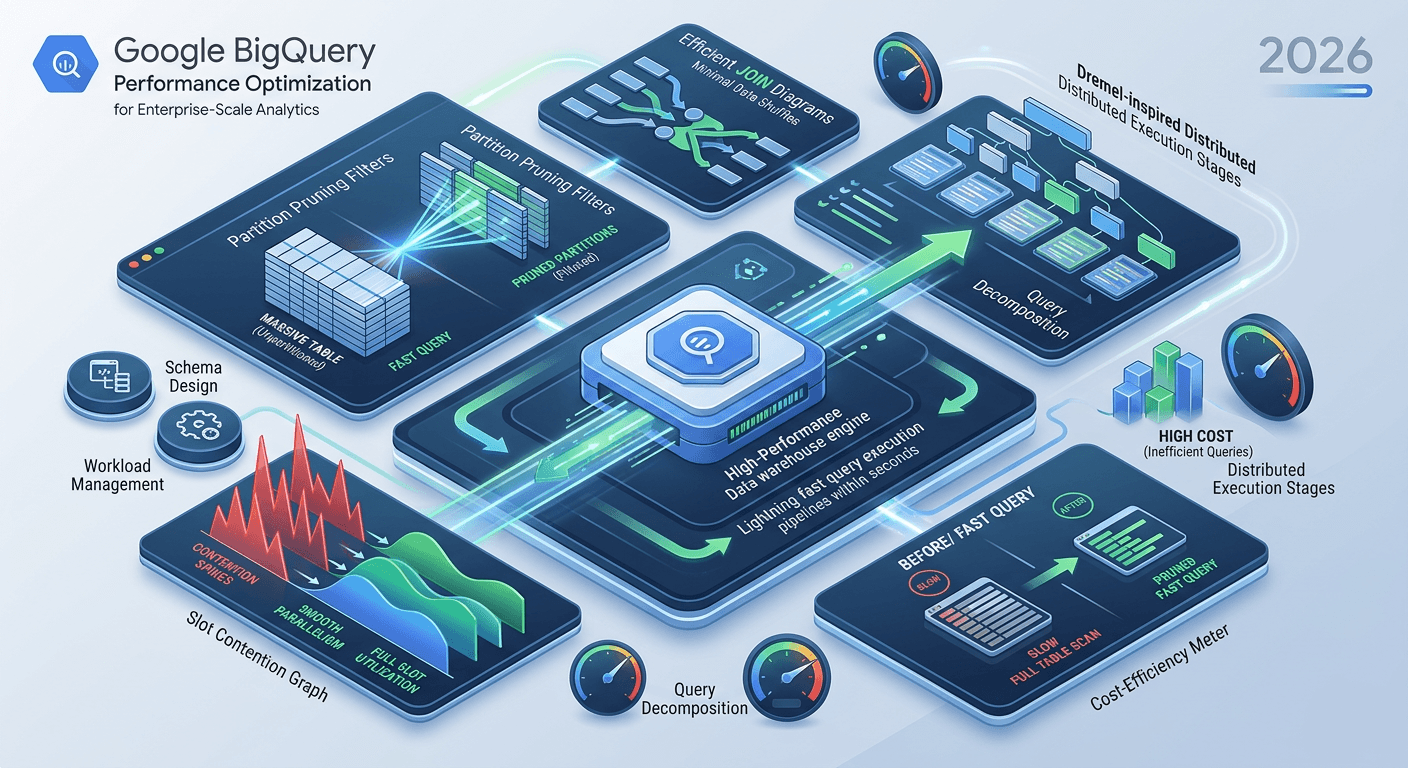
BigQuery Performance Optimization Guide 2024: Advanced Strategies to Improve Query Speed and Reduce Cost
A complete 2024 BigQuery performance optimization guide covering partitioning, clustering, slot tuning, query plan analysis, materialized views, storage design, shuffle reduction, and cost control for enterprise analytics workloads.
2024-07-30
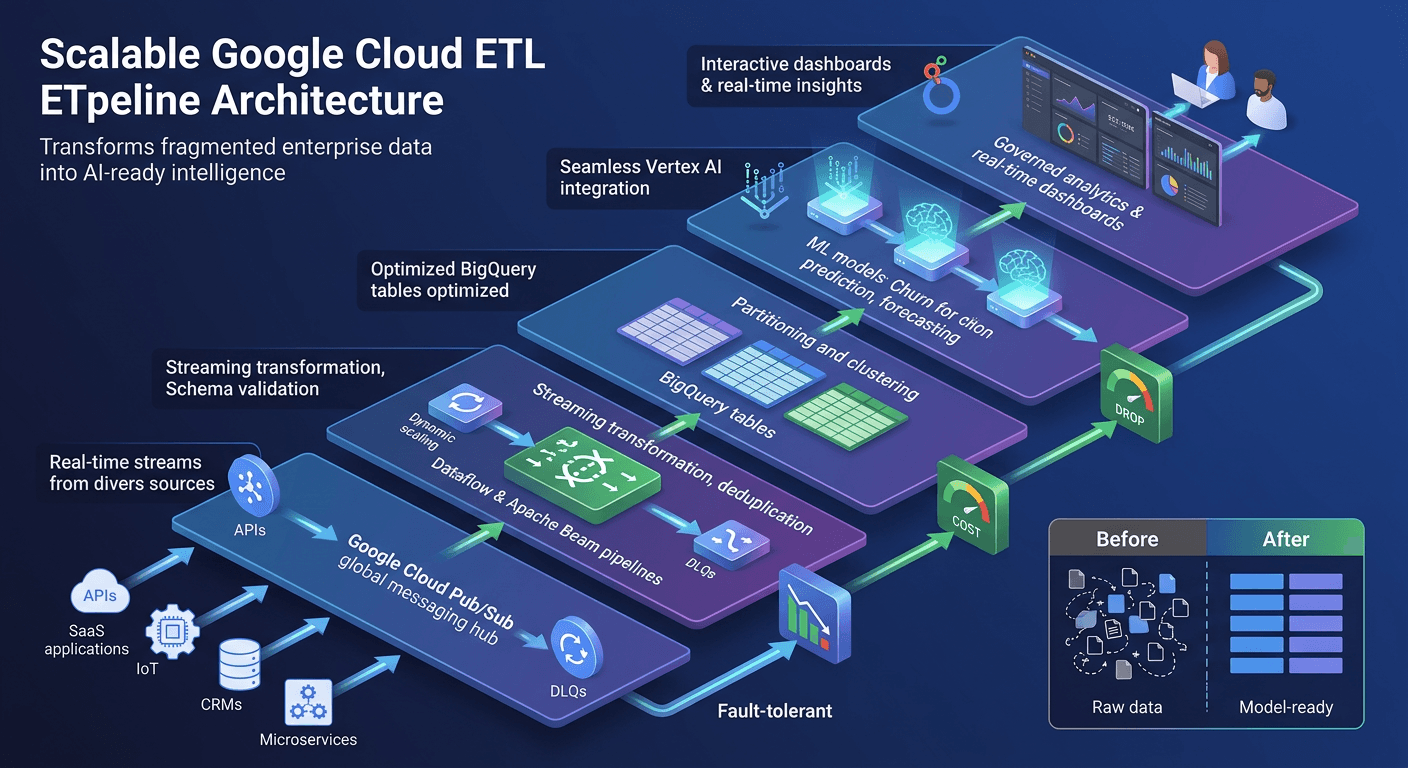
From Messy Data to Model-Ready Pipelines: Designing Scalable ETL Architecture on Google Cloud
A comprehensive guide to building modern ETL pipelines on Google Cloud using Pub/Sub, Dataflow, BigQuery, and Vertex AI to transform fragmented enterprise data into governed, analytics-ready, and AI-ready systems.
2025-02-15
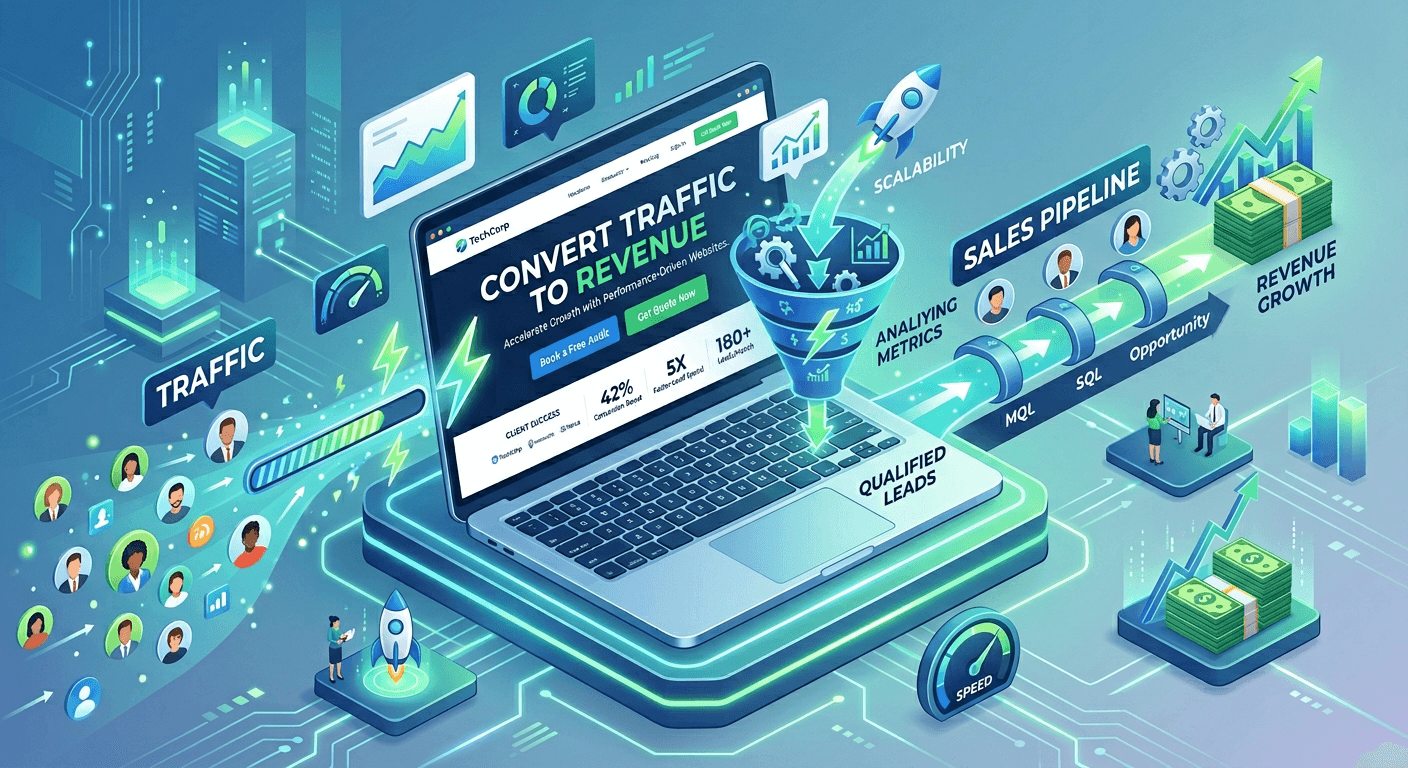
Why Most Business Websites Fail at Lead Generation (And How to Fix It in 2025)
Discover why most business websites fail at lead generation and learn the exact conversion architecture, UX strategy, analytics integration, and automation framework needed to turn traffic into qualified leads.
2025-01-18
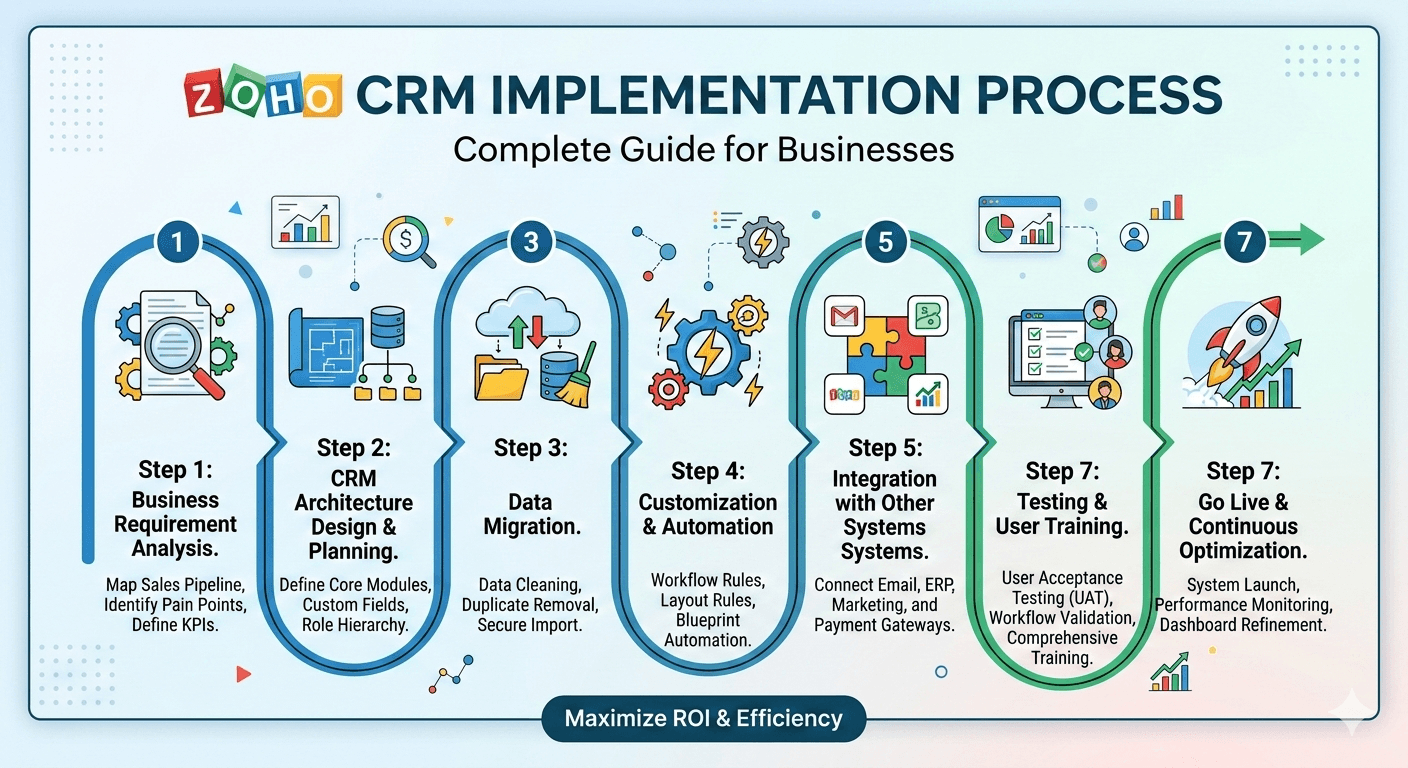
Zoho CRM Implementation Process for Businesses: Complete Step-by-Step Guide
A complete guide explaining the Zoho CRM implementation process for businesses, including setup, customization, automation, integration, and optimization strategies.
2025-02-10
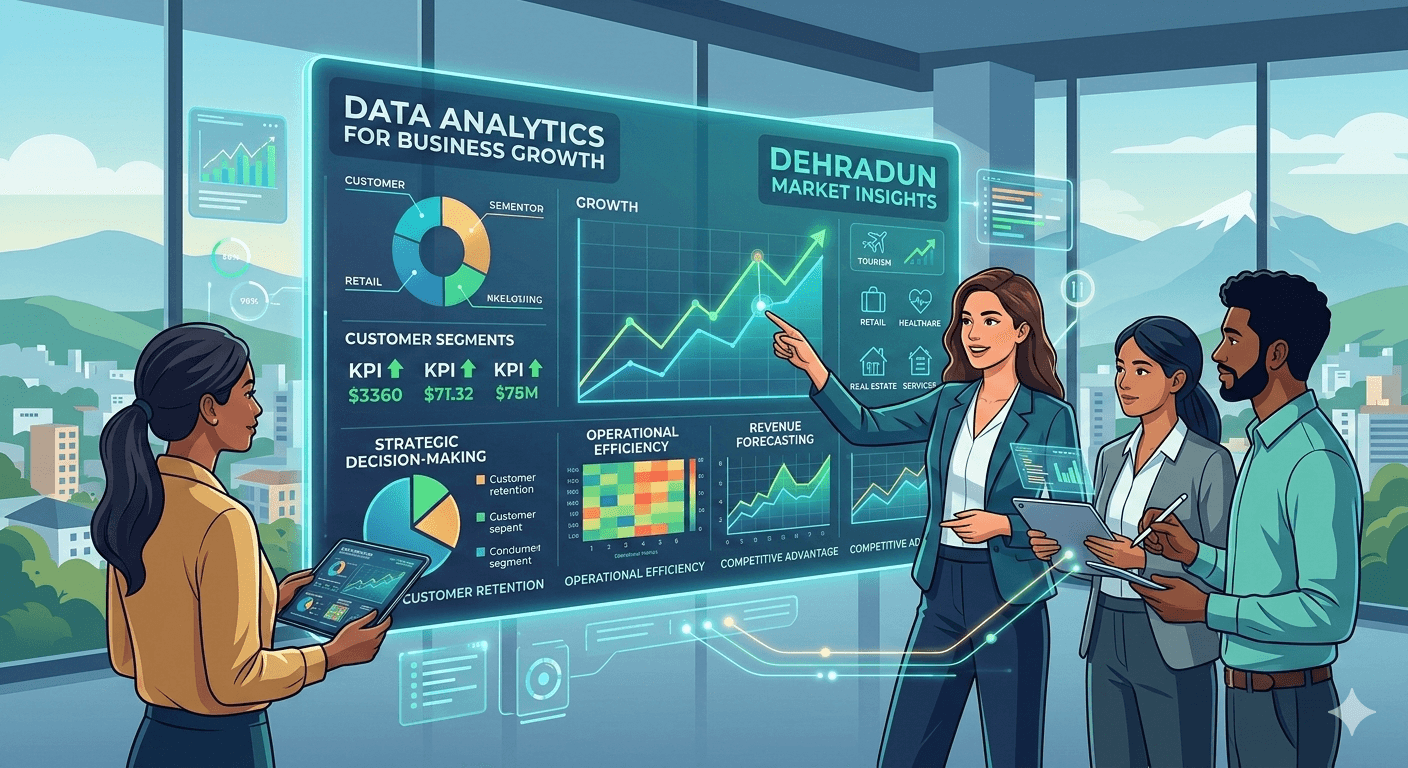
How Data Analytics for Businesses in Dehradun Improves Decision-Making and Growth
A strategic guide explaining how data analytics for businesses in Dehradun enhances decision-making, operational efficiency, forecasting accuracy, customer insights, and long-term scalability.
2025-01-22
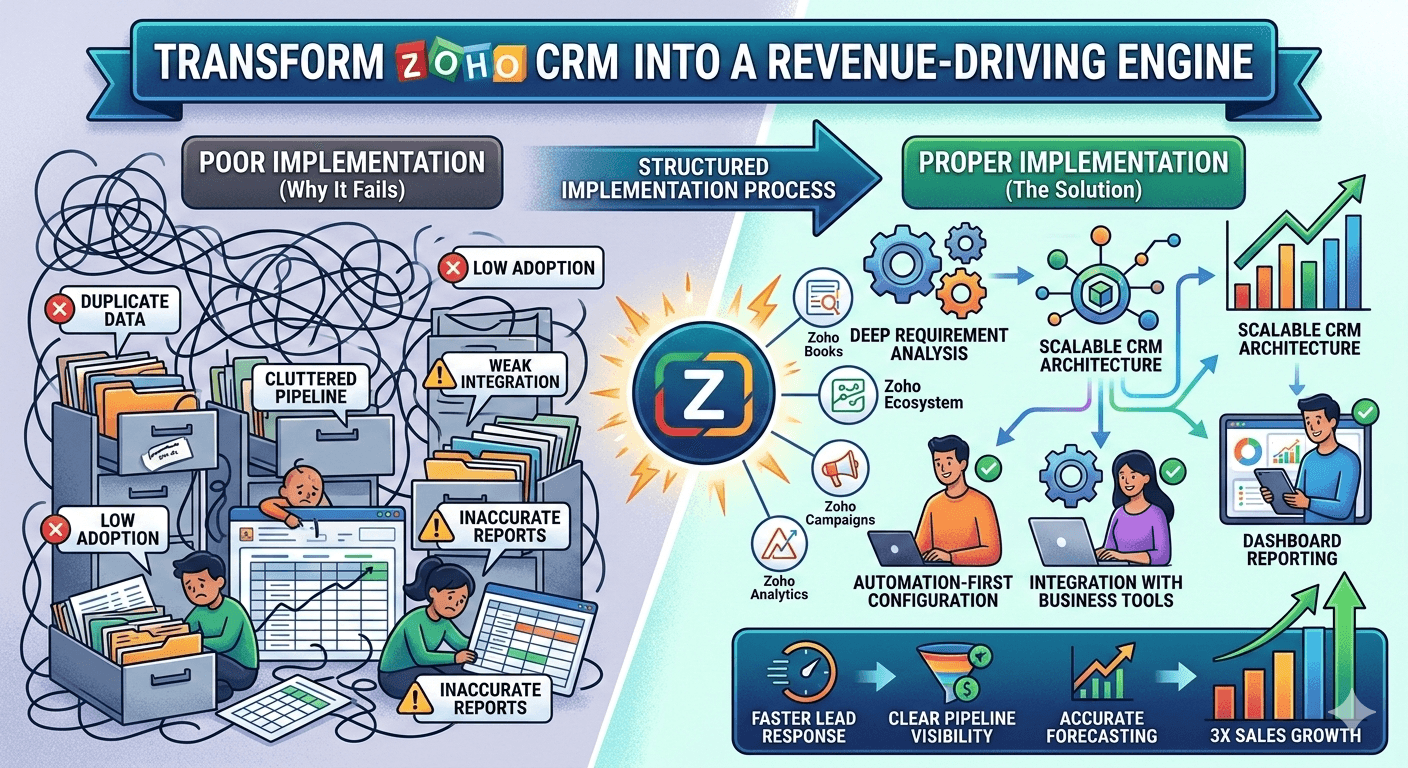
Why Zoho CRM Fails for Most Businesses (And How Proper Implementation Drives 3X Sales Growth)
Discover why many Zoho CRM implementations fail and how a structured Zoho CRM implementation process, automation strategy, and integration framework can drive measurable sales growth and operational efficiency.
2025-01-30
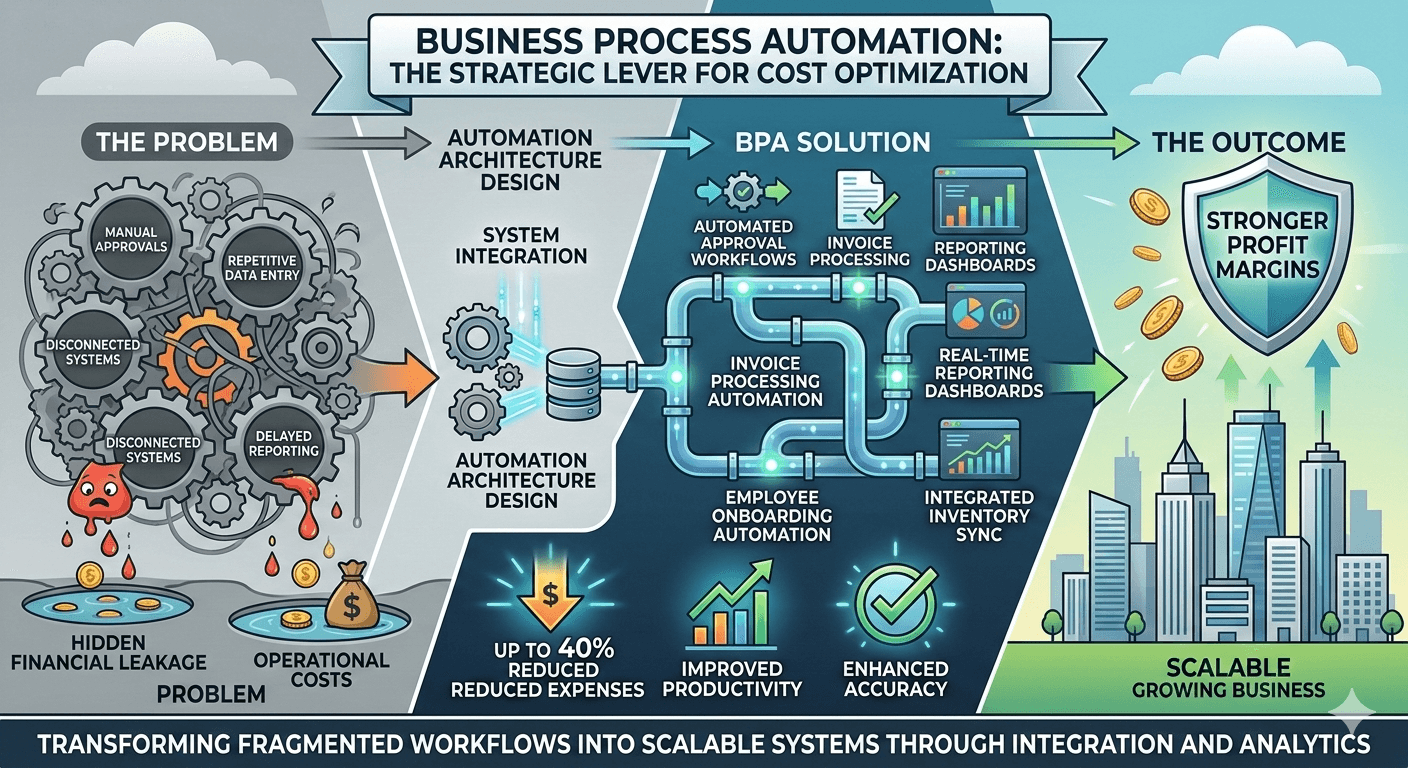
How Business Process Automation Reduces Operational Cost by 40%: A Strategic Guide for Modern Enterprises
Discover how business process automation reduces operational costs by up to 40% through workflow automation, system integration, analytics-driven optimization, and digital transformation strategies.