Business Intelligence
Zoho CRM Implementation Process for Businesses: Complete Step-by-Step Guide
A complete guide explaining the Zoho CRM implementation process for businesses, including setup, customization, automation, integration, and optimization strategies.
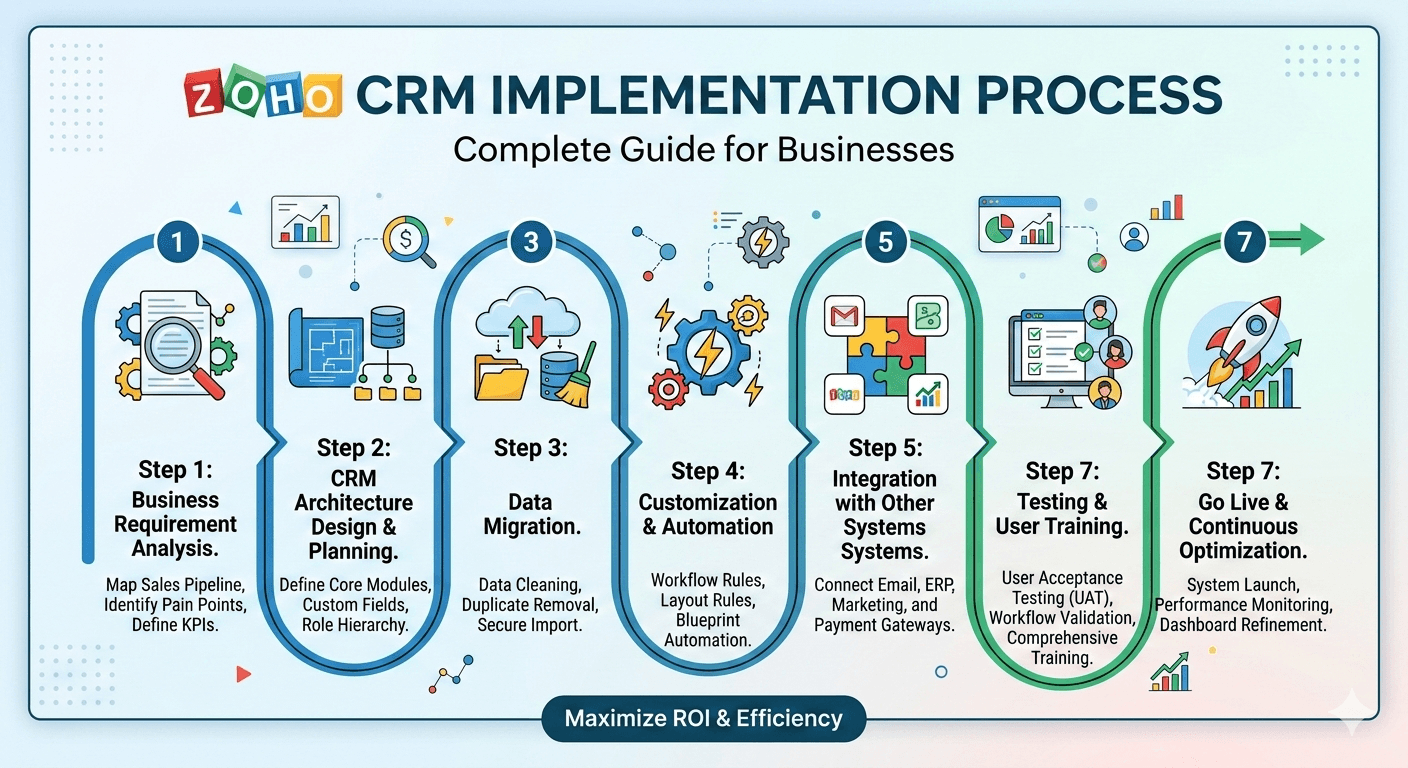
Zoho CRM Implementation Process for Businesses: Complete Guide
The Zoho CRM implementation process plays a crucial role in determining whether your business achieves real operational efficiency and return on investment. While Zoho CRM is one of the most powerful and flexible CRM platforms available today, simply purchasing licenses is not enough. Structured planning, customization, automation, and integration define the real success of implementation.
In this guide, we break down the complete Zoho CRM implementation process step-by-step to help businesses deploy it correctly, avoid common mistakes, and maximize long-term scalability.
What is Zoho CRM Implementation?
Zoho CRM implementation is the structured process of configuring, customizing, and deploying Zoho CRM according to a company’s specific workflows. It goes far beyond basic setup.
- Understanding business processes
- Designing CRM architecture
- Configuring modules and pipelines
- Automating workflows
- Integrating third-party tools
- Training users
A properly implemented CRM adapts to your business model instead of forcing your team to change their workflow.
Step 1 – Business Requirement Analysis
Every successful Zoho CRM implementation process begins with deep requirement analysis.
Key Activities
- Mapping existing sales pipeline
- Identifying lead sources
- Understanding deal stages
- Documenting pain points
- Defining measurable KPIs
Without structured analysis, CRM systems become cluttered and inefficient.
Step 2 – CRM Architecture Design & Planning
Once requirements are finalized, system architecture is designed.
- Defining core modules (Leads, Contacts, Deals, Accounts)
- Creating custom fields
- Designing sales pipelines
- Setting role hierarchy and permissions
- Planning automation logic
A scalable CRM design prevents restructuring in the future.
Step 3 – Data Migration
Data migration is one of the most sensitive stages in the Zoho CRM implementation process.
- Data cleaning
- Duplicate removal
- Field mapping validation
- Historical data import
- Accuracy testing
Poor migration causes reporting inconsistencies and operational errors later.
Step 4 – Customization & Automation
Zoho CRM becomes powerful when customized properly.
Customization Includes
- Custom modules
- Layout rules
- Field validation
Automation Includes
- Workflow rules
- Email automation
- Task assignments
- Blueprint automation
Automation reduces manual effort and improves consistency.
Step 5 – Integration with Other Systems
Most businesses use multiple tools. Zoho CRM must integrate seamlessly.
- Email systems
- Accounting software
- ERP platforms
- Marketing tools
- Payment gateways
You can explore Zoho’s official integration capabilities here: Zoho CRM Integrations.
Proper integration ensures centralized data visibility.
Step 6 – Testing & User Training
Testing ensures system accuracy before launch.
- User Acceptance Testing (UAT)
- Workflow validation
- Automation testing
- Report accuracy checks
User training is equally important. Adoption determines ROI.
Step 7 – Go Live & Continuous Optimization
After deployment, ongoing optimization begins.
- Performance monitoring
- User feedback collection
- Dashboard refinement
- Advanced automation upgrades
Continuous optimization ensures long-term growth.
Common Mistakes in Zoho CRM Implementation
- Skipping requirement analysis
- Over-customization
- Poor data hygiene
- Lack of training
- No post-launch support
Benefits of Professional Zoho CRM Implementation
Partnering with experts ensures:
- Faster deployment
- Structured CRM architecture
- Clean automation workflows
- Scalable system design
- Reduced implementation risks
If you are exploring complete Zoho deployment, check our Zoho Implementation Services and Zoho Consulting Services.
How Long Does Zoho CRM Implementation Take?
- Small Business: 1–2 weeks
- Mid-Sized Company: 3–6 weeks
- Enterprise-Level: 2–3 months
Complex integrations may extend timelines.
Conclusion
The Zoho CRM implementation process is not just a technical setup. It is a strategic transformation that improves visibility, automates workflows, enhances customer relationships, and drives measurable business growth.
When implemented correctly, Zoho CRM becomes the backbone of your sales and operational ecosystem.
Looking for expert Zoho CRM implementation services?
Contact our team today for a free consultation.
Build a Scalable Data Strategy for Your Business
Transform raw data into strategic intelligence with structured analytics implementation.
Book a Free Strategy CallExplore More Insights
Continue learning with practical strategies, implementation guides, and expert perspectives on analytics, CRM, and digital growth.
2024-07-28
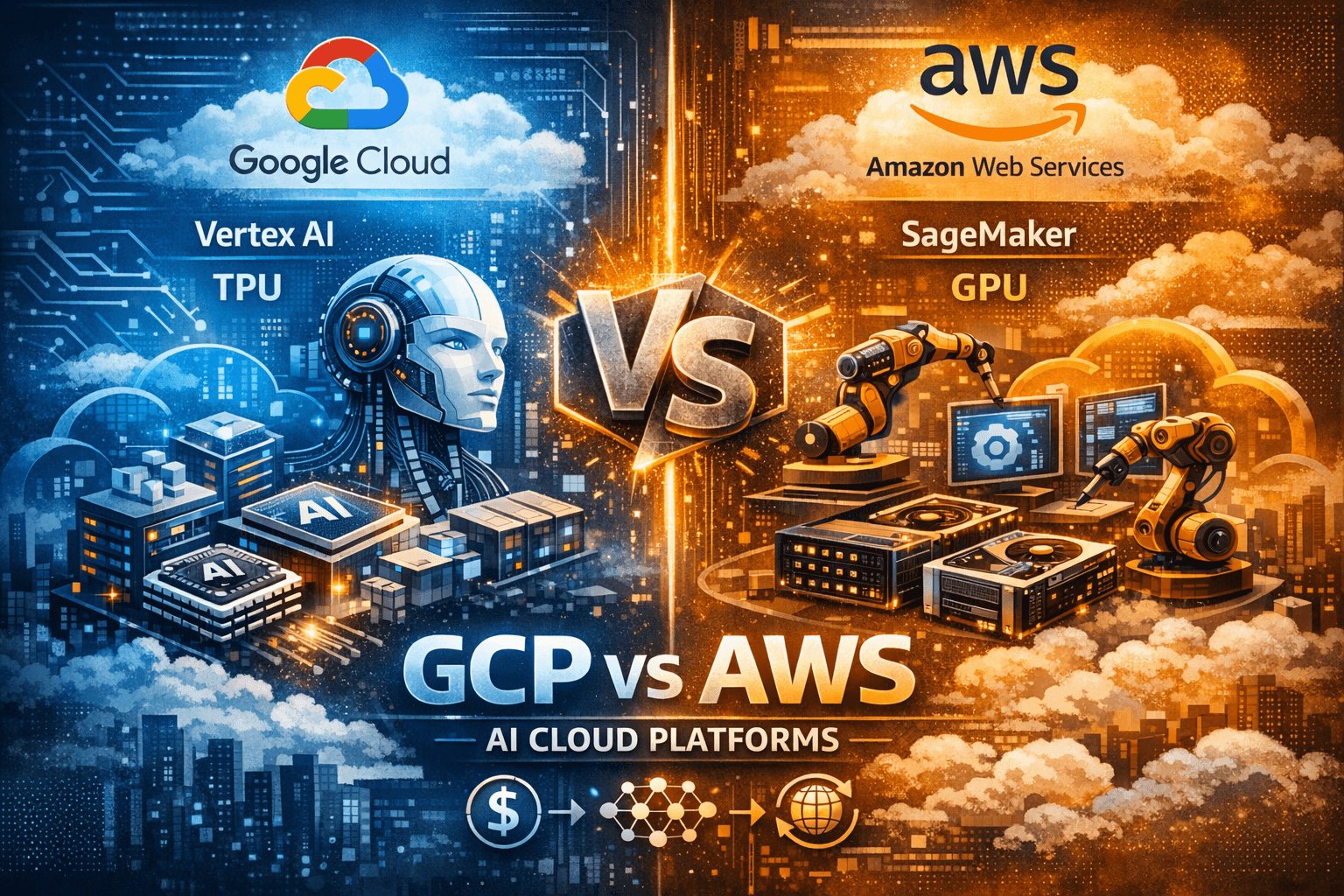
GCP vs AWS for AI Workloads in 2024: Enterprise Cloud Strategy, Cost, and MLOps Comparison
An in-depth 2024 enterprise comparison of GCP vs AWS for AI workloads. Explore Vertex AI vs SageMaker, TPU vs GPU infrastructure, AI cost optimization, scalability, MLOps maturity, and strategic cloud architecture decisions.

2024-07-20
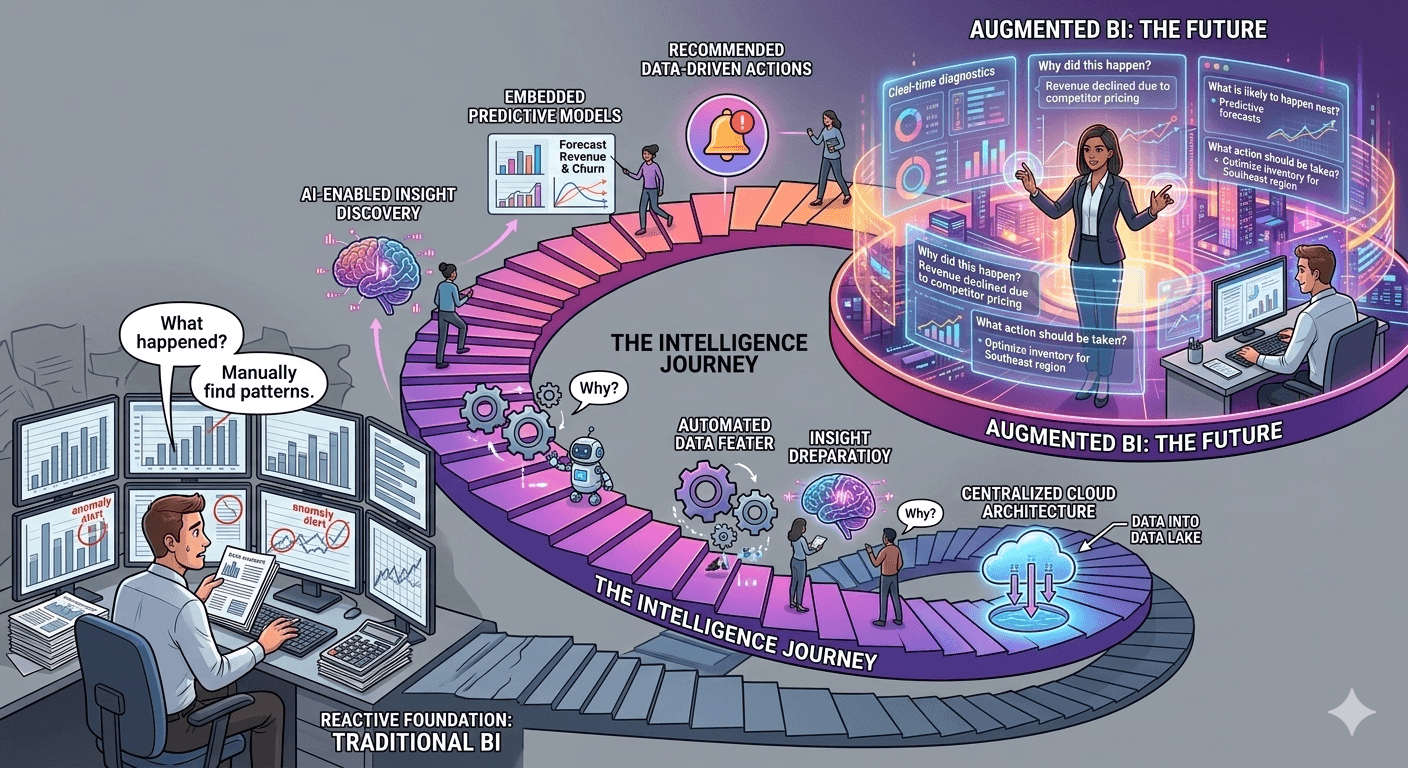
The Future of Business Intelligence is Augmented: AI-Powered Enterprise Analytics in 2024
Explore how augmented analytics is transforming business intelligence in 2024 with AI-powered insights, automated anomaly detection, predictive forecasting, NLP-driven dashboards, and enterprise data intelligence frameworks.
2024-07-15
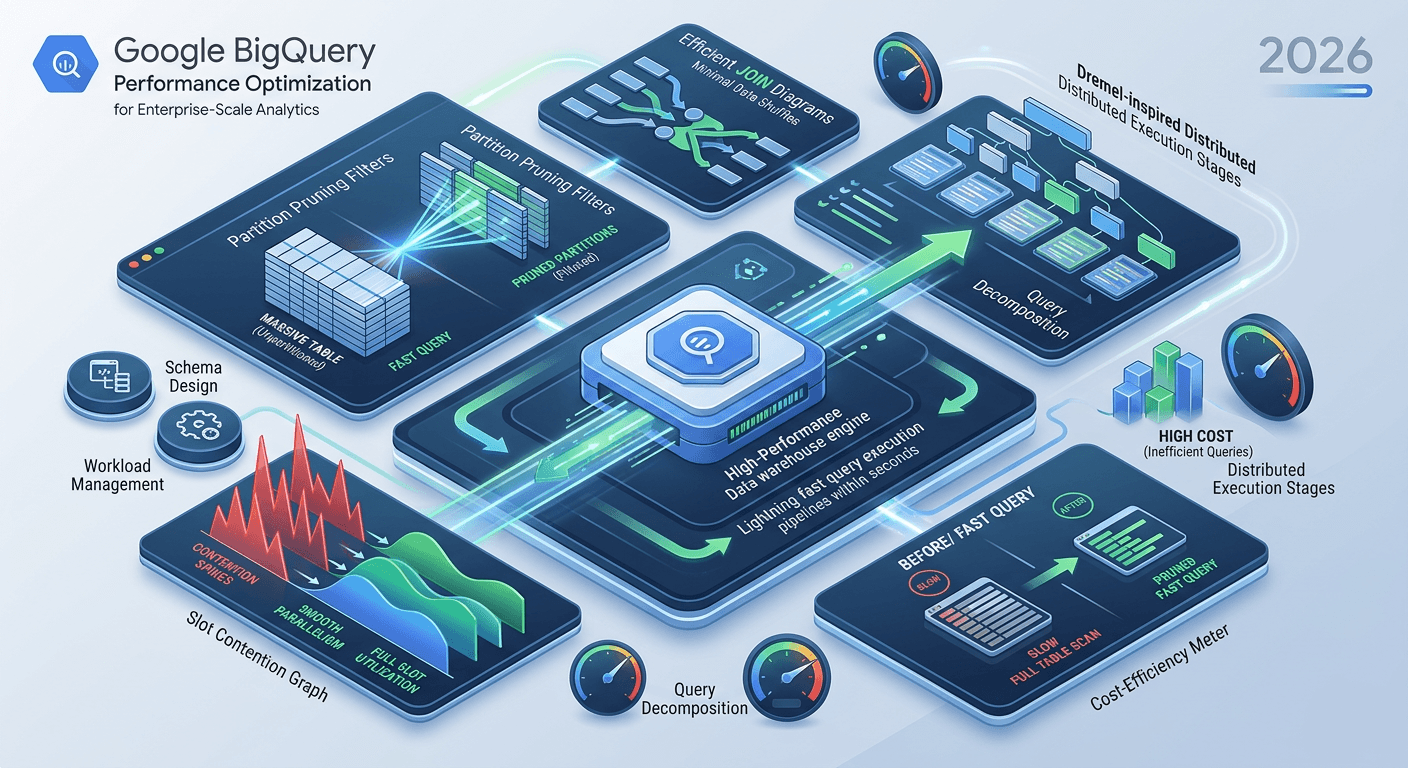
BigQuery Performance Optimization Guide 2024: Advanced Strategies to Improve Query Speed and Reduce Cost
A complete 2024 BigQuery performance optimization guide covering partitioning, clustering, slot tuning, query plan analysis, materialized views, storage design, shuffle reduction, and cost control for enterprise analytics workloads.
2024-07-30
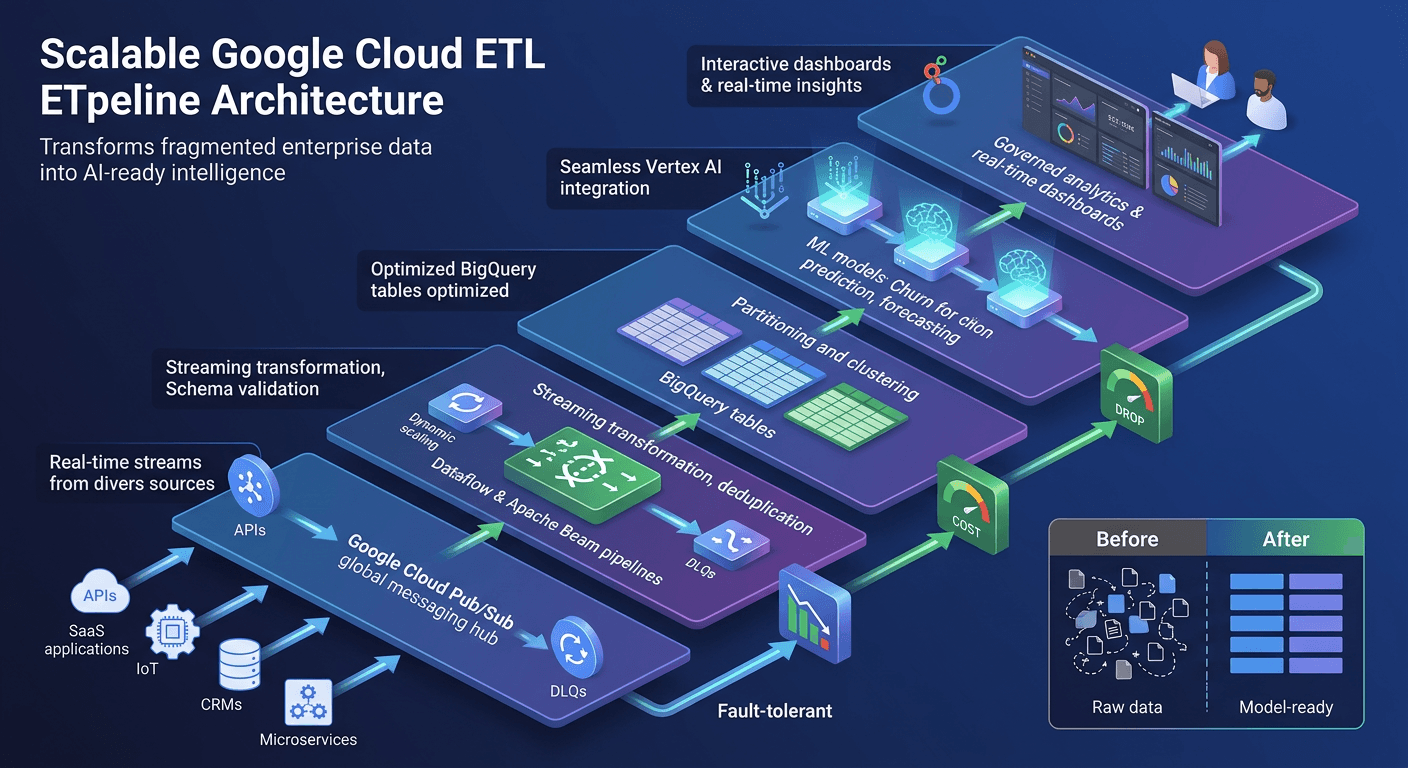
From Messy Data to Model-Ready Pipelines: Designing Scalable ETL Architecture on Google Cloud
A comprehensive guide to building modern ETL pipelines on Google Cloud using Pub/Sub, Dataflow, BigQuery, and Vertex AI to transform fragmented enterprise data into governed, analytics-ready, and AI-ready systems.
2025-02-15
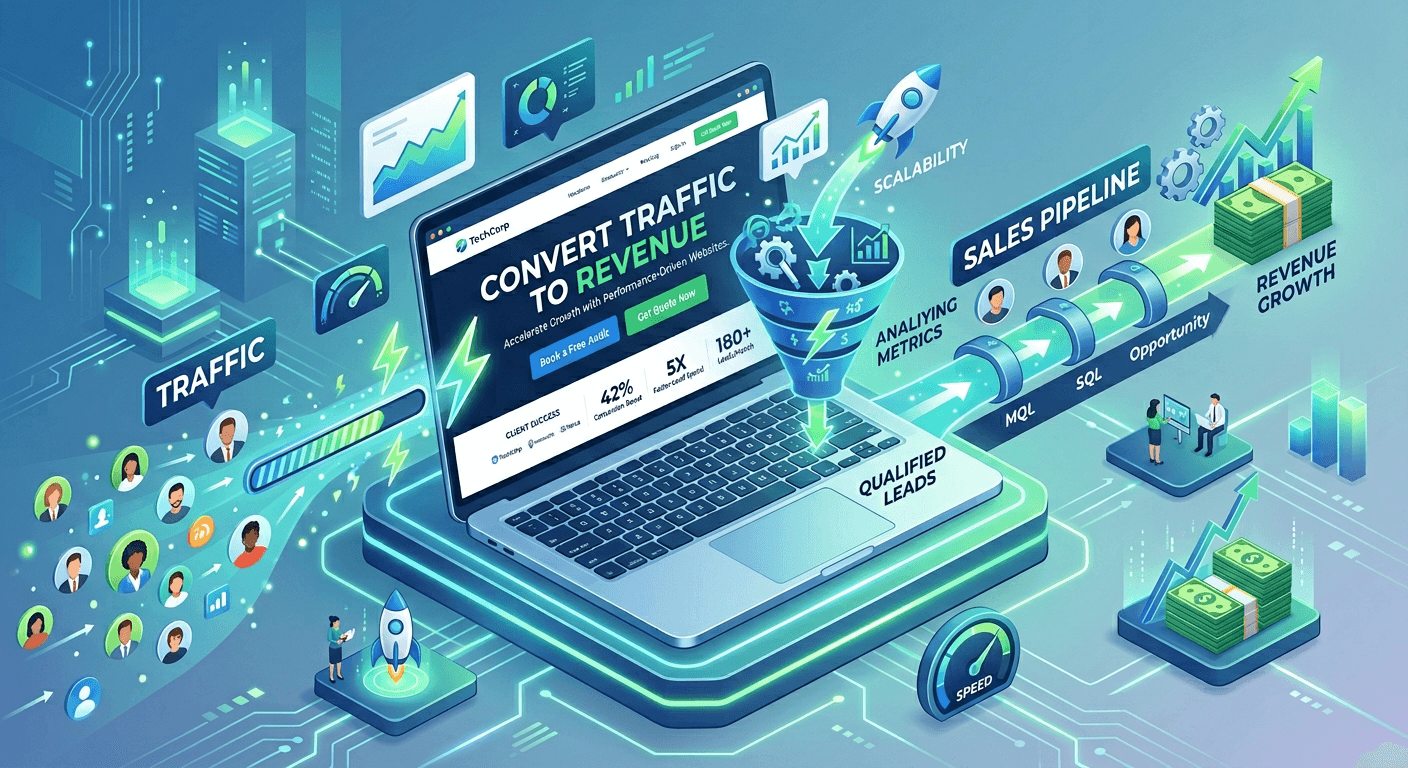
Why Most Business Websites Fail at Lead Generation (And How to Fix It in 2025)
Discover why most business websites fail at lead generation and learn the exact conversion architecture, UX strategy, analytics integration, and automation framework needed to turn traffic into qualified leads.
2025-01-10
The Importance of Data Visualization in Business Operations: Driving Smarter Decisions with Visual Intelligence
A comprehensive guide to understanding the importance of data visualization in business operations, covering executive dashboards, operational analytics, KPI monitoring, predictive visualization, and strategic decision-making frameworks.

2025-02-10
How Data Analytics for Businesses in Dehradun Improves Decision-Making and Growth
A strategic guide explaining how data analytics for businesses in Dehradun enhances decision-making, operational efficiency, forecasting accuracy, customer insights, and long-term scalability.
2025-01-22
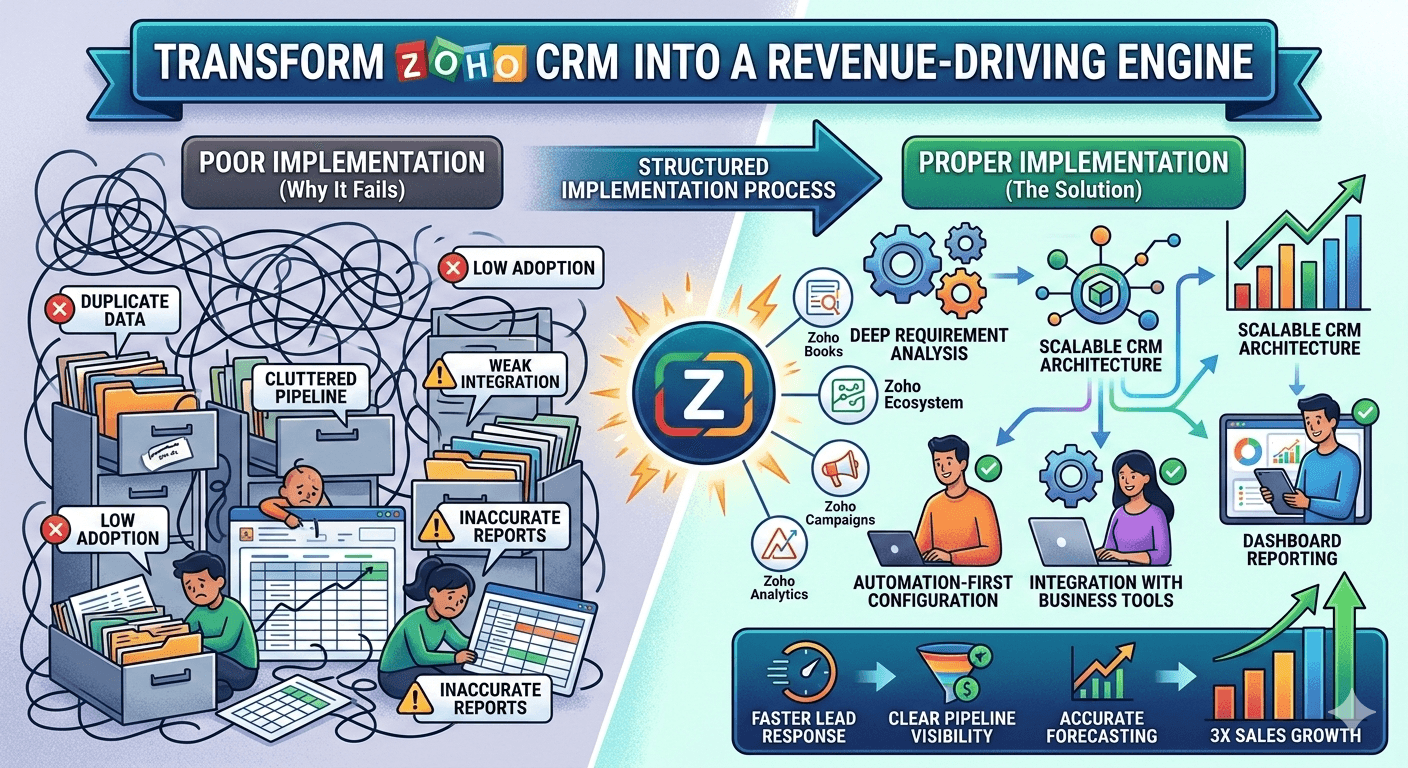
Why Zoho CRM Fails for Most Businesses (And How Proper Implementation Drives 3X Sales Growth)
Discover why many Zoho CRM implementations fail and how a structured Zoho CRM implementation process, automation strategy, and integration framework can drive measurable sales growth and operational efficiency.
2025-01-30
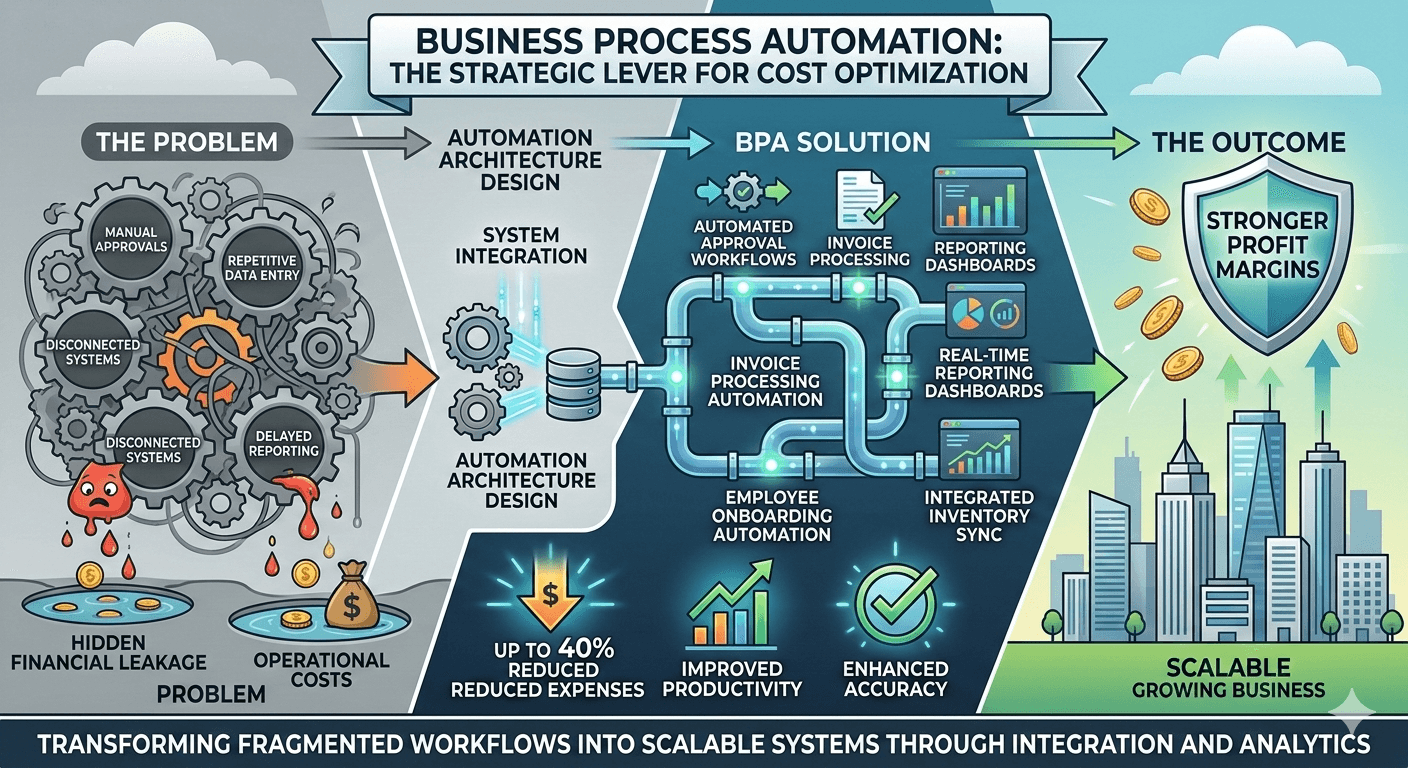
How Business Process Automation Reduces Operational Cost by 40%: A Strategic Guide for Modern Enterprises
Discover how business process automation reduces operational costs by up to 40% through workflow automation, system integration, analytics-driven optimization, and digital transformation strategies.