Business Intelligence
Why Most Business Websites Fail at Lead Generation (And How to Fix It in 2025)
Discover why most business websites fail at lead generation and learn the exact conversion architecture, UX strategy, analytics integration, and automation framework needed to turn traffic into qualified leads.
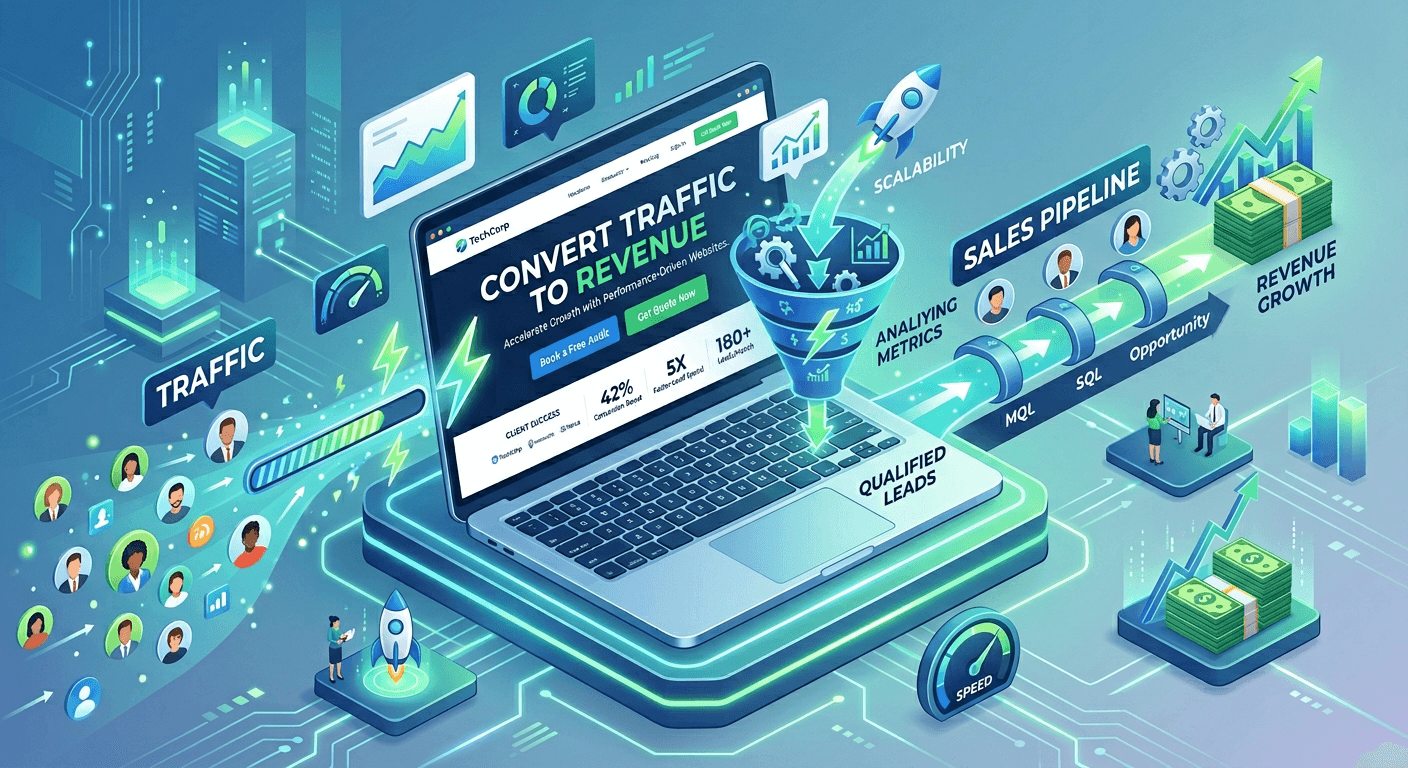
Millions of business websites exist today. Only a small percentage generate consistent, qualified leads.
Most companies invest in branding, ads, SEO, and social media — but their website quietly underperforms. Traffic arrives. Visitors browse. Then they leave. No form submission. No call booking. No measurable conversion.
The problem is rarely traffic. The problem is architecture.
This guide breaks down why most business websites fail at lead generation and how modern enterprises can fix it with structured conversion strategy.
Problem 1: The Website Was Designed for Aesthetics, Not Conversions
Many websites are built with visual appeal in mind but lack strategic conversion structure.
- No clear value proposition above the fold
- Weak or hidden call-to-action buttons
- Confusing navigation
- No urgency or trust indicators
A website should guide visitors toward a decision — not leave them guessing.
Problem 2: Slow Performance Kills Intent
Website speed directly impacts bounce rate and conversion rate. If your page takes more than a few seconds to load, potential leads leave before engaging.
Performance issues often include:
- Unoptimized images
- Heavy JavaScript bundles
- Poor hosting infrastructure
- No performance monitoring
In 2025, speed is not optional — it is a competitive advantage.
Problem 3: No Structured Lead Funnel
Most websites lack a defined conversion funnel. They offer generic contact forms without segmentation, qualification, or automation.
A structured funnel includes:
- Clear primary CTA (Book Call / Get Quote / Schedule Demo)
- Lead qualification logic
- Automated follow-up workflows
- CRM integration
Without this, even interested prospects slip away.
Problem 4: No Analytics = No Optimization
If you cannot measure user behavior, you cannot improve conversion rate.
- No event tracking
- No funnel analysis
- No heatmaps
- No conversion dashboards
Optimization requires data-driven iteration.
Problem 5: Disconnected Systems After Lead Capture
Even when leads are captured, many businesses fail to route them properly.
- No CRM integration
- No automated email follow-up
- No sales pipeline tracking
- No performance attribution
A disconnected backend kills conversion momentum.
The Conversion Architecture That Actually Works
1. Clear Above-the-Fold Value Proposition
Within seconds, visitors must understand what you offer and why it matters.
2. Strategic CTA Placement
Every high-intent section must guide users toward action.
3. Trust & Authority Signals
- Case studies
- Client logos
- Performance metrics
- Industry positioning
4. Performance-Optimized Framework
Modern frameworks like Next.js enable SEO-friendly, lightning-fast websites.
5. Analytics + Automation Integration
Tracking + CRM + workflow automation creates a measurable growth engine.
How Structured Website Engineering Transforms Results
When businesses redesign website architecture with performance optimization, UX hierarchy, analytics integration, and automation workflows, results compound.
- Lower bounce rate
- Higher engagement time
- Improved lead quality
- Shorter sales cycle
A website becomes a scalable revenue system rather than a static digital brochure.
Real Example: Website Transformation Impact
After restructuring conversion architecture for a service-based company:
- Lead conversion rate increased by 42%
- Average session duration increased by 35%
- Page speed improved by 50%+
- CRM lead tracking improved close rates
The transformation was structural, not cosmetic.
Why Growing Businesses Need a Conversion-First Website Strategy
In competitive markets, your website must operate as:
- Lead generation engine
- Brand authority builder
- Analytics intelligence system
- Automation-enabled conversion funnel
Without structured architecture, growth stalls.
Conclusion
Most business websites fail at lead generation not because they lack traffic — but because they lack conversion engineering.
Modern websites must integrate UX strategy, performance optimization, analytics tracking, automation workflows, and scalable development frameworks.
When engineered correctly, a website becomes a predictable growth asset.
Ready to Turn Your Website into a Lead Generation Engine?
At Syncverse Solutions, we design high-performance, SEO-optimized, automation-integrated business websites that convert traffic into measurable revenue.
Explore our Website Development Services, NextJs Development, NodeJs Development and Mobile App Development
Contact us today for a website conversion audit.
Build a Scalable Data Strategy for Your Business
Transform raw data into strategic intelligence with structured analytics implementation.
Book a Free Strategy CallExplore More Insights
Continue learning with practical strategies, implementation guides, and expert perspectives on analytics, CRM, and digital growth.

2024-07-28
GCP vs AWS for AI Workloads in 2024: Enterprise Cloud Strategy, Cost, and MLOps Comparison
An in-depth 2024 enterprise comparison of GCP vs AWS for AI workloads. Explore Vertex AI vs SageMaker, TPU vs GPU infrastructure, AI cost optimization, scalability, MLOps maturity, and strategic cloud architecture decisions.
2024-07-20
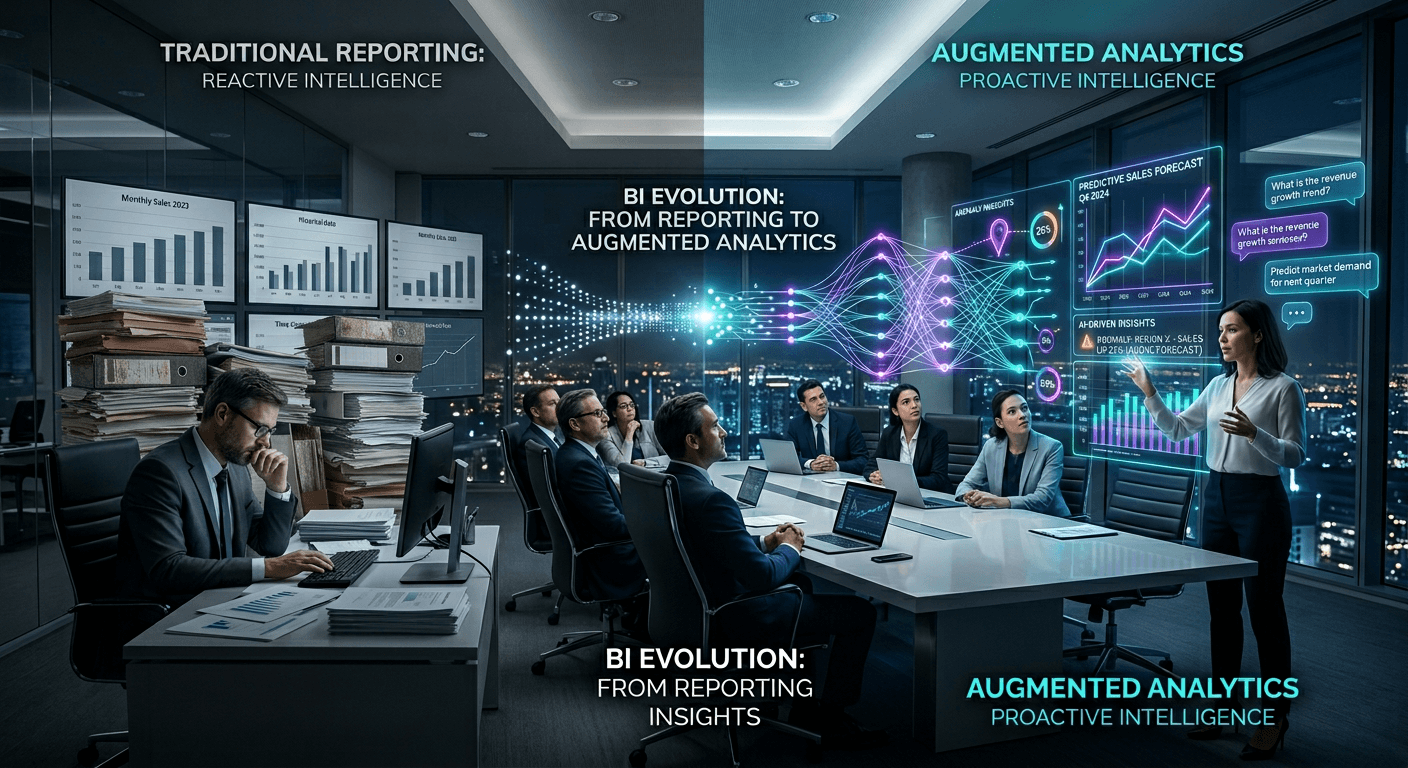
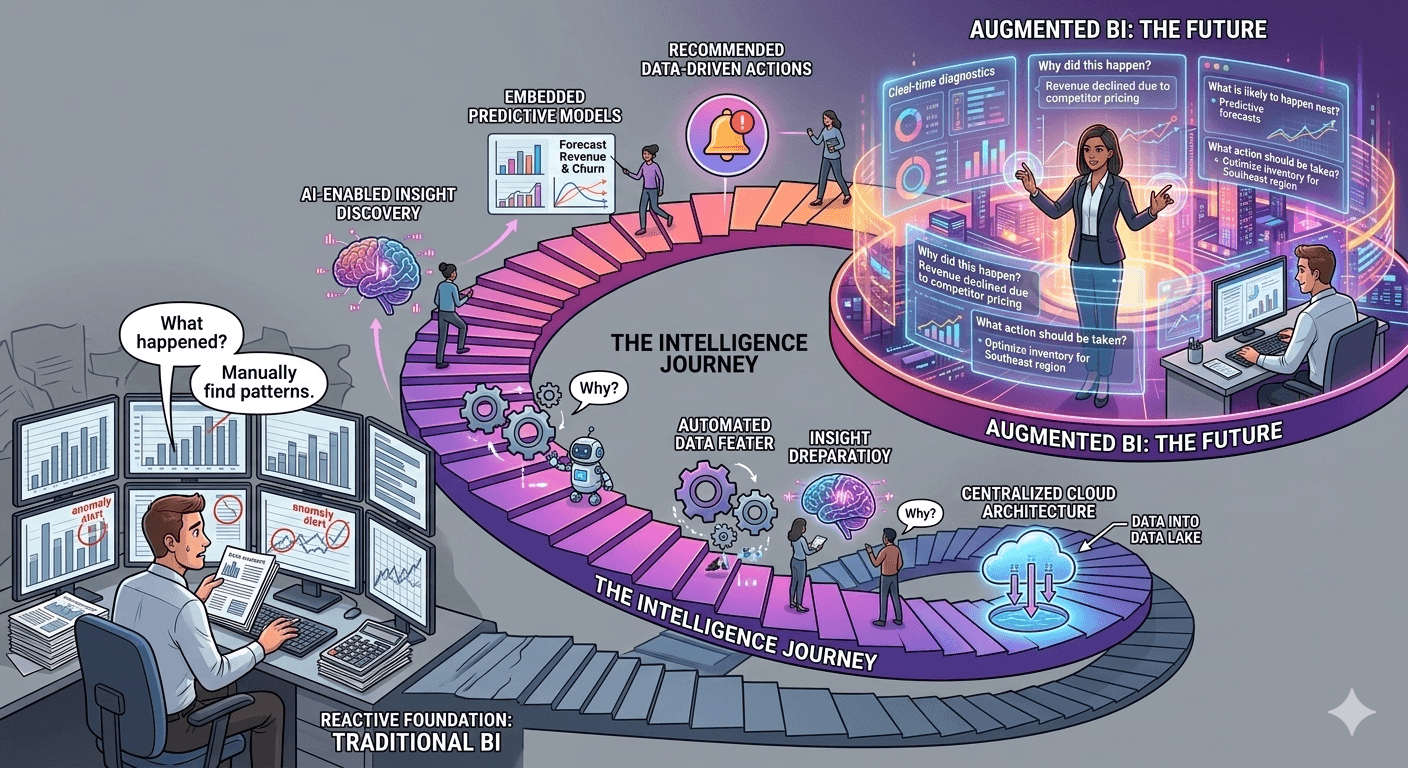
The Future of Business Intelligence is Augmented: AI-Powered Enterprise Analytics in 2024
Explore how augmented analytics is transforming business intelligence in 2024 with AI-powered insights, automated anomaly detection, predictive forecasting, NLP-driven dashboards, and enterprise data intelligence frameworks.
2024-07-15
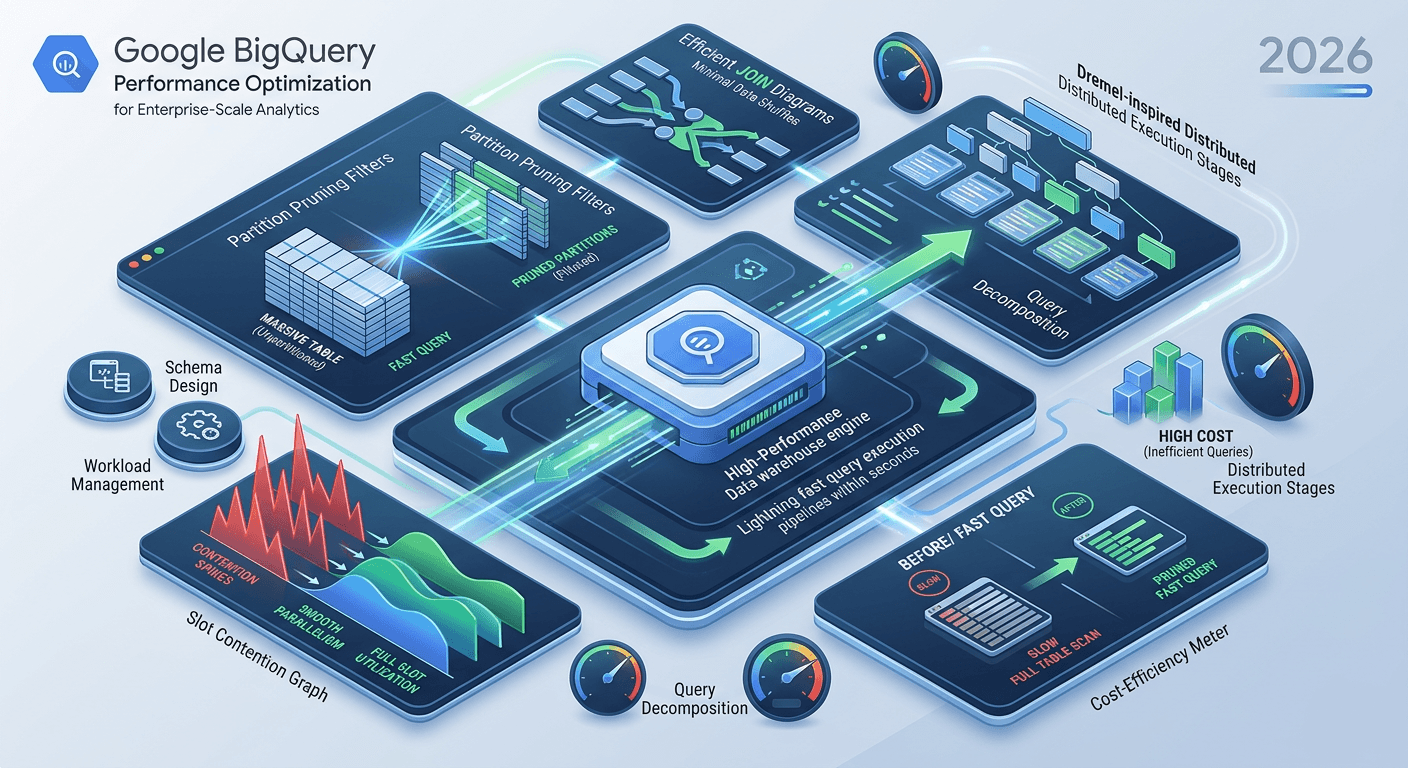
BigQuery Performance Optimization Guide 2024: Advanced Strategies to Improve Query Speed and Reduce Cost
A complete 2024 BigQuery performance optimization guide covering partitioning, clustering, slot tuning, query plan analysis, materialized views, storage design, shuffle reduction, and cost control for enterprise analytics workloads.
2024-07-30
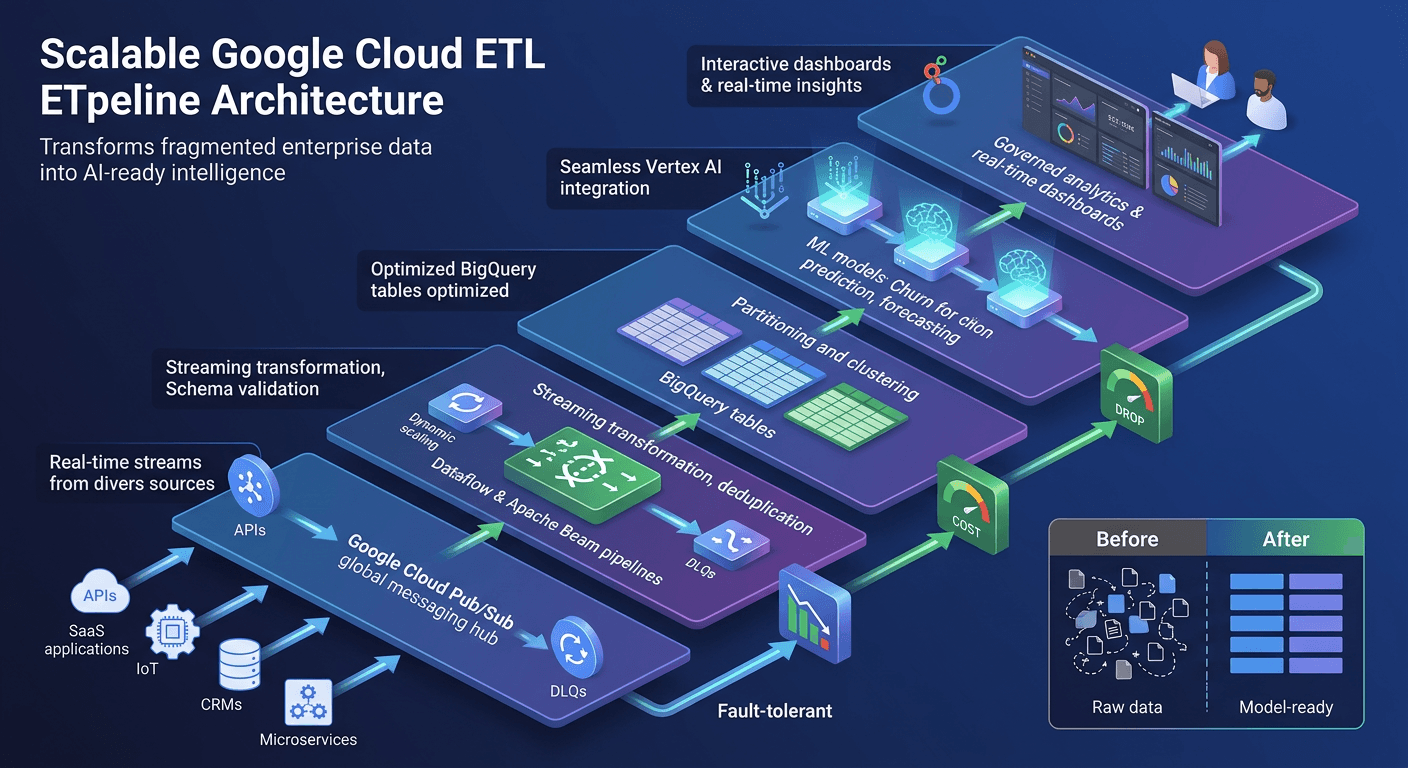
From Messy Data to Model-Ready Pipelines: Designing Scalable ETL Architecture on Google Cloud
A comprehensive guide to building modern ETL pipelines on Google Cloud using Pub/Sub, Dataflow, BigQuery, and Vertex AI to transform fragmented enterprise data into governed, analytics-ready, and AI-ready systems.
2025-01-10
The Importance of Data Visualization in Business Operations: Driving Smarter Decisions with Visual Intelligence
A comprehensive guide to understanding the importance of data visualization in business operations, covering executive dashboards, operational analytics, KPI monitoring, predictive visualization, and strategic decision-making frameworks.
2025-01-18
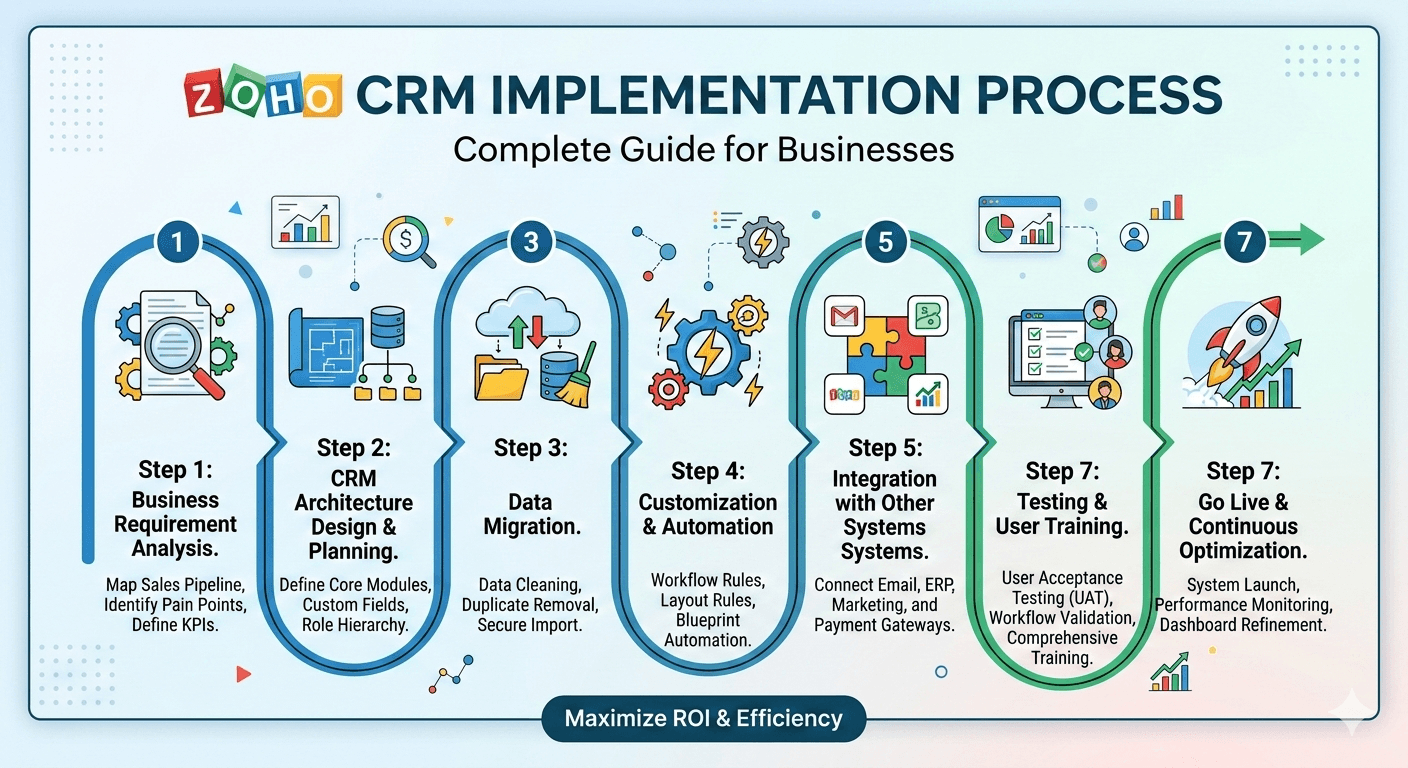
Zoho CRM Implementation Process for Businesses: Complete Step-by-Step Guide
A complete guide explaining the Zoho CRM implementation process for businesses, including setup, customization, automation, integration, and optimization strategies.
2025-02-10
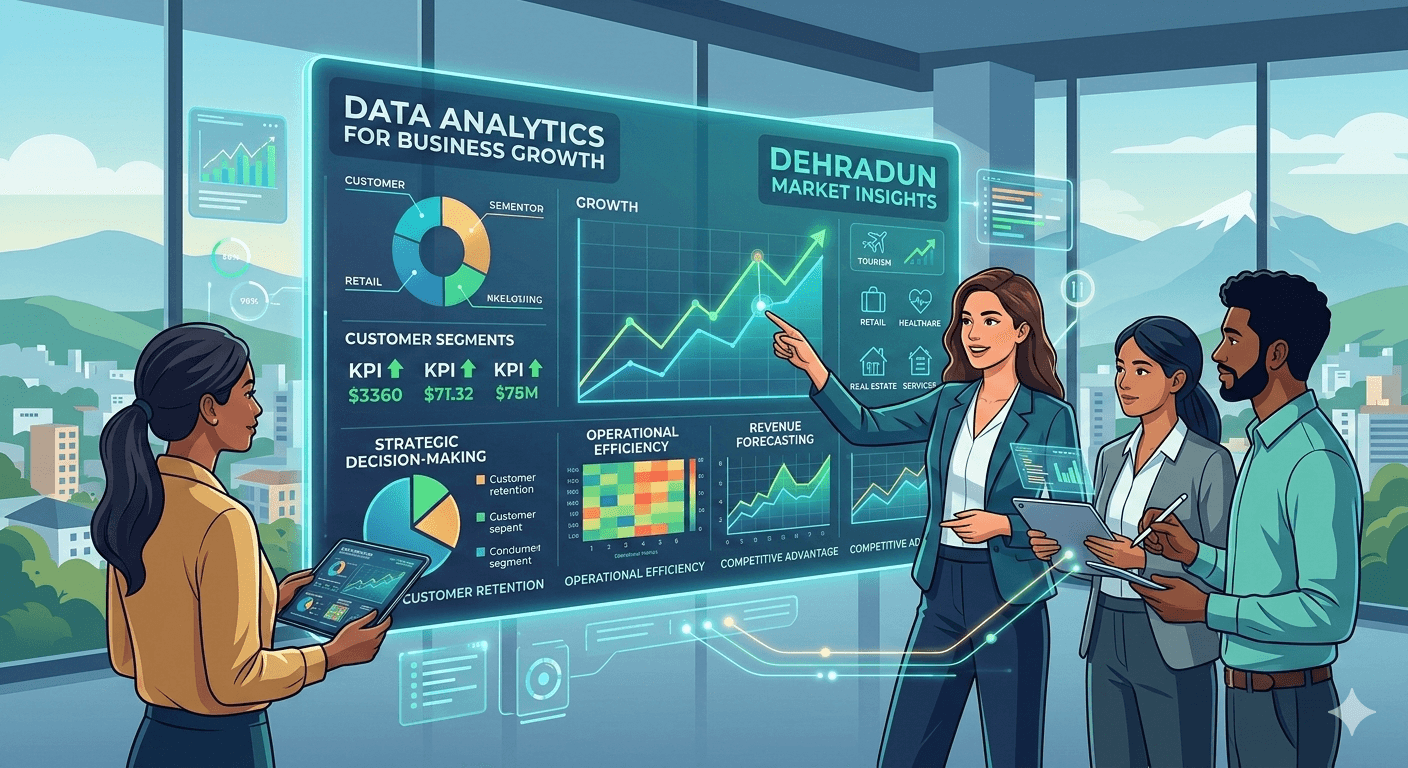
How Data Analytics for Businesses in Dehradun Improves Decision-Making and Growth
A strategic guide explaining how data analytics for businesses in Dehradun enhances decision-making, operational efficiency, forecasting accuracy, customer insights, and long-term scalability.
2025-01-22
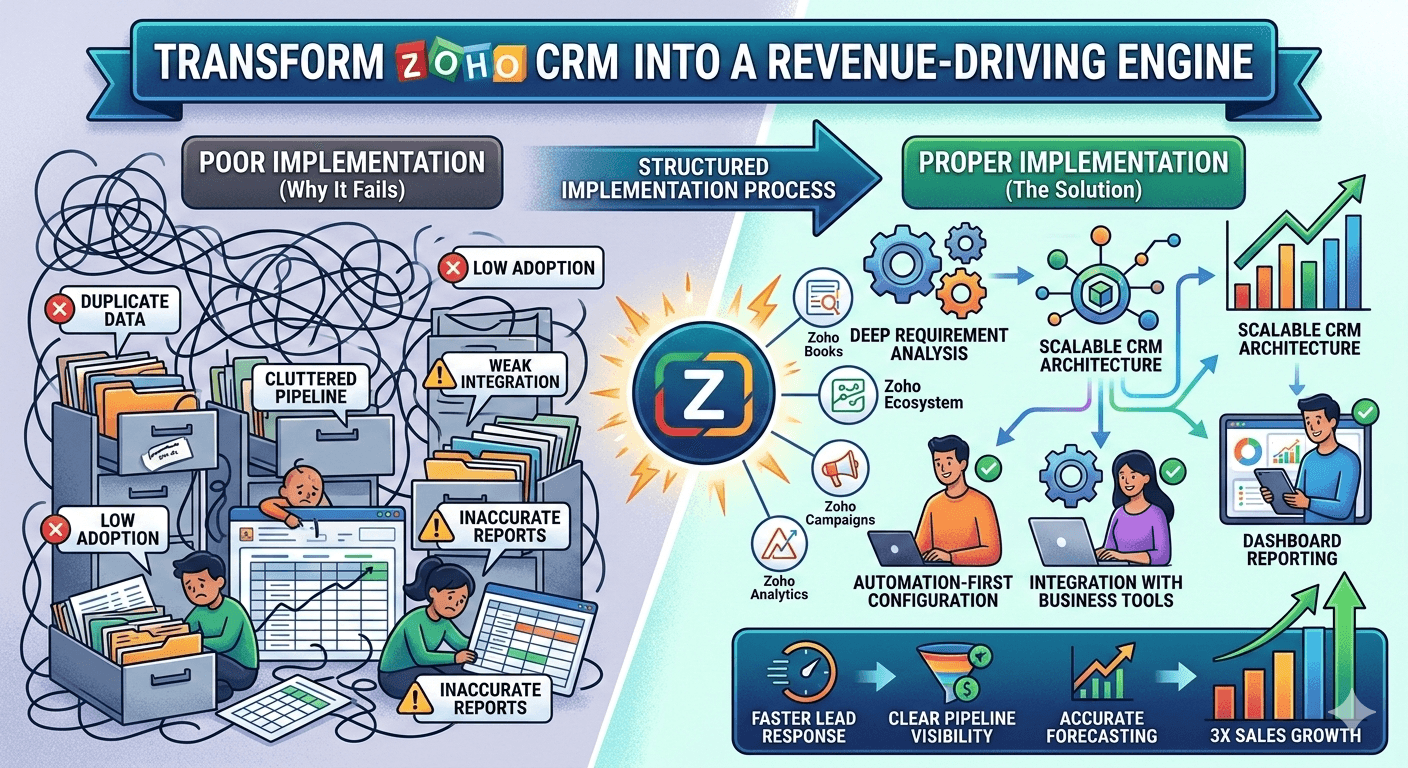
Why Zoho CRM Fails for Most Businesses (And How Proper Implementation Drives 3X Sales Growth)
Discover why many Zoho CRM implementations fail and how a structured Zoho CRM implementation process, automation strategy, and integration framework can drive measurable sales growth and operational efficiency.
2025-01-30
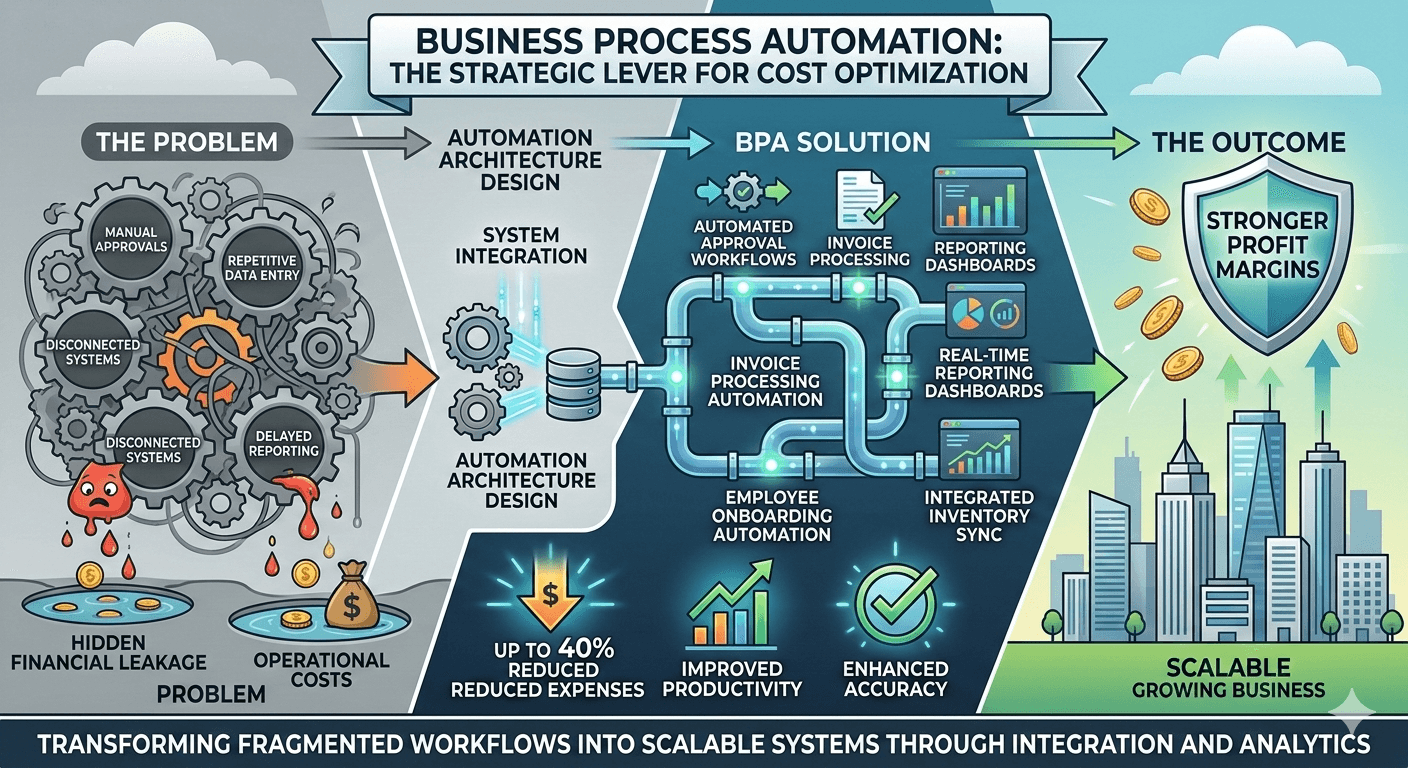
How Business Process Automation Reduces Operational Cost by 40%: A Strategic Guide for Modern Enterprises
Discover how business process automation reduces operational costs by up to 40% through workflow automation, system integration, analytics-driven optimization, and digital transformation strategies.