Business Intelligence
From Messy Data to Model-Ready Pipelines: Designing Scalable ETL Architecture on Google Cloud
A comprehensive guide to building modern ETL pipelines on Google Cloud using Pub/Sub, Dataflow, BigQuery, and Vertex AI to transform fragmented enterprise data into governed, analytics-ready, and AI-ready systems.
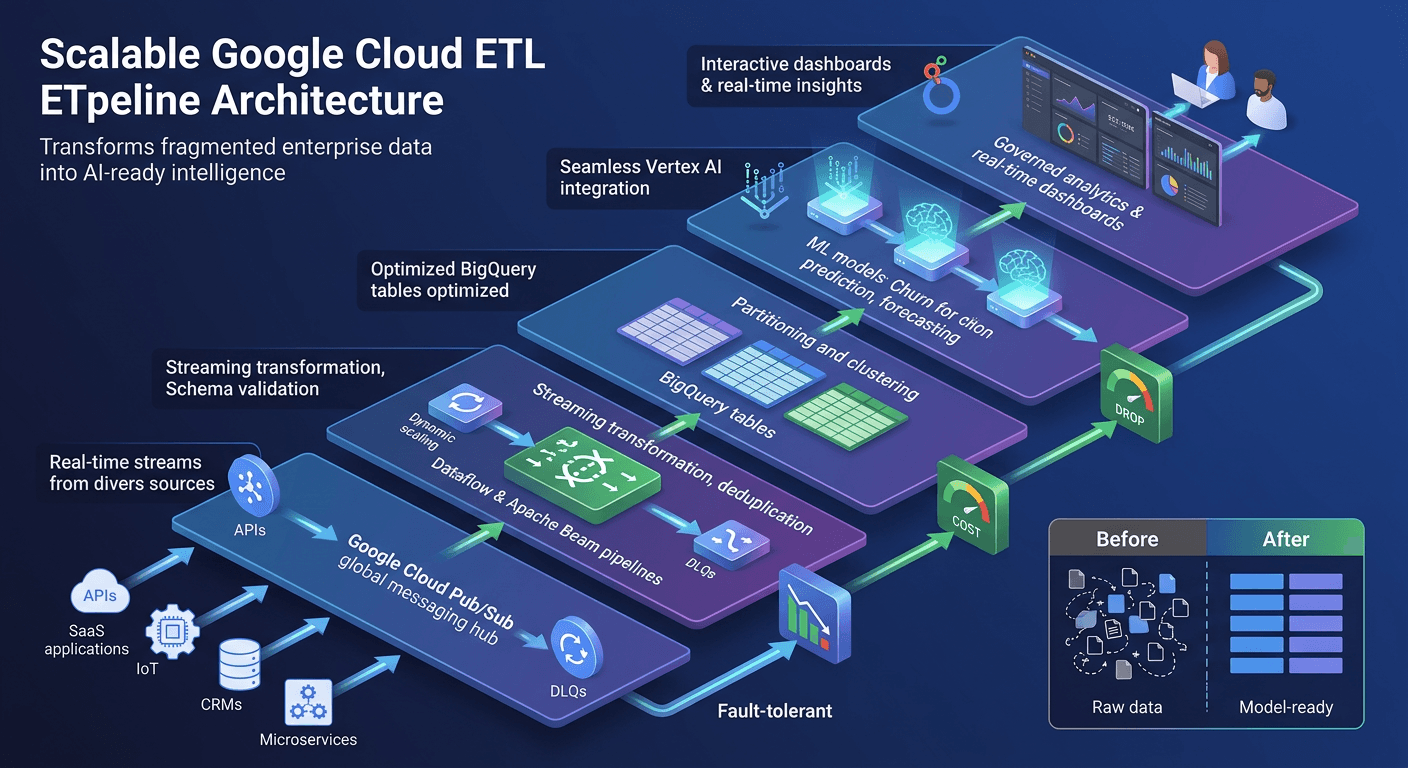
Modern enterprises generate data from dozens of distributed systems: SaaS platforms, transactional databases, IoT devices, mobile applications, APIs, CRMs, ERPs, and event-driven microservices. However, raw enterprise data is rarely usable in its native state. It is fragmented, inconsistent, duplicated, schema-volatile, and often non-compliant with governance standards.
Transforming messy, multi-source data into analytics-ready and model-ready datasets requires more than traditional ETL scripts. It requires a scalable, cloud-native, contract-driven ETL architecture built for real-time processing, governance enforcement, and AI integration.
This guide explains how to design a modern ETL pipeline on Google Cloud that converts raw enterprise data into structured, governed, and AI-ready intelligence systems.
The Limitations of Traditional ETL Architectures
Legacy ETL frameworks were built primarily for batch analytics. While effective for static reporting, they struggle under modern data velocity and complexity.
Common limitations include:
- Batch-only ingestion with high latency
- Tightly coupled ingestion and transformation logic
- Rigid schema evolution handling
- Manual monitoring and incident recovery
- Poor support for AI feature engineering
As businesses demand real-time dashboards, AI experimentation, and predictive analytics, traditional ETL systems become architectural bottlenecks.
Principles of a Modern ETL Architecture
A production-grade cloud-native ETL pipeline must be:
- Streaming-capable and event-driven
- Horizontally scalable
- Schema-governed and contract-driven
- Fault-tolerant with retry mechanisms
- Integrated with AI and analytics layers
- Observable and cost-optimized
Google Cloud provides a powerful ecosystem to implement this architecture.
Layer 1: Data Ingestion with Pub/Sub
Google Pub/Sub acts as a globally distributed messaging backbone. It decouples data producers from processing systems, enabling real-time ingestion at scale.
Advantages include:
- Event-driven streaming architecture
- Horizontal scalability
- At-least-once delivery guarantees
- Global replication and durability
Pub/Sub enables organizations to ingest data from APIs, SaaS tools, microservices, and IoT streams without tightly coupling systems.
Layer 2: Transformation with Dataflow (Apache Beam)
Google Dataflow, built on Apache Beam, processes streaming and batch data pipelines using unified programming models.
Key capabilities:
- Event-time windowing and watermark management
- Deduplication and idempotent transformations
- Schema validation and enforcement
- Automatic scaling and load balancing
- Exactly-once processing semantics
Dataflow pipelines transform raw events into structured datasets while handling late arrivals and high-throughput spikes.
Layer 3: Storage in BigQuery (Optimized Design)
Transformed data is stored in BigQuery using partitioned and clustered tables to ensure cost-efficient querying.
Best practices include:
- Time-based partitioning for transactional data
- Clustering on frequently filtered columns
- Denormalized schema design
- Nested and repeated fields for reducing joins
BigQuery serves as the unified analytics and feature store foundation for downstream use cases.
Layer 4: AI Integration with Vertex AI
Once datasets are structured, Vertex AI enables direct model training and deployment without moving data outside the Google Cloud ecosystem.
Use cases include:
- Customer churn prediction
- Demand forecasting
- Fraud detection
- Anomaly detection in operational data
This tight integration reduces latency between data engineering and machine learning experimentation.
Layer 5: Analytics & Governance with Looker
Looker provides governed data access through semantic modeling and role-based permissions.
Executives gain real-time visibility while ensuring compliance and data security.
Advanced Enterprise Enhancements
- Schema registry for data contract enforcement
- Dead Letter Queues (DLQ) for failure isolation
- Cloud Composer for workflow orchestration
- VPC Service Controls for security perimeter
- Column-level access control in BigQuery
- Automated lineage tracking for compliance audits
These enhancements transform pipelines from operational scripts into enterprise-grade data infrastructure.
Real-World Scenario: Retail Churn Intelligence
A retail enterprise processes millions of daily events across online and offline channels. Traditional batch ETL pipelines delayed feature availability for machine learning models.
After implementing a streaming ETL architecture:
- Data ingestion became real time
- Cleaned features were generated automatically
- ML models updated churn risk scores daily
- Dashboards surfaced at-risk customers instantly
The result: improved retention rates and measurable revenue growth.
Strategic Business Impact
A modern ETL architecture does not merely move data — it enables structural competitive advantage.
- Reduced time-to-insight
- Improved regulatory compliance
- Faster AI experimentation cycles
- Scalable analytics without operational friction
Organizations that modernize their data pipelines unlock long-term digital transformation.
Conclusion
Building a scalable ETL pipeline on Google Cloud requires architectural discipline, governance enforcement, and AI integration. By leveraging Pub/Sub, Dataflow, BigQuery, and Vertex AI, enterprises can convert fragmented raw data into model-ready intelligence systems.
The future of data engineering lies in streaming-first, contract-driven, AI-integrated pipelines that scale with business growth.
Need a Scalable ETL Architecture?
Syncverse Solutions designs GCP-native ETL frameworks that convert fragmented enterprise data into governed, analytics-ready, and AI-ready systems.
Contact us for a modern data architecture consultation.
Build a Scalable Data Strategy for Your Business
Transform raw data into strategic intelligence with structured analytics implementation.
Book a Free Strategy CallExplore More Insights
Continue learning with practical strategies, implementation guides, and expert perspectives on analytics, CRM, and digital growth.
2024-07-28
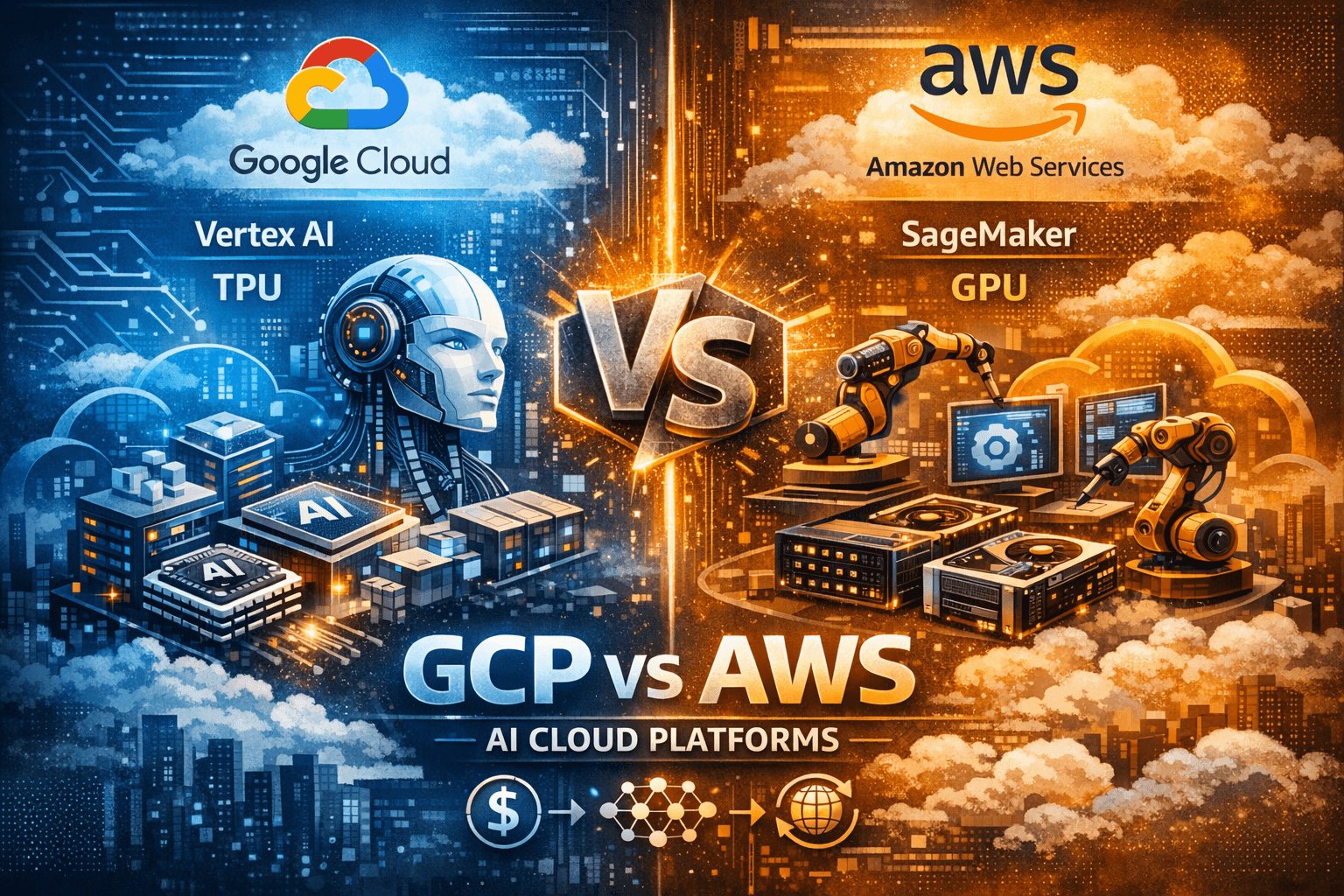
GCP vs AWS for AI Workloads in 2024: Enterprise Cloud Strategy, Cost, and MLOps Comparison
An in-depth 2024 enterprise comparison of GCP vs AWS for AI workloads. Explore Vertex AI vs SageMaker, TPU vs GPU infrastructure, AI cost optimization, scalability, MLOps maturity, and strategic cloud architecture decisions.
2024-07-20
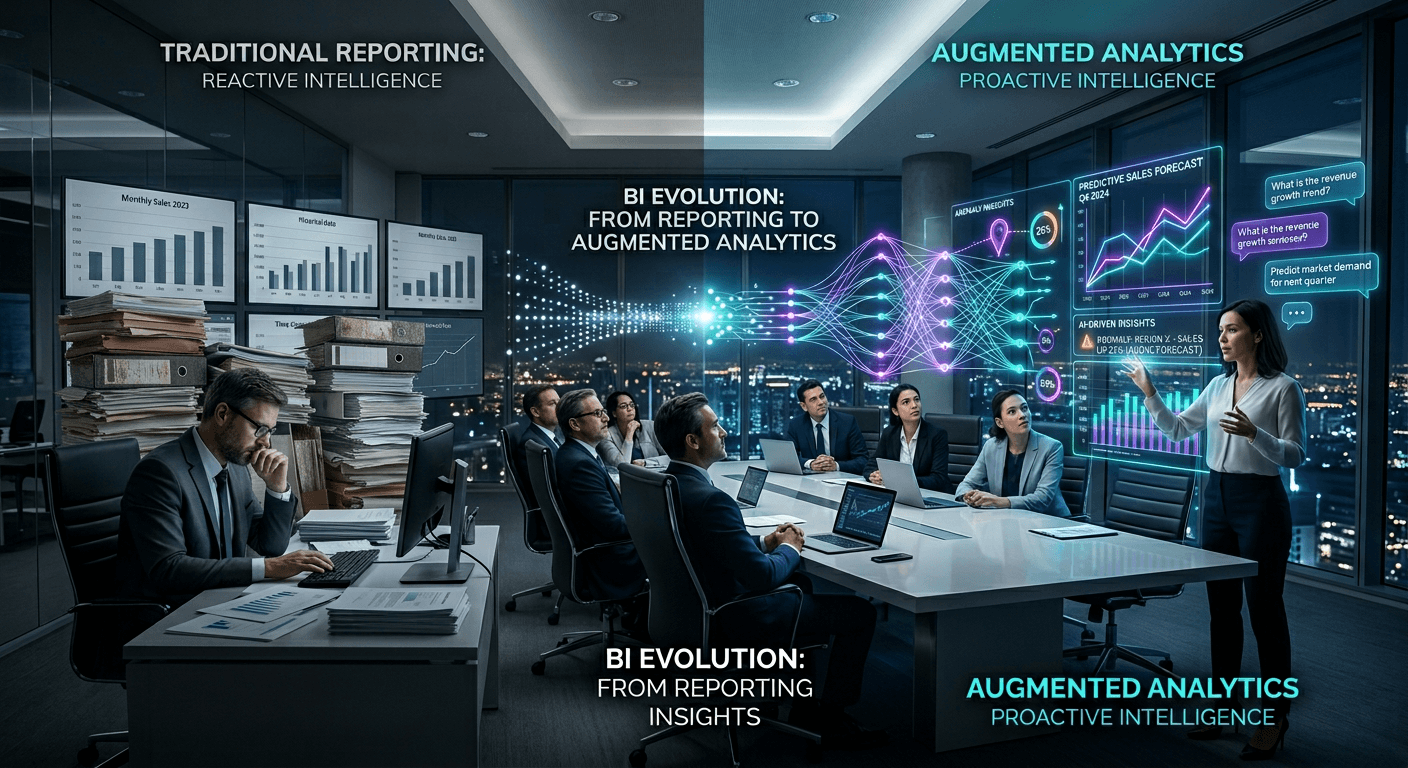
The Future of Business Intelligence is Augmented: AI-Powered Enterprise Analytics in 2024
Explore how augmented analytics is transforming business intelligence in 2024 with AI-powered insights, automated anomaly detection, predictive forecasting, NLP-driven dashboards, and enterprise data intelligence frameworks.
2024-07-15
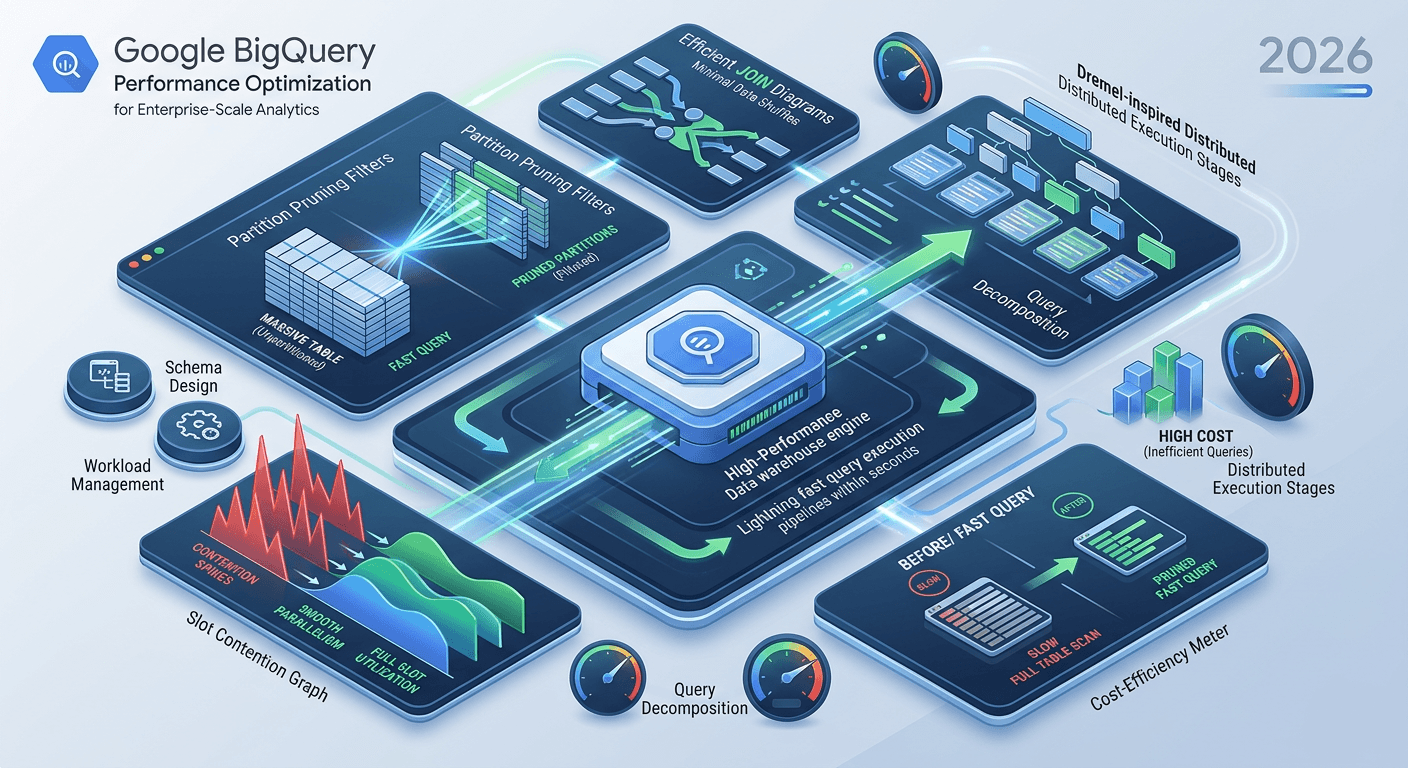
BigQuery Performance Optimization Guide 2024: Advanced Strategies to Improve Query Speed and Reduce Cost
A complete 2024 BigQuery performance optimization guide covering partitioning, clustering, slot tuning, query plan analysis, materialized views, storage design, shuffle reduction, and cost control for enterprise analytics workloads.
2025-02-15
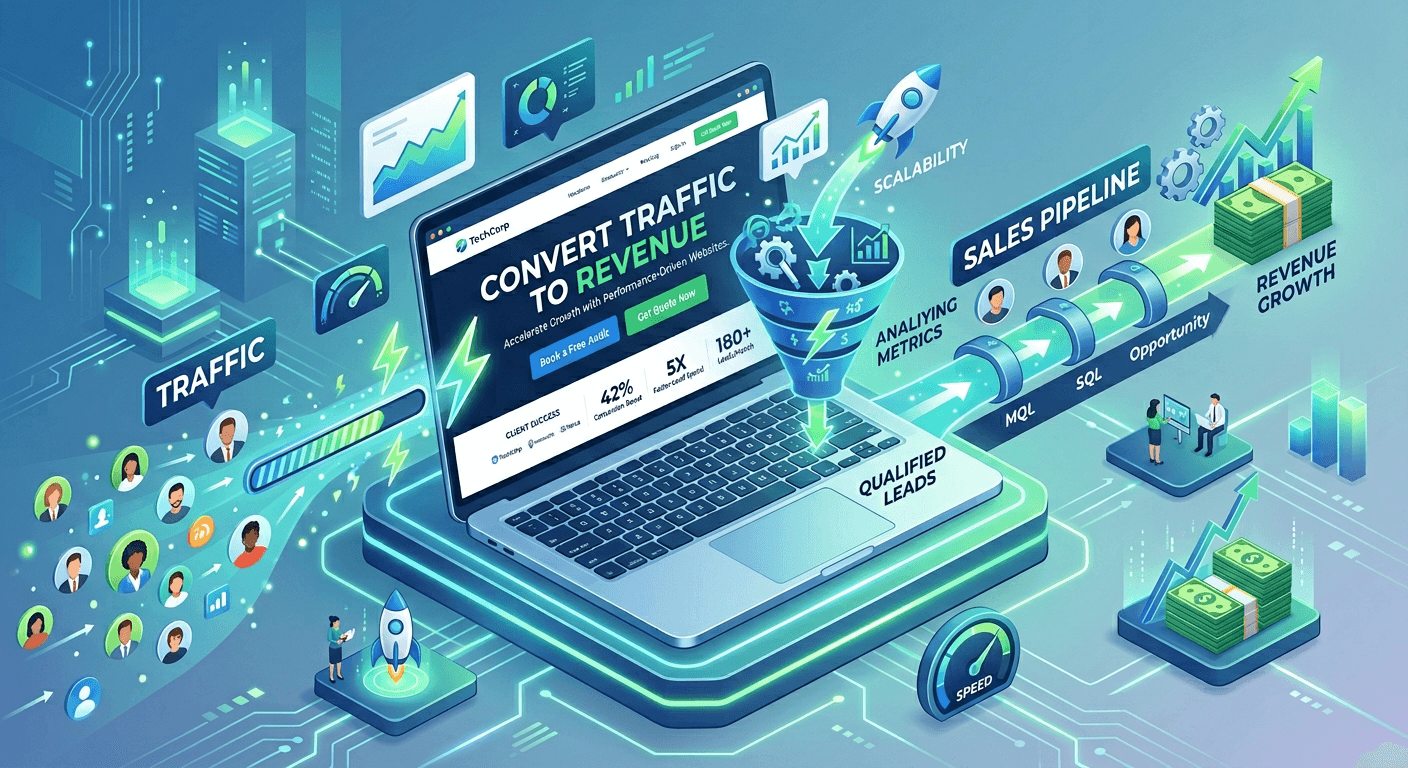
Why Most Business Websites Fail at Lead Generation (And How to Fix It in 2025)
Discover why most business websites fail at lead generation and learn the exact conversion architecture, UX strategy, analytics integration, and automation framework needed to turn traffic into qualified leads.
2025-01-10
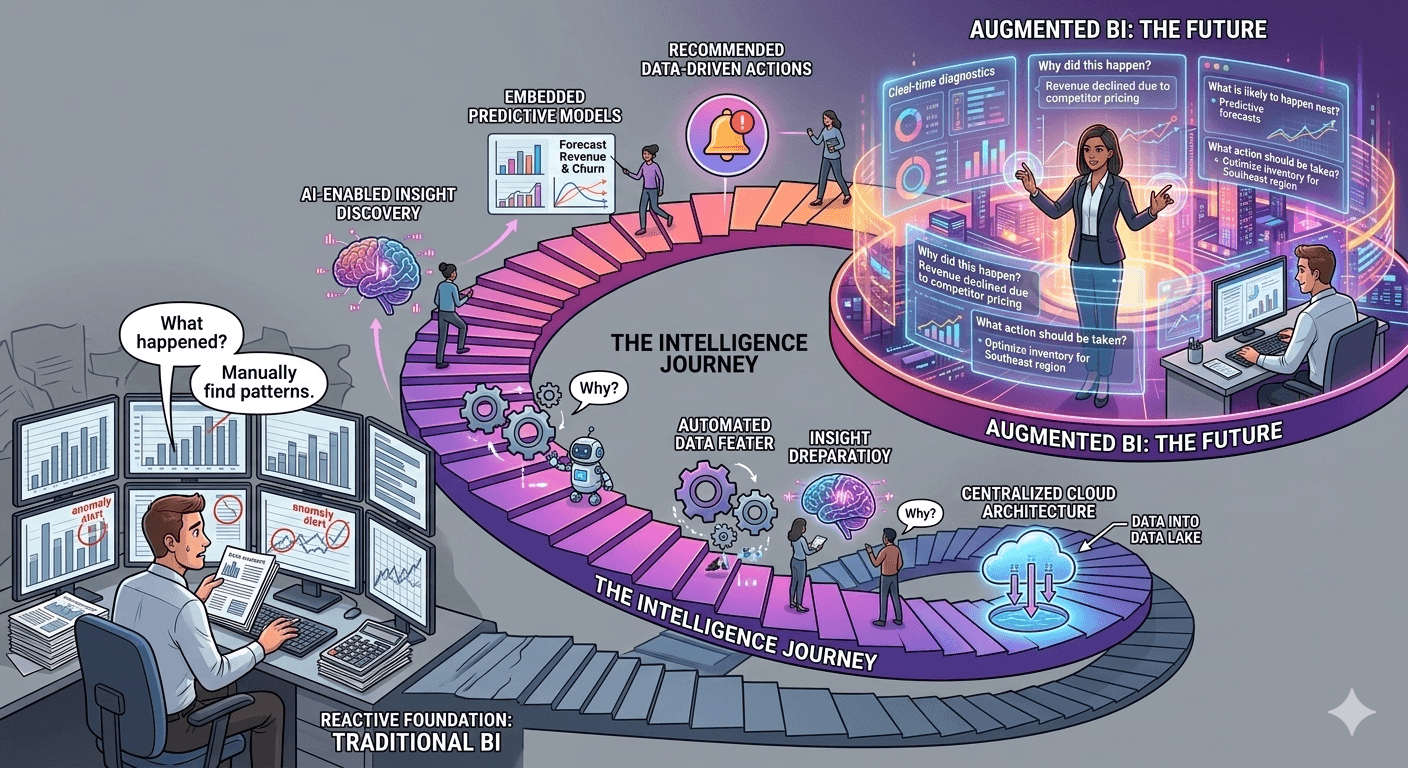
The Importance of Data Visualization in Business Operations: Driving Smarter Decisions with Visual Intelligence
A comprehensive guide to understanding the importance of data visualization in business operations, covering executive dashboards, operational analytics, KPI monitoring, predictive visualization, and strategic decision-making frameworks.
2025-01-18
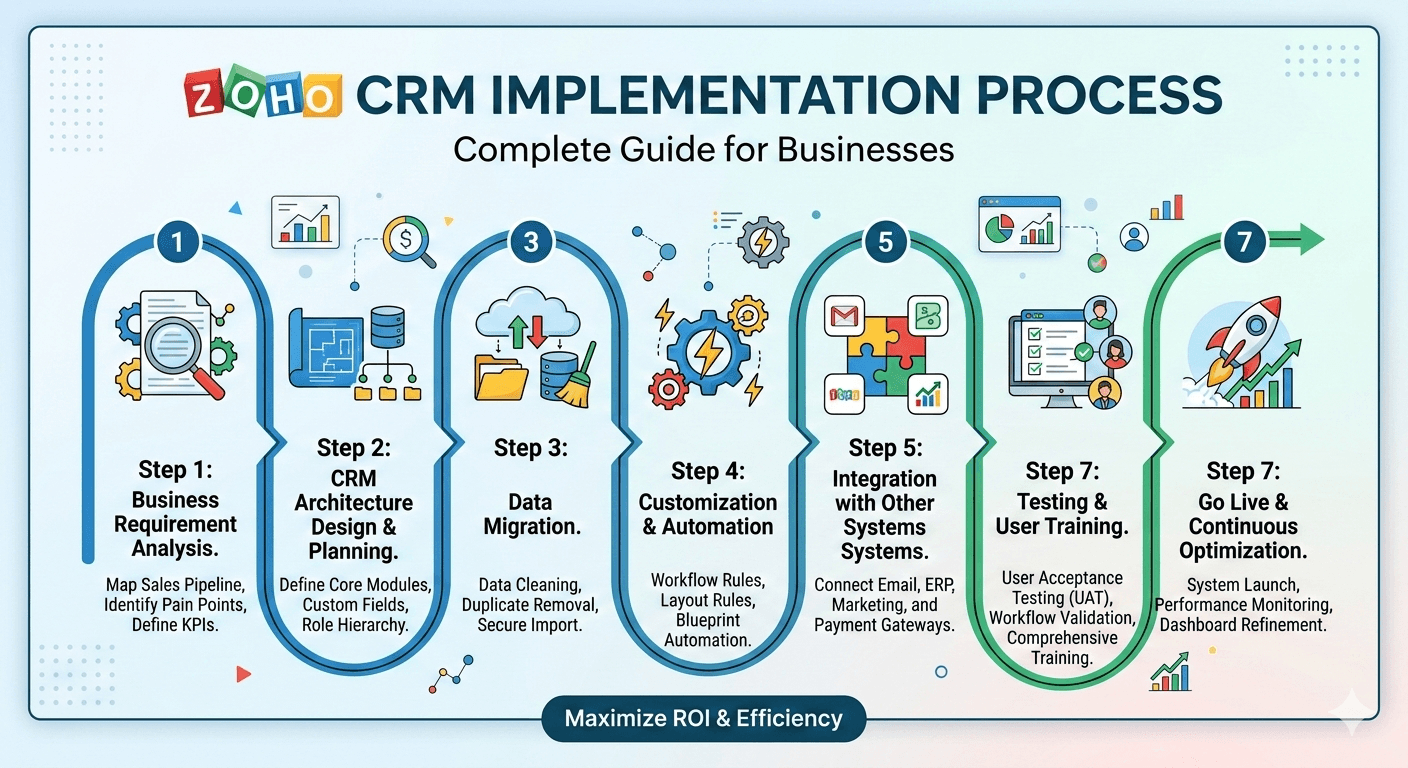
Zoho CRM Implementation Process for Businesses: Complete Step-by-Step Guide
A complete guide explaining the Zoho CRM implementation process for businesses, including setup, customization, automation, integration, and optimization strategies.
2025-02-10
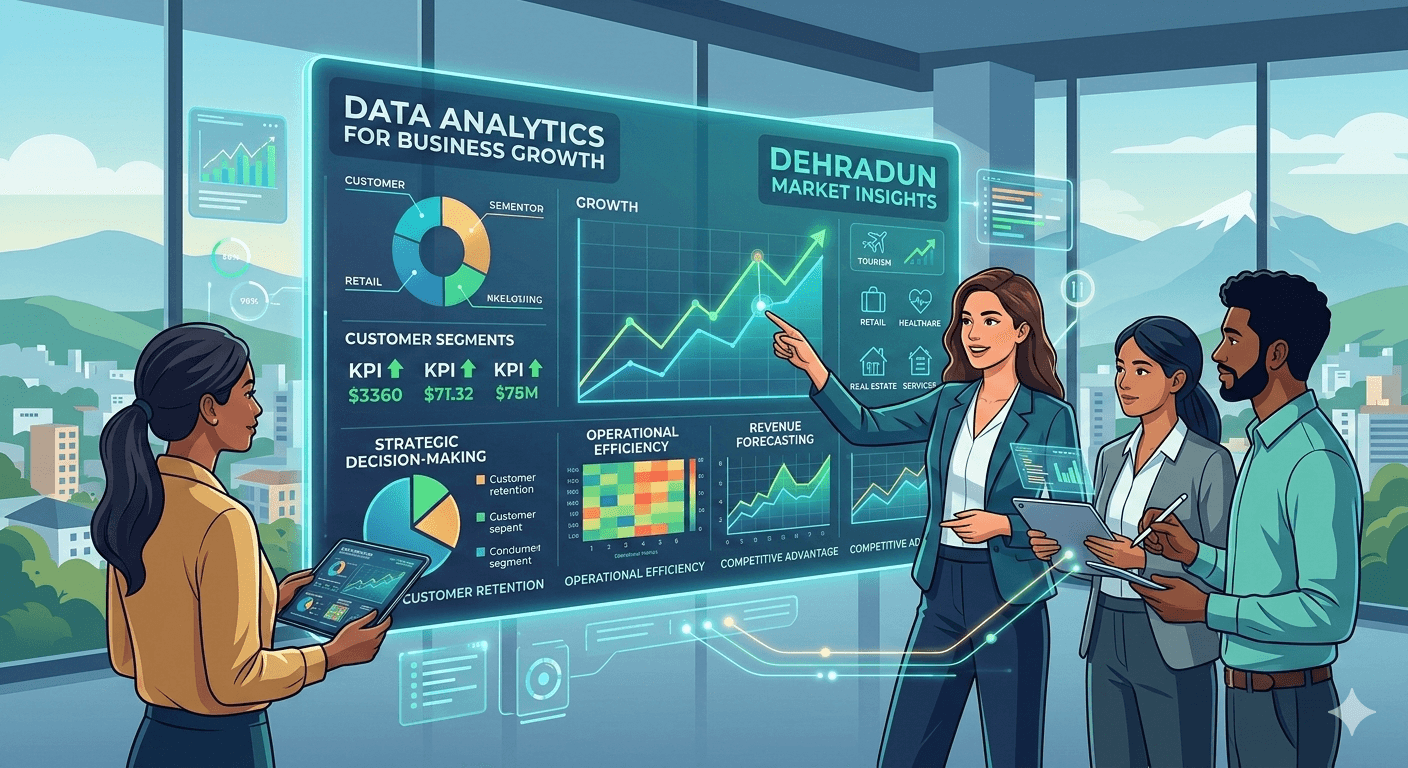
How Data Analytics for Businesses in Dehradun Improves Decision-Making and Growth
A strategic guide explaining how data analytics for businesses in Dehradun enhances decision-making, operational efficiency, forecasting accuracy, customer insights, and long-term scalability.
2025-01-22
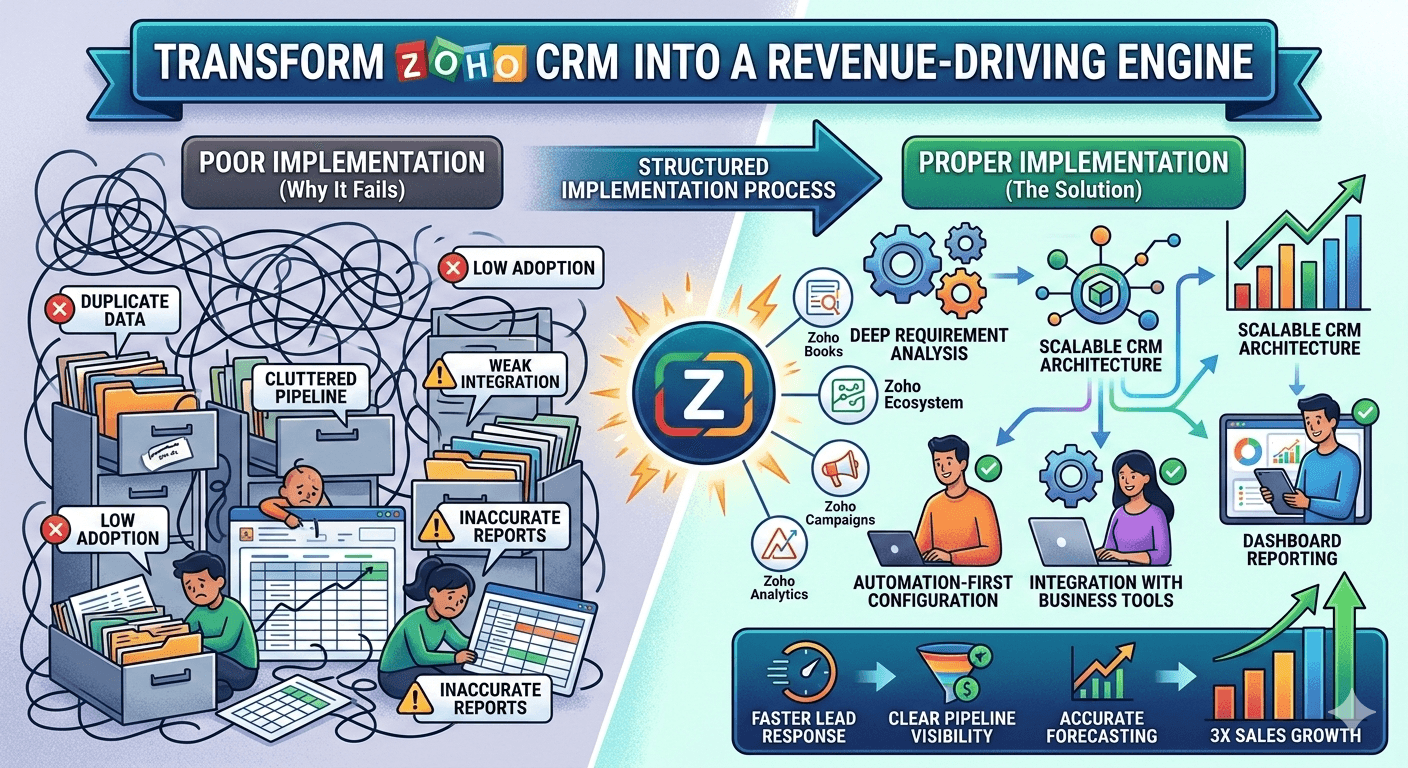
Why Zoho CRM Fails for Most Businesses (And How Proper Implementation Drives 3X Sales Growth)
Discover why many Zoho CRM implementations fail and how a structured Zoho CRM implementation process, automation strategy, and integration framework can drive measurable sales growth and operational efficiency.
2025-01-30
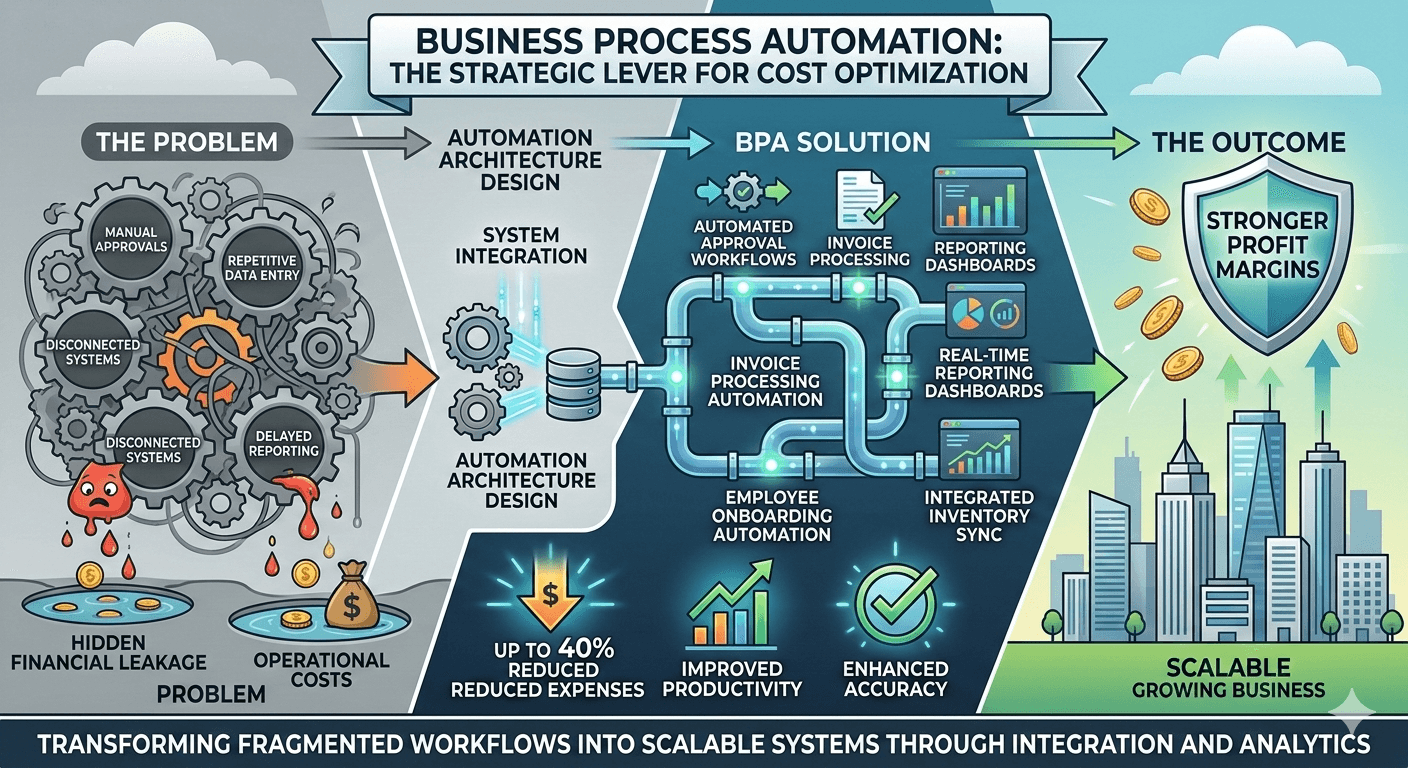
How Business Process Automation Reduces Operational Cost by 40%: A Strategic Guide for Modern Enterprises
Discover how business process automation reduces operational costs by up to 40% through workflow automation, system integration, analytics-driven optimization, and digital transformation strategies.