Business Intelligence
How Business Process Automation Reduces Operational Cost by 40%: A Strategic Guide for Modern Enterprises
Discover how business process automation reduces operational costs by up to 40% through workflow automation, system integration, analytics-driven optimization, and digital transformation strategies.
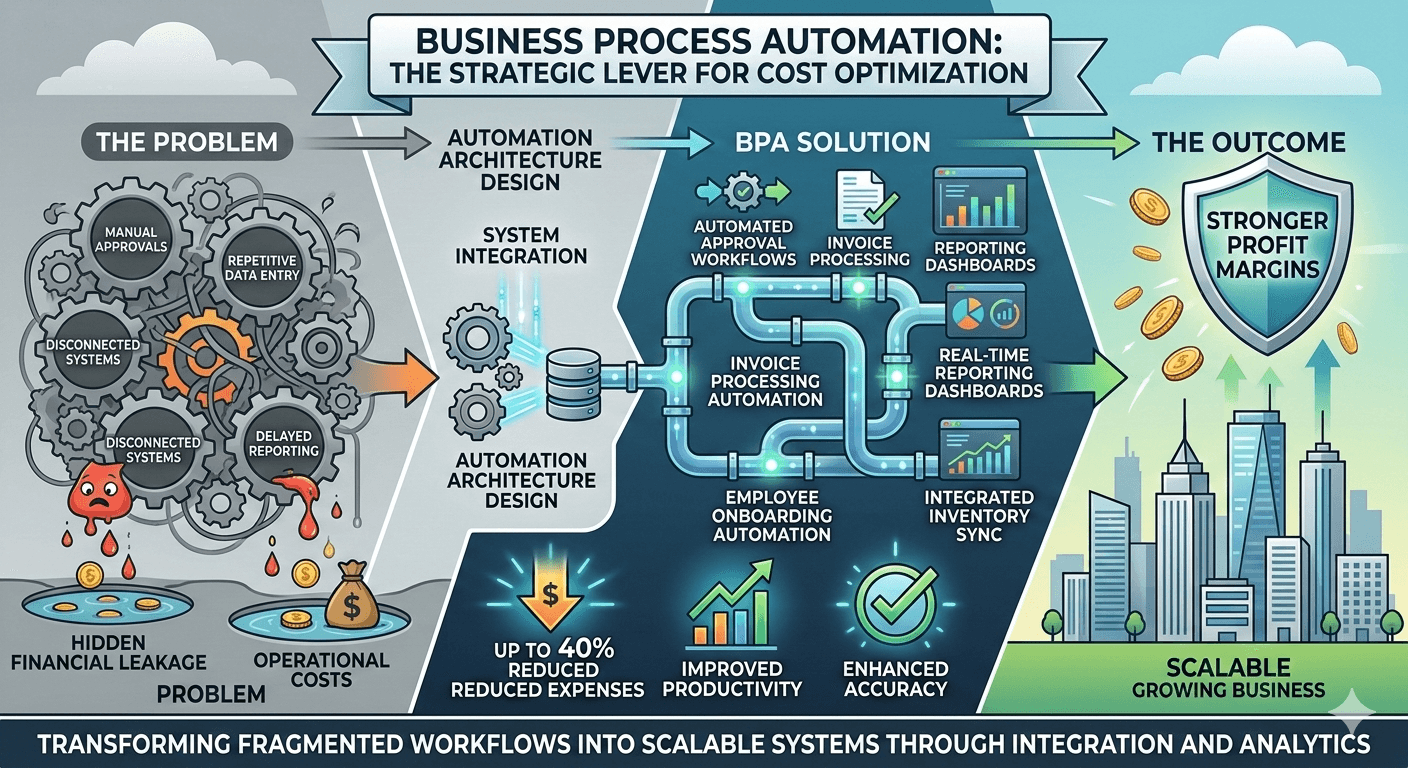
Operational costs silently drain profitability in most growing businesses. Manual approvals, repetitive data entry, disconnected software systems, delayed reporting, and inefficient workflows create hidden financial leakage.
Business process automation is not just a technology upgrade — it is a strategic cost optimization initiative. When implemented correctly, workflow automation can reduce operational expenses by up to 40%, improve productivity, and enhance decision-making accuracy.
This guide explains how business process automation transforms operational efficiency and how modern enterprises can implement it strategically.
What is Business Process Automation?
Business Process Automation (BPA) refers to the use of technology to execute recurring tasks or processes in a business where manual effort can be replaced with automated workflows.
It includes:
- Automated task assignments
- Approval workflows
- Invoice processing automation
- Employee onboarding automation
- Inventory update synchronization
- Report generation automation
The objective is simple: eliminate friction and reduce dependency on repetitive human intervention.
Where Operational Costs Actually Leak
Many businesses underestimate operational inefficiencies because they appear “normal.” However, cost leakage often occurs due to:
- Manual data duplication across systems
- Delayed approval cycles
- Human error corrections
- Untracked process bottlenecks
- Lack of real-time reporting visibility
These inefficiencies compound monthly and annually, significantly impacting margins.
How Workflow Automation Reduces Operational Cost
1. Eliminates Repetitive Manual Tasks
Automation replaces manual email follow-ups, data transfers, and internal reminders with structured workflows.
2. Reduces Human Error
Automated validation rules and system logic minimize data inconsistencies and correction costs.
3. Accelerates Approval Processes
Digital approval chains reduce delays in procurement, finance, and HR workflows.
4. Improves Resource Allocation
Teams can focus on revenue-generating activities rather than administrative tasks.
5. Enables Real-Time Monitoring
Analytics dashboards provide operational visibility, allowing leadership to detect inefficiencies early.
Core Areas Where Automation Delivers Maximum ROI
Finance & Accounting
- Invoice processing automation
- Expense approval workflows
- Payment reconciliation
Operations Management
- Inventory tracking automation
- Vendor coordination workflows
- Production stage tracking
Human Resources
- Employee onboarding automation
- Leave management workflows
- Performance review tracking
Sales & Marketing Operations
- Lead routing automation
- Campaign tracking workflows
- Performance reporting dashboards
The Role of System Integration in Cost Reduction
Automation alone is insufficient if systems operate independently. Integration connects accounting software, analytics platforms, operational tools, and workflow engines into a unified ecosystem.
System integration ensures:
- Single source of truth
- Reduced data duplication
- Real-time synchronization
- Cross-department transparency
Disconnected tools create inefficiency. Integrated systems create scalability.
Analytics-Driven Process Optimization
Automation generates data. Analytics converts that data into insight.
- Process completion time tracking
- Bottleneck identification
- Cost per task measurement
- Operational efficiency scoring
Without analytics, automation cannot be optimized.
Realistic Example: Operational Cost Reduction Scenario
A mid-sized service company manually processed vendor approvals and internal task assignments. After implementing structured workflow automation and system integration:
- Approval cycle time reduced by 60%
- Administrative workload reduced by 35%
- Reporting time reduced from weekly to real-time
- Operational cost reduced by approximately 30–40%
The impact was not incremental — it was structural.
Steps to Implement Business Process Automation Strategically
- Conduct process audit
- Identify repetitive workflows
- Prioritize high-cost inefficiencies
- Design automation architecture
- Integrate systems
- Deploy dashboards for monitoring
- Continuously optimize workflows
Common Mistakes in Automation Projects
- Automating broken processes
- Ignoring integration architecture
- No performance monitoring dashboards
- Lack of governance framework
- Overcomplicating workflows
Why Businesses Need Professional Automation Consulting
Automation is not just about installing software. It requires structured planning, workflow engineering, data governance, and integration expertise.
Professional workflow automation services ensure:
- Scalable architecture design
- Cost-focused optimization strategy
- Integration across departments
- Analytics-based monitoring
- Long-term digital transformation roadmap
Explore our Workflow Automation Services, System Integration Solutions,
Conclusion
Business process automation is one of the most powerful levers for operational cost reduction. When supported by integration and analytics, it transforms fragmented workflows into scalable systems.
Enterprises that implement structured automation strategies achieve lower costs, faster execution cycles, improved accountability, and stronger profit margins.
Ready to Reduce Operational Costs Through Automation?
Our team helps businesses design automation-first architectures that reduce inefficiencies and drive measurable ROI.
Contact us for a structured operational efficiency audit.
Build a Scalable Data Strategy for Your Business
Transform raw data into strategic intelligence with structured analytics implementation.
Book a Free Strategy CallExplore More Insights
Continue learning with practical strategies, implementation guides, and expert perspectives on analytics, CRM, and digital growth.
2024-07-28
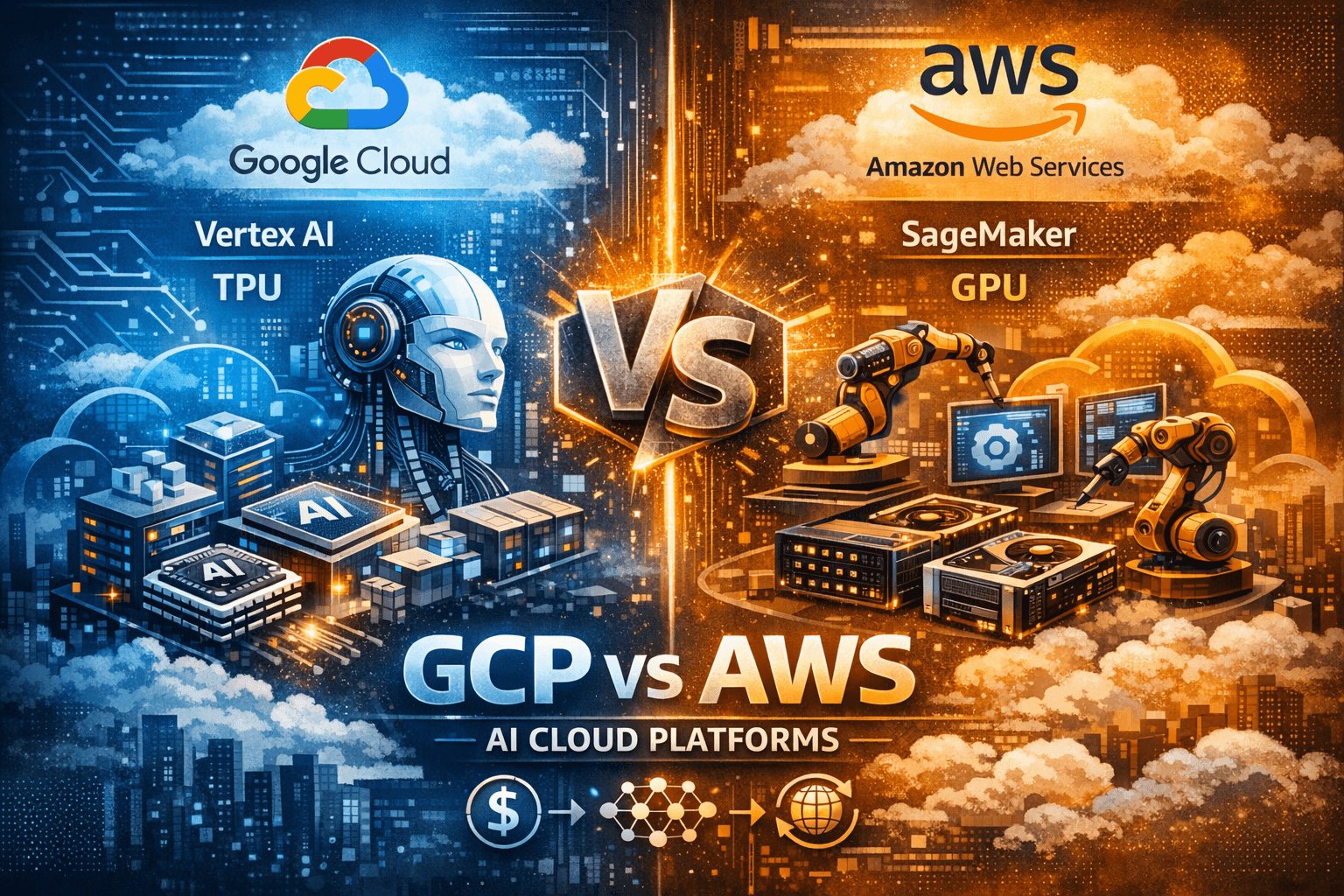
GCP vs AWS for AI Workloads in 2024: Enterprise Cloud Strategy, Cost, and MLOps Comparison
An in-depth 2024 enterprise comparison of GCP vs AWS for AI workloads. Explore Vertex AI vs SageMaker, TPU vs GPU infrastructure, AI cost optimization, scalability, MLOps maturity, and strategic cloud architecture decisions.

2024-07-20
The Future of Business Intelligence is Augmented: AI-Powered Enterprise Analytics in 2024
Explore how augmented analytics is transforming business intelligence in 2024 with AI-powered insights, automated anomaly detection, predictive forecasting, NLP-driven dashboards, and enterprise data intelligence frameworks.
2024-07-15
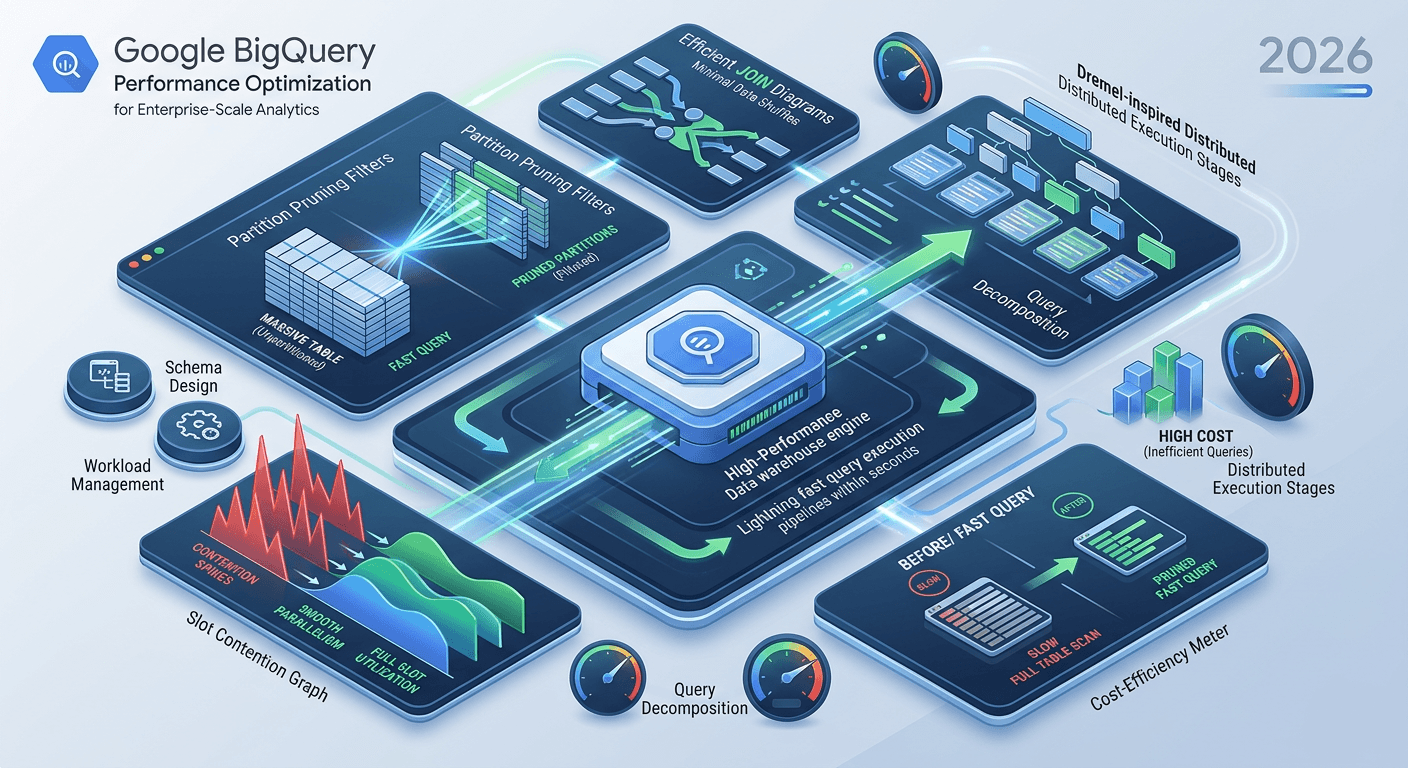
BigQuery Performance Optimization Guide 2024: Advanced Strategies to Improve Query Speed and Reduce Cost
A complete 2024 BigQuery performance optimization guide covering partitioning, clustering, slot tuning, query plan analysis, materialized views, storage design, shuffle reduction, and cost control for enterprise analytics workloads.
2024-07-30
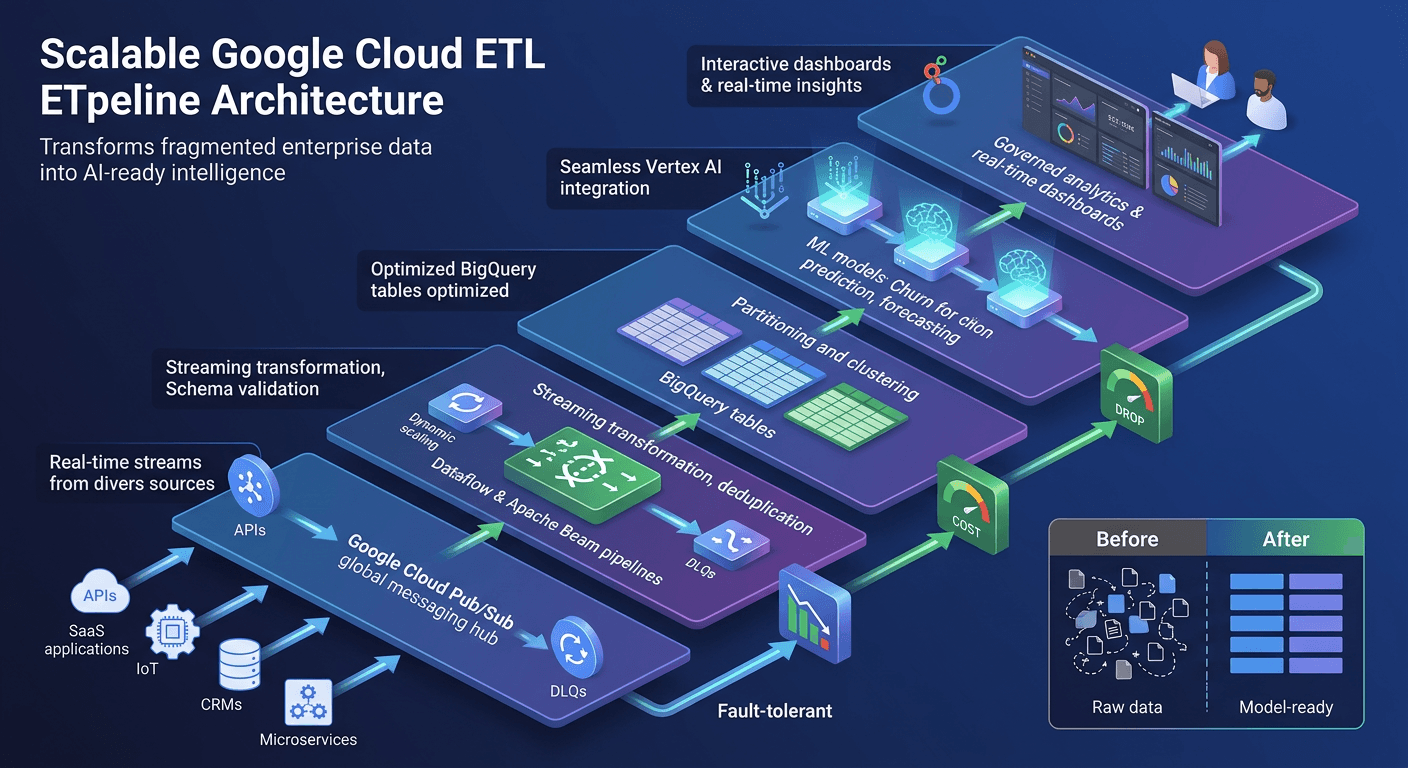
From Messy Data to Model-Ready Pipelines: Designing Scalable ETL Architecture on Google Cloud
A comprehensive guide to building modern ETL pipelines on Google Cloud using Pub/Sub, Dataflow, BigQuery, and Vertex AI to transform fragmented enterprise data into governed, analytics-ready, and AI-ready systems.
2025-02-15
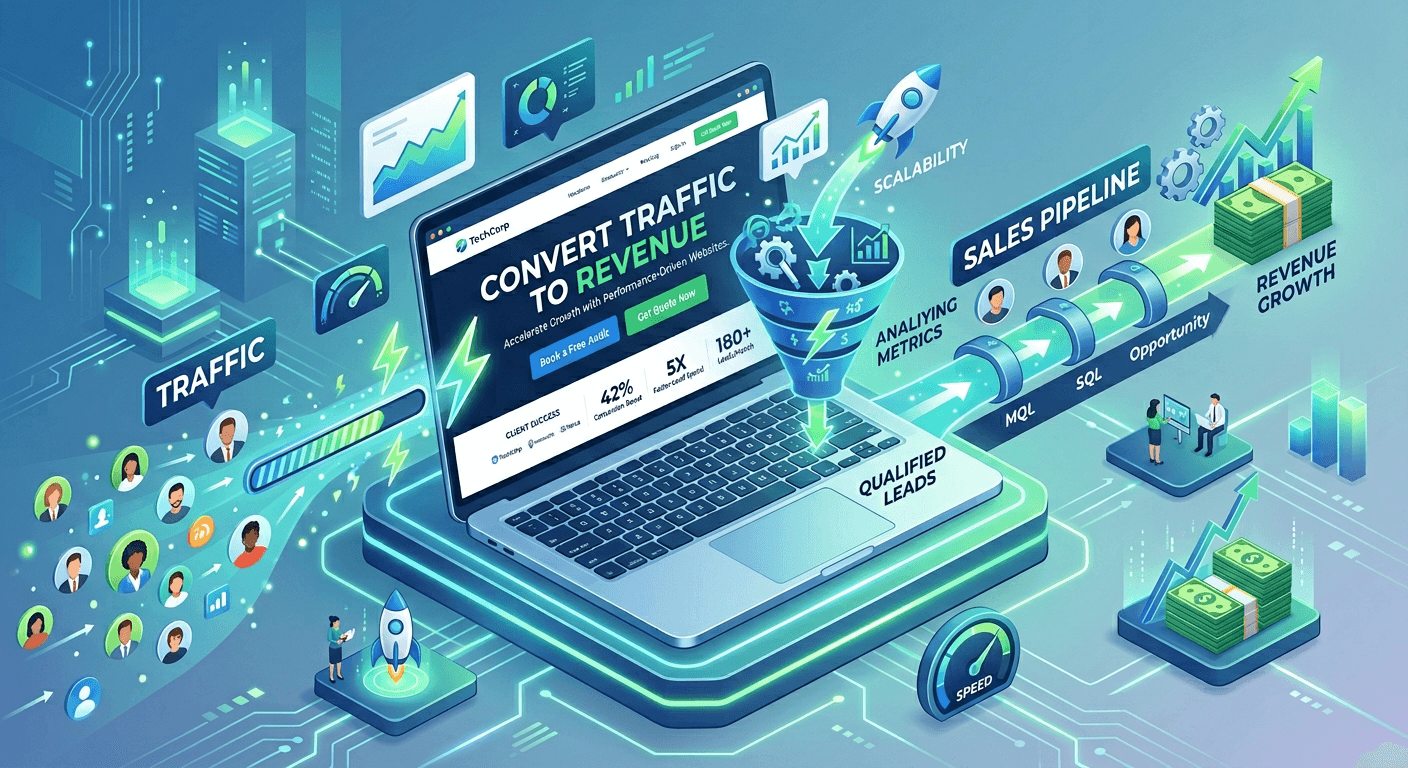
Why Most Business Websites Fail at Lead Generation (And How to Fix It in 2025)
Discover why most business websites fail at lead generation and learn the exact conversion architecture, UX strategy, analytics integration, and automation framework needed to turn traffic into qualified leads.
2025-01-10
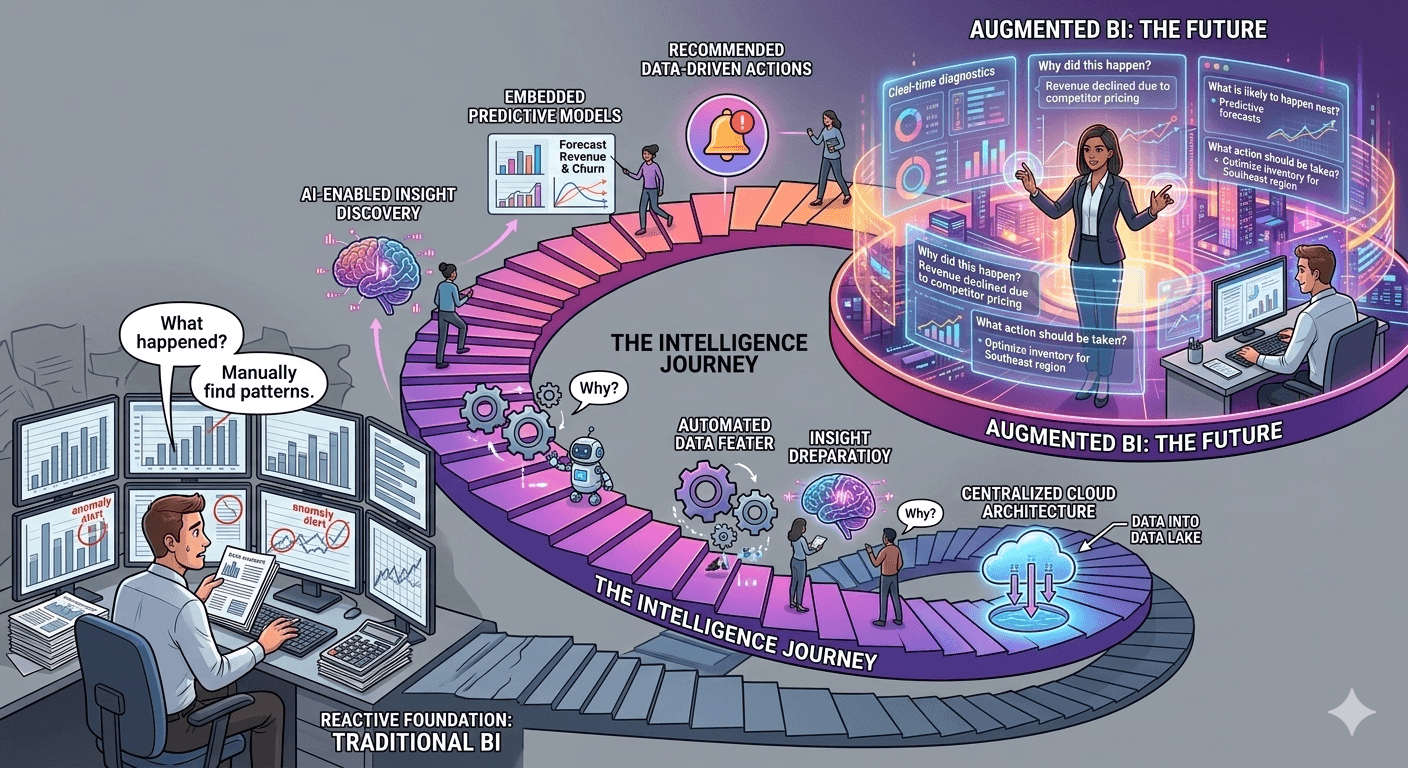
The Importance of Data Visualization in Business Operations: Driving Smarter Decisions with Visual Intelligence
A comprehensive guide to understanding the importance of data visualization in business operations, covering executive dashboards, operational analytics, KPI monitoring, predictive visualization, and strategic decision-making frameworks.
2025-01-18
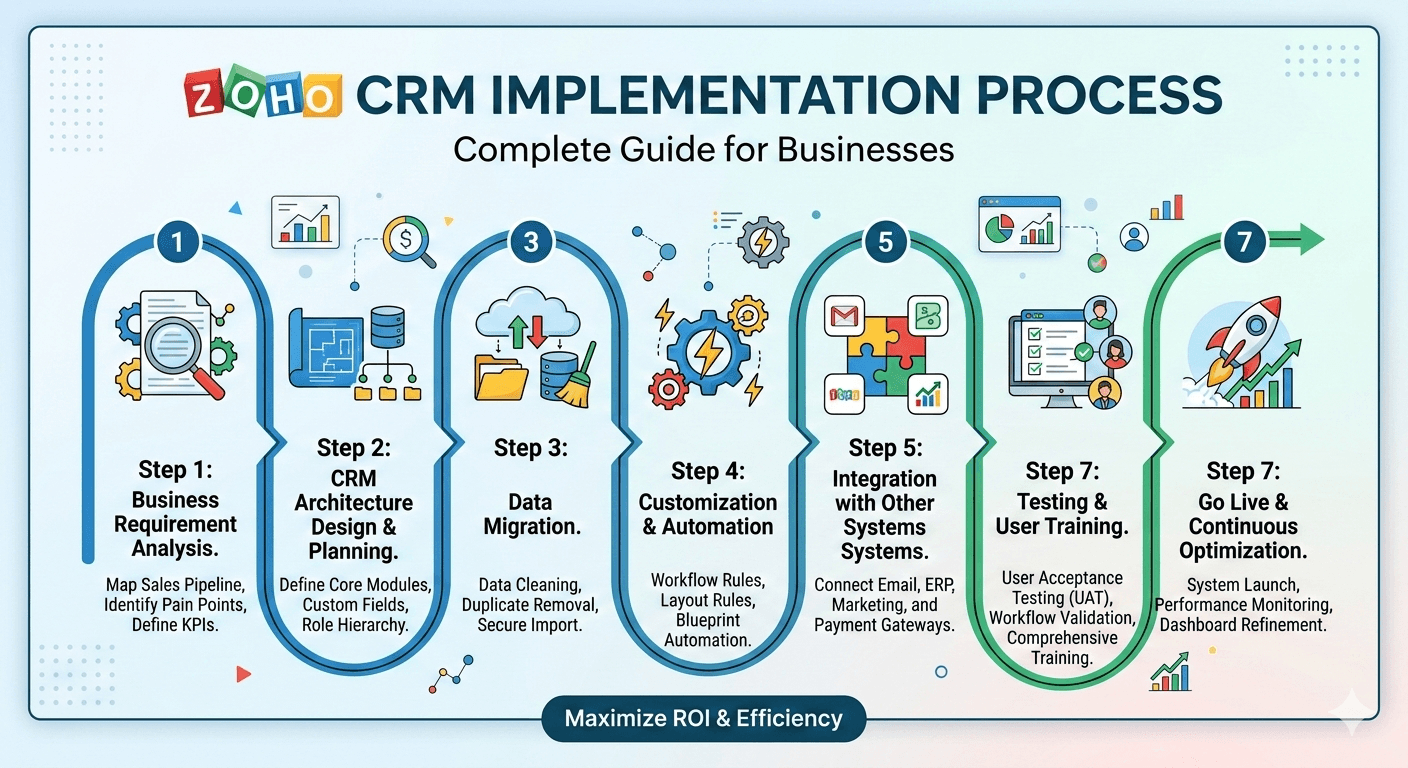
Zoho CRM Implementation Process for Businesses: Complete Step-by-Step Guide
A complete guide explaining the Zoho CRM implementation process for businesses, including setup, customization, automation, integration, and optimization strategies.

2025-02-10
How Data Analytics for Businesses in Dehradun Improves Decision-Making and Growth
A strategic guide explaining how data analytics for businesses in Dehradun enhances decision-making, operational efficiency, forecasting accuracy, customer insights, and long-term scalability.
2025-01-22
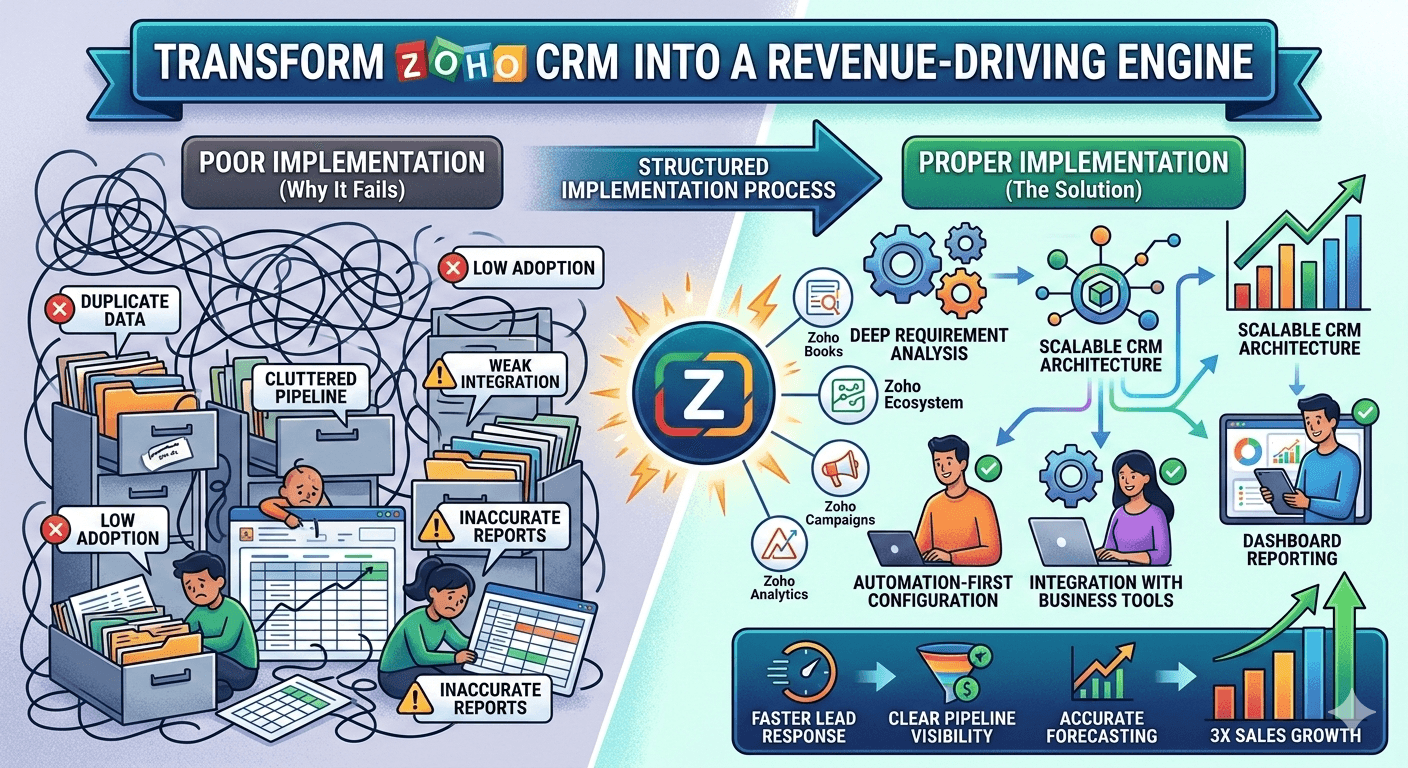
Why Zoho CRM Fails for Most Businesses (And How Proper Implementation Drives 3X Sales Growth)
Discover why many Zoho CRM implementations fail and how a structured Zoho CRM implementation process, automation strategy, and integration framework can drive measurable sales growth and operational efficiency.