Business Intelligence
The Future of Business Intelligence is Augmented: AI-Powered Enterprise Analytics in 2024
Explore how augmented analytics is transforming business intelligence in 2024 with AI-powered insights, automated anomaly detection, predictive forecasting, NLP-driven dashboards, and enterprise data intelligence frameworks.
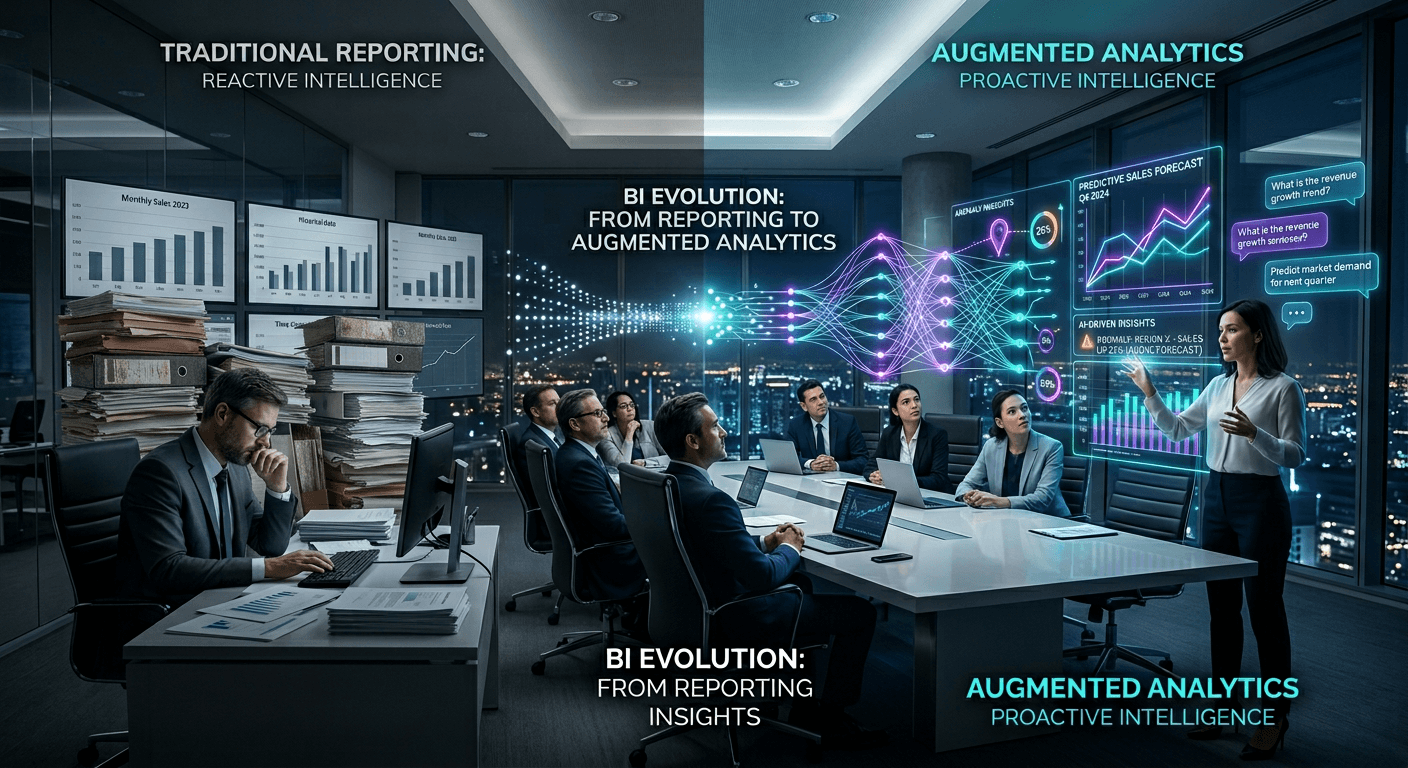
For decades, traditional Business Intelligence (BI) platforms focused primarily on dashboards, static reports, and historical analysis. While these systems improved organizational visibility, they remained reactive in nature — requiring analysts to manually search for patterns, anomalies, and performance drivers.
The future of Business Intelligence is augmented. Augmented analytics integrates artificial intelligence (AI), machine learning (ML), and natural language processing (NLP) directly into enterprise BI platforms, transforming them from passive reporting tools into intelligent, proactive decision systems.
In 2024, organizations embracing AI-powered business intelligence are shifting from descriptive reporting to predictive, diagnostic, and prescriptive analytics — unlocking measurable competitive advantage.
What is Augmented Analytics?
Augmented analytics refers to the use of artificial intelligence and machine learning technologies to automate data preparation, insight discovery, forecasting, and explanation within business intelligence platforms.
Unlike traditional BI systems that rely heavily on manual exploration, augmented BI platforms:
- Automatically detect anomalies across large datasets
- Identify hidden correlations and performance drivers
- Generate predictive forecasts using embedded ML models
- Explain trends through natural language narratives
- Recommend data-driven actions in real time
This shift democratizes analytics across the enterprise and reduces dependency on specialized technical analysts.
From Reactive Dashboards to Proactive Intelligence
Traditional BI answers the question: “What happened?”
Augmented analytics answers deeper strategic questions:
- Why did this happen?
- What is likely to happen next?
- What action should be taken?
By embedding AI models directly within analytics platforms, organizations move from retrospective reporting to forward-looking enterprise intelligence.
Core Technologies Powering Augmented BI
Machine Learning Algorithms
ML models identify seasonality trends, demand shifts, performance anomalies, and growth patterns without requiring manual query building.
Natural Language Processing (NLP)
NLP allows users to interact conversationally with dashboards. Executives can ask questions such as “Why did revenue decline last quarter?” and receive AI-generated explanations instantly.
Automated Data Preparation
AI systems automatically clean, classify, and transform raw datasets, dramatically reducing data preparation time and improving accuracy.
Embedded Predictive Analytics
Modern BI platforms now integrate predictive analytics directly into dashboards, enabling forecasting for revenue, customer churn, demand planning, and operational risk management.
Enterprise Benefits of Augmented Analytics
Accelerated Decision-Making
Executives no longer wait for manually generated reports. AI surfaces insights proactively and in real time.
Democratized Data Access
Non-technical stakeholders can access advanced analytics without requiring SQL expertise or complex query building.
Reduced Analytical Bias
AI-driven analysis evaluates complete datasets objectively, minimizing selective reporting and confirmation bias.
Operational Efficiency Gains
Automation reduces manual dashboard maintenance and repetitive data compilation tasks, improving productivity.
Industry Applications of Augmented BI
Retail & E-Commerce
- AI-driven demand forecasting
- Inventory optimization
- Dynamic pricing intelligence
Healthcare
- Patient outcome prediction
- Operational efficiency tracking
- Resource allocation forecasting
Financial Services
- Fraud detection systems
- Risk modeling frameworks
- Cash flow forecasting automation
The Strategic Shift: From Reporting to Enterprise Intelligence
Organizations adopting augmented analytics move beyond reporting toward intelligent decision frameworks embedded into daily workflows.
Industry research from leading technology analysts indicates that augmented analytics is rapidly becoming the default model for enterprise BI platforms, reshaping how organizations derive value from data assets.
This transformation is not purely technological. It represents a cultural shift toward continuous, automated, data-driven decision-making.
Challenges in Implementing Augmented Analytics
- Poor data quality and fragmented systems
- Weak governance and compliance frameworks
- Lack of centralized cloud data architecture
- Resistance to AI-driven automation adoption
Successful implementation requires clean data pipelines, scalable cloud infrastructure, structured governance, and executive alignment.
How Enterprises Can Prepare for Augmented BI Transformation
- Centralize enterprise data architecture
- Adopt scalable cloud-based analytics platforms
- Implement robust data governance frameworks
- Train teams on AI-assisted analytics workflows
For organizations exploring AI-driven business intelligence, review our Zoho Analytics & Business Intelligence Services and Enterprise Data Analytics Consulting to understand how structured implementation accelerates value realization.
Conclusion
The future of Business Intelligence is augmented. Organizations integrating AI into their analytics ecosystems achieve faster insights, improved forecasting accuracy, reduced operational friction, and measurable strategic advantage.
Augmented analytics transforms BI from static dashboards into intelligent enterprise decision systems — enabling smarter, faster, and more confident executive action.
Ready to Modernize Your Business Intelligence Strategy?
Syncverse Solutions helps enterprises design scalable augmented analytics architectures, implement AI-powered dashboards, and build intelligent reporting frameworks aligned with long-term digital growth strategies.
Contact our team for a strategic consultation on upgrading your BI ecosystem.
Build a Scalable Data Strategy for Your Business
Transform raw data into strategic intelligence with structured analytics implementation.
Book a Free Strategy CallExplore More Insights
Continue learning with practical strategies, implementation guides, and expert perspectives on analytics, CRM, and digital growth.
2024-07-28
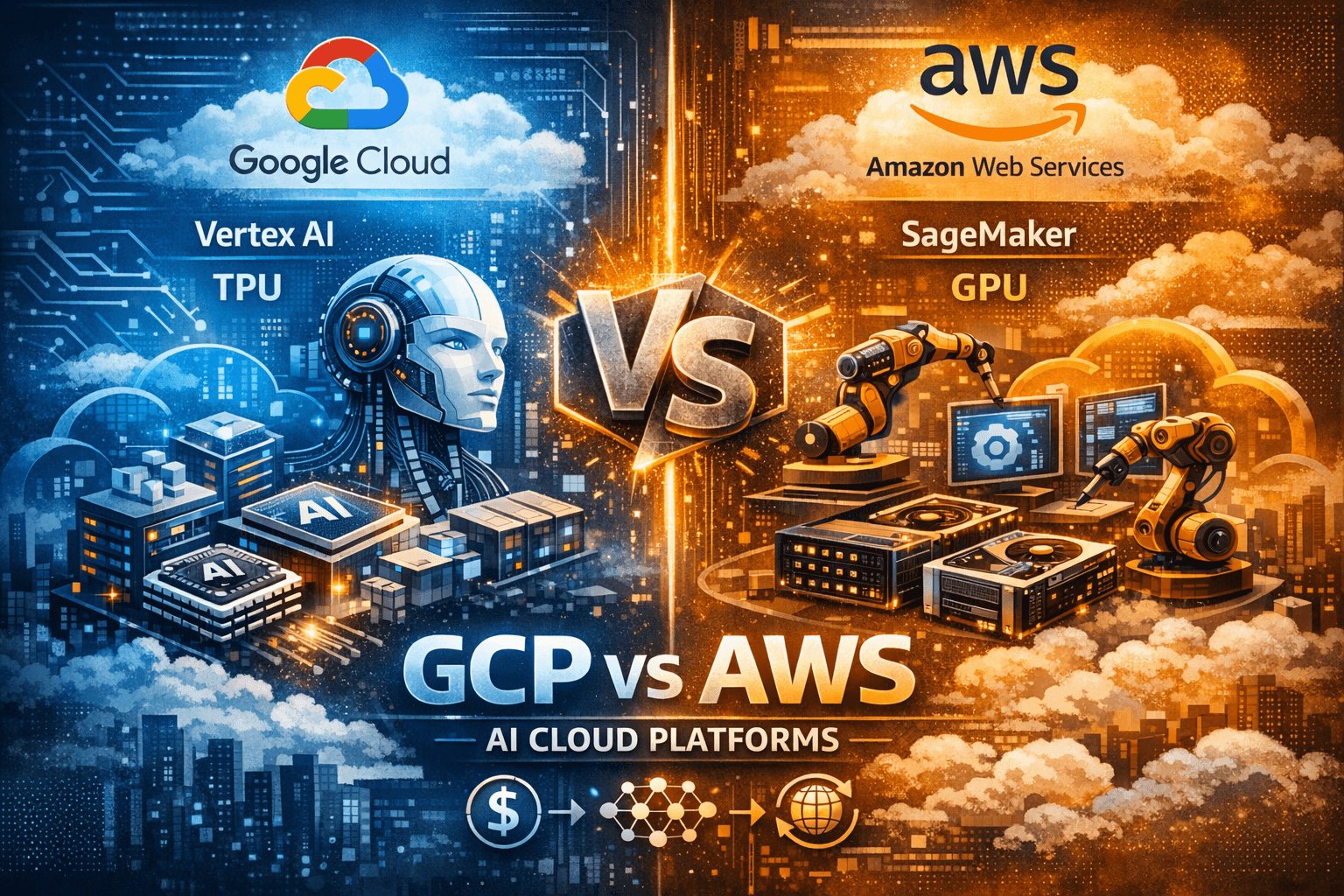
GCP vs AWS for AI Workloads in 2024: Enterprise Cloud Strategy, Cost, and MLOps Comparison
An in-depth 2024 enterprise comparison of GCP vs AWS for AI workloads. Explore Vertex AI vs SageMaker, TPU vs GPU infrastructure, AI cost optimization, scalability, MLOps maturity, and strategic cloud architecture decisions.
2024-07-15
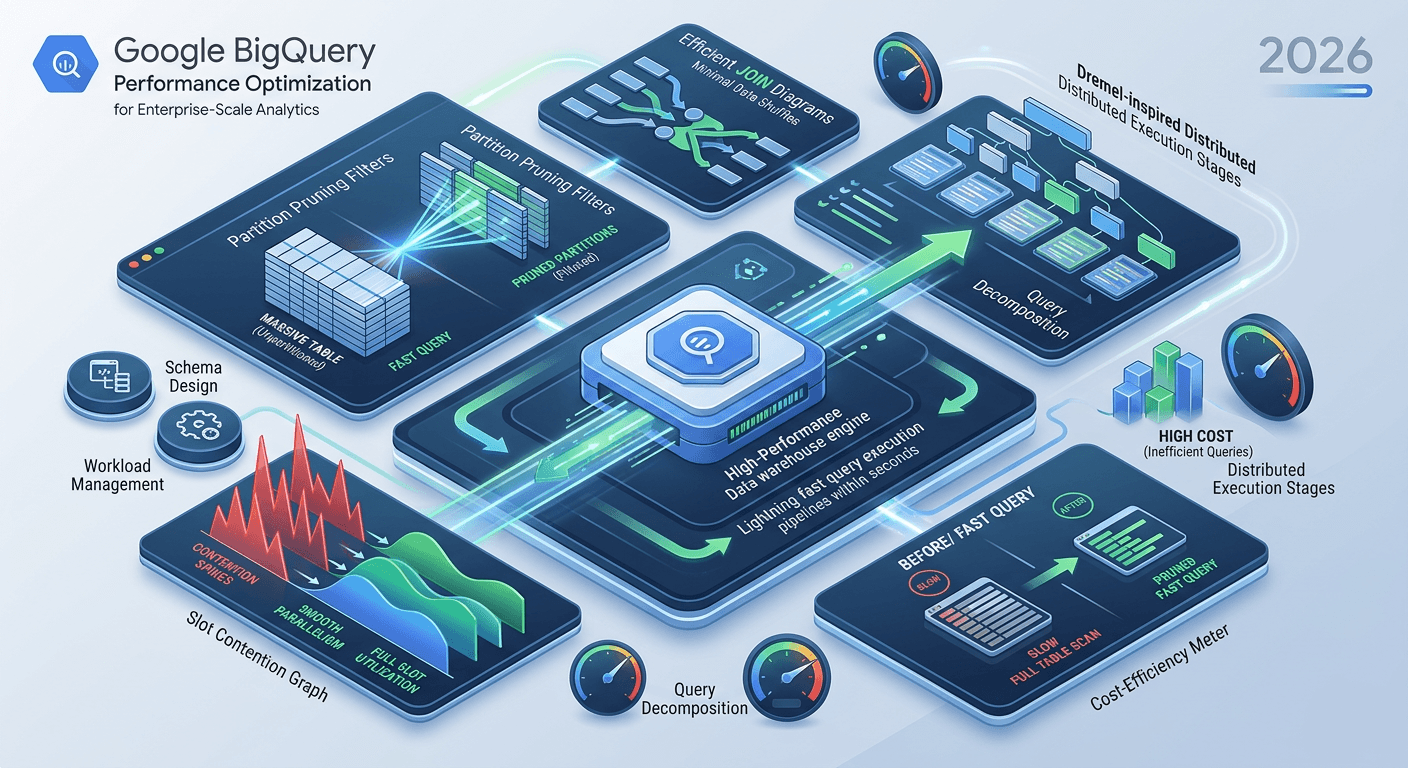
BigQuery Performance Optimization Guide 2024: Advanced Strategies to Improve Query Speed and Reduce Cost
A complete 2024 BigQuery performance optimization guide covering partitioning, clustering, slot tuning, query plan analysis, materialized views, storage design, shuffle reduction, and cost control for enterprise analytics workloads.
2024-07-30
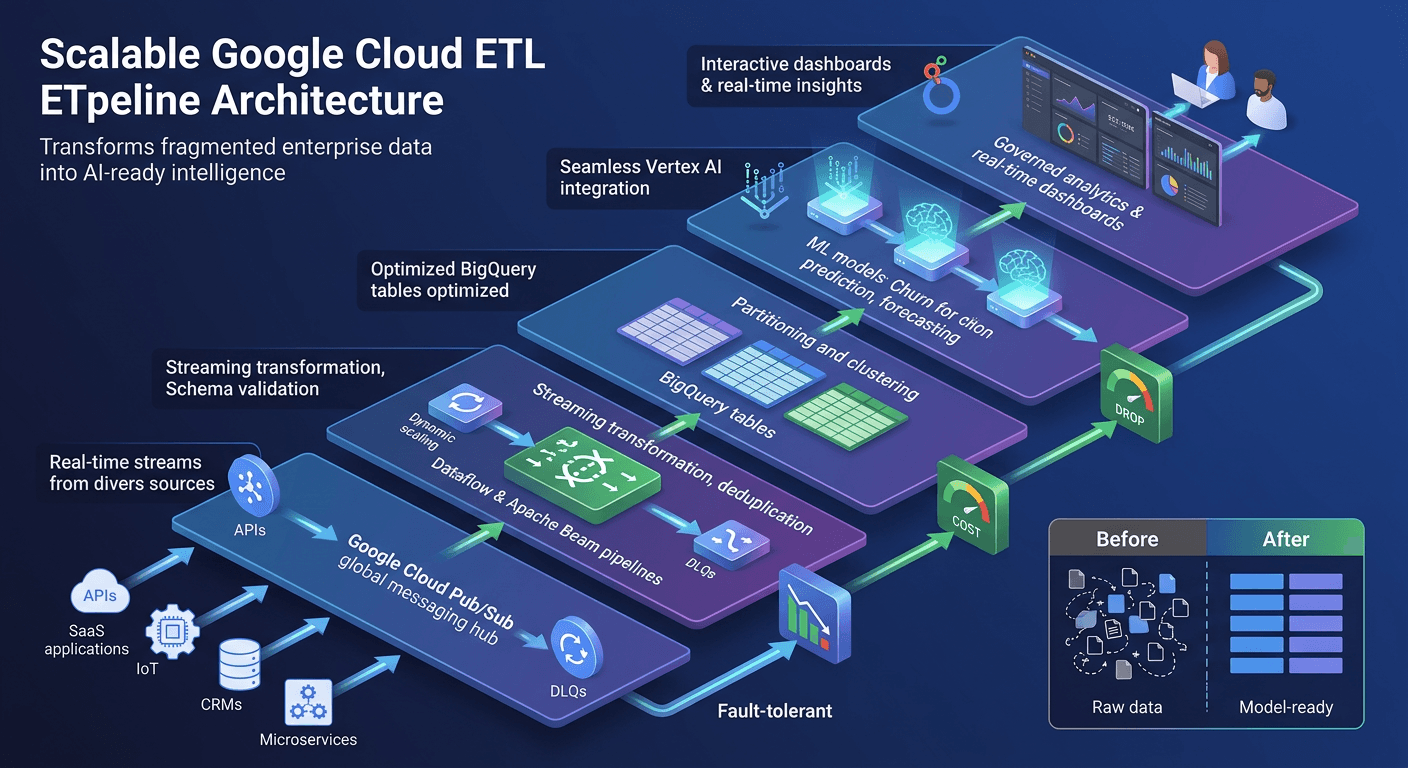
From Messy Data to Model-Ready Pipelines: Designing Scalable ETL Architecture on Google Cloud
A comprehensive guide to building modern ETL pipelines on Google Cloud using Pub/Sub, Dataflow, BigQuery, and Vertex AI to transform fragmented enterprise data into governed, analytics-ready, and AI-ready systems.
2025-02-15
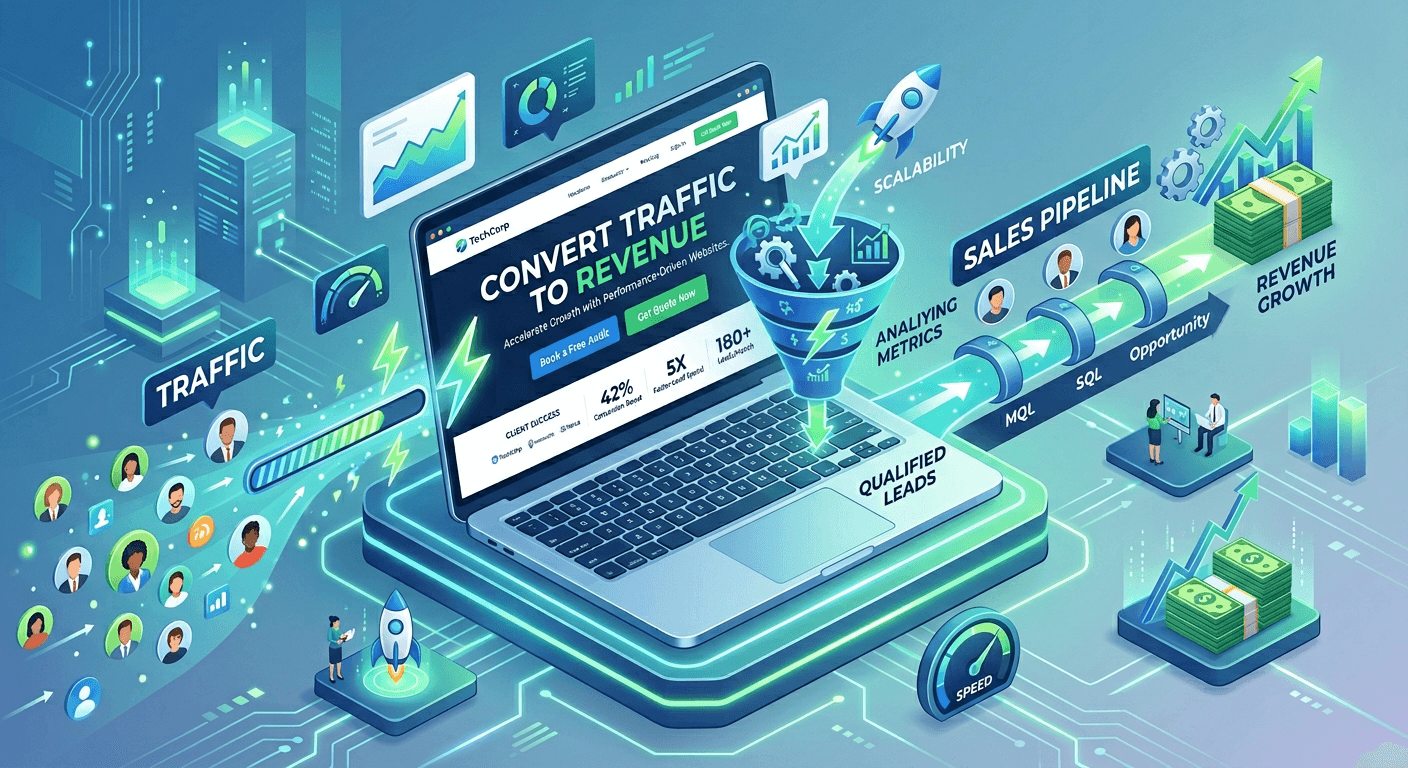
Why Most Business Websites Fail at Lead Generation (And How to Fix It in 2025)
Discover why most business websites fail at lead generation and learn the exact conversion architecture, UX strategy, analytics integration, and automation framework needed to turn traffic into qualified leads.
2025-01-10
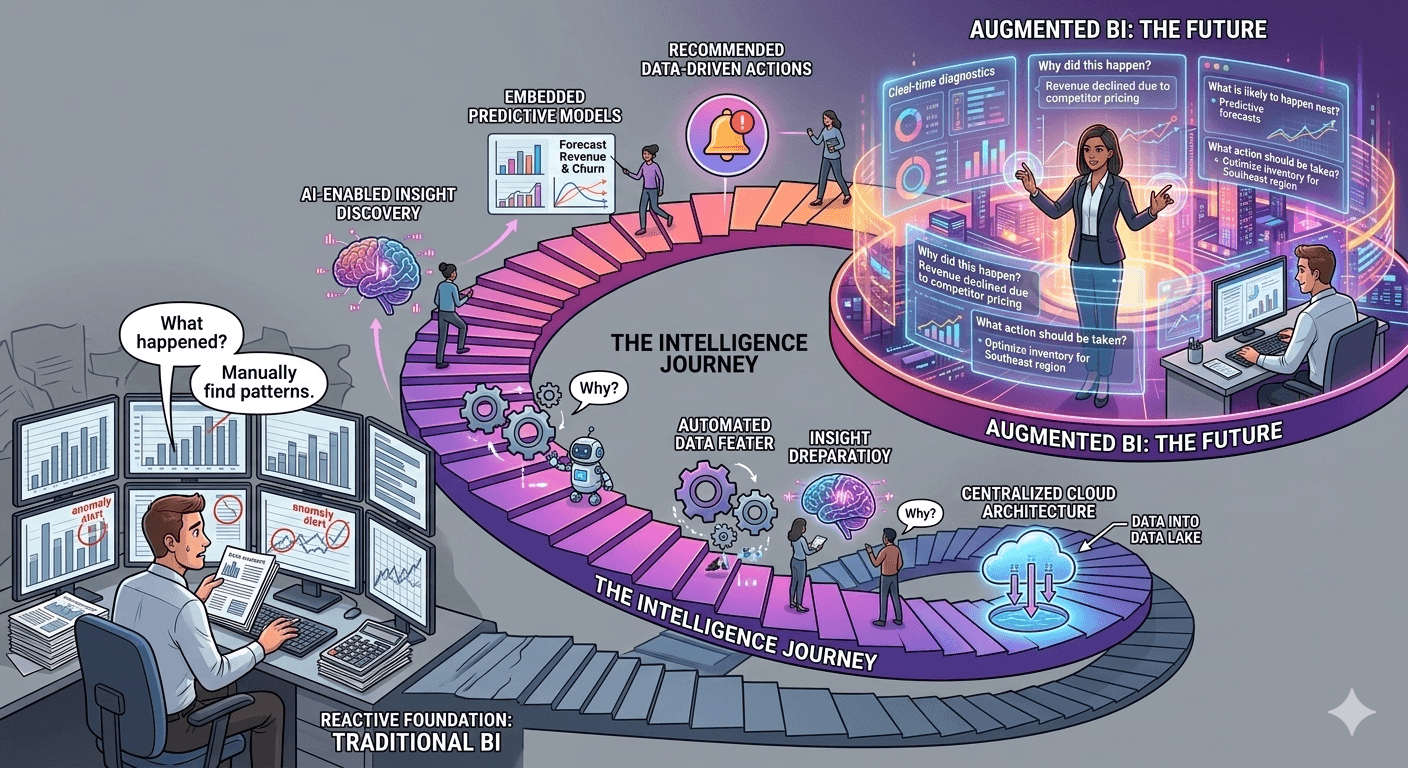
The Importance of Data Visualization in Business Operations: Driving Smarter Decisions with Visual Intelligence
A comprehensive guide to understanding the importance of data visualization in business operations, covering executive dashboards, operational analytics, KPI monitoring, predictive visualization, and strategic decision-making frameworks.
2025-01-18
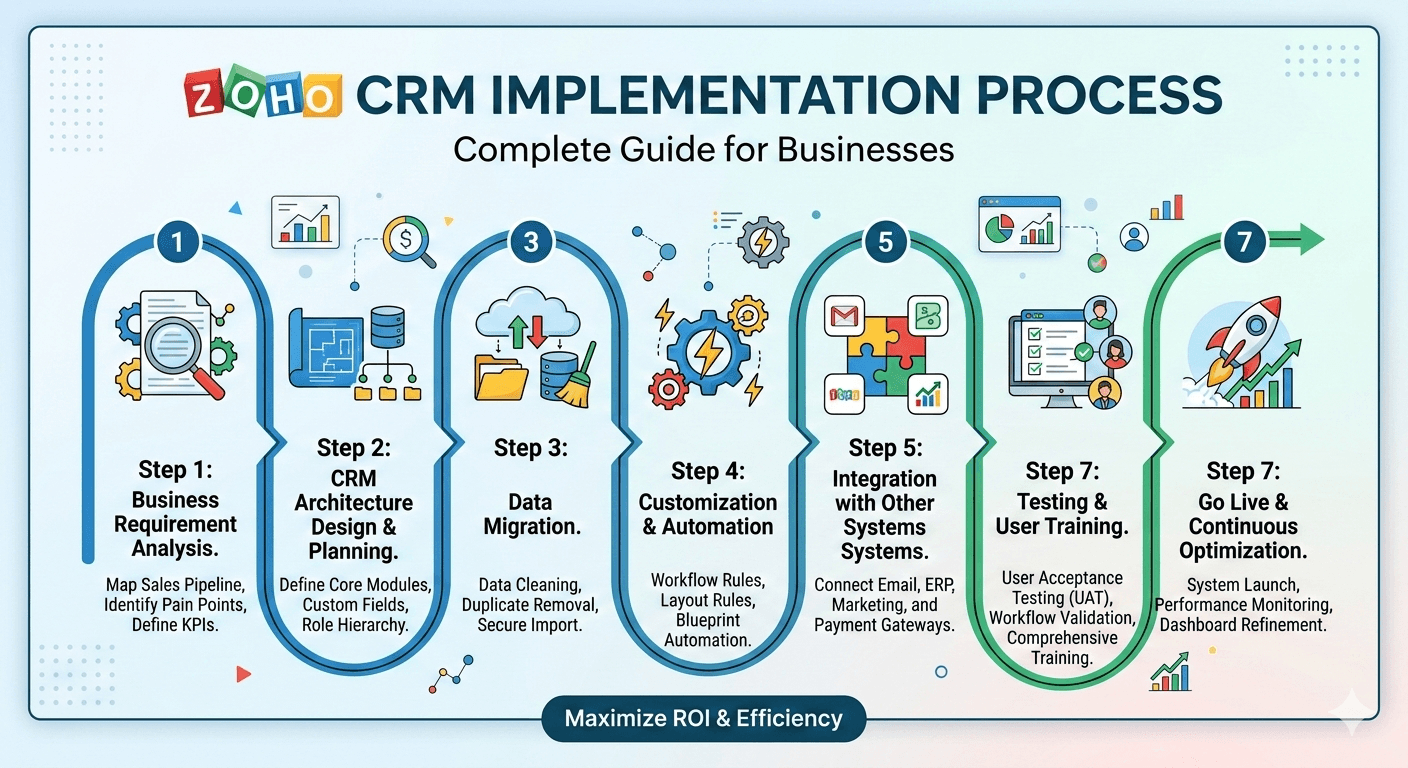
Zoho CRM Implementation Process for Businesses: Complete Step-by-Step Guide
A complete guide explaining the Zoho CRM implementation process for businesses, including setup, customization, automation, integration, and optimization strategies.
2025-02-10
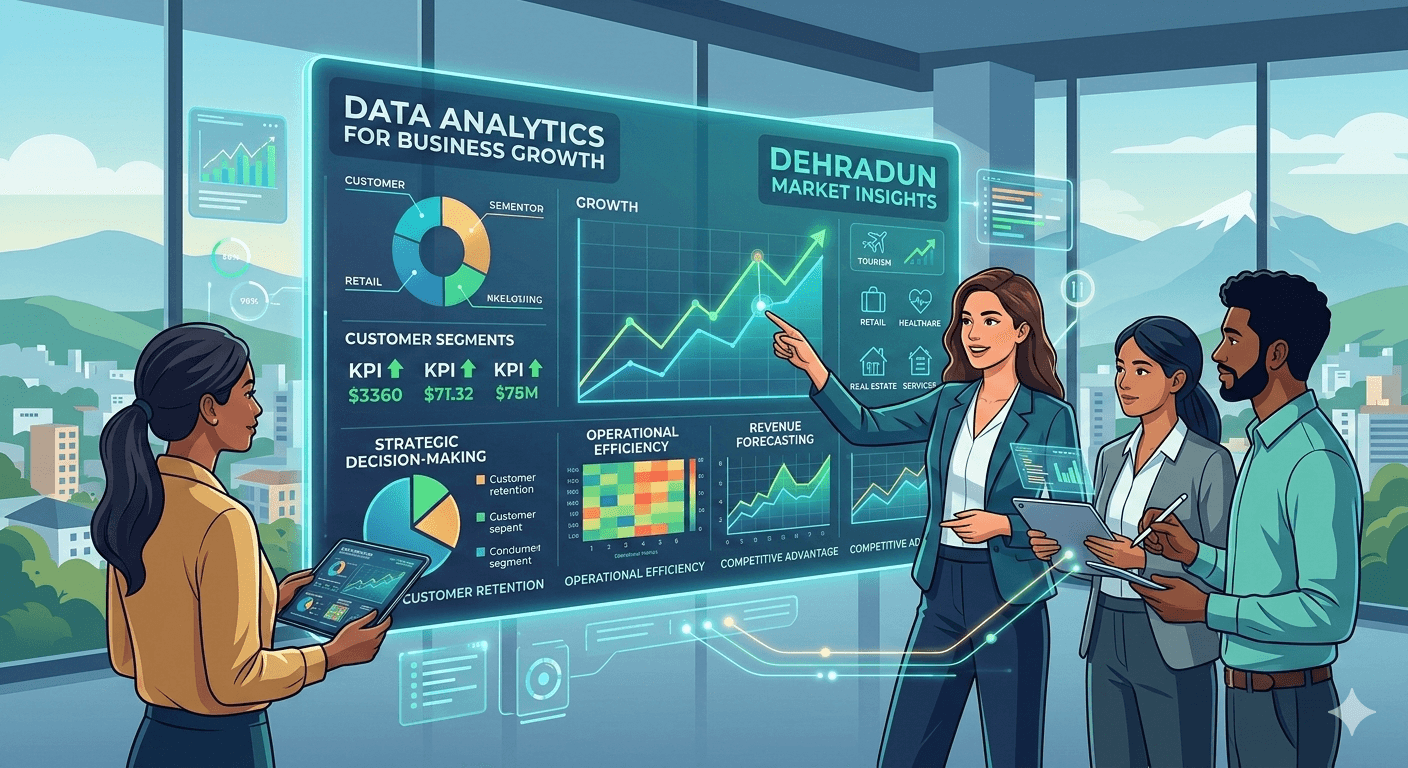
How Data Analytics for Businesses in Dehradun Improves Decision-Making and Growth
A strategic guide explaining how data analytics for businesses in Dehradun enhances decision-making, operational efficiency, forecasting accuracy, customer insights, and long-term scalability.
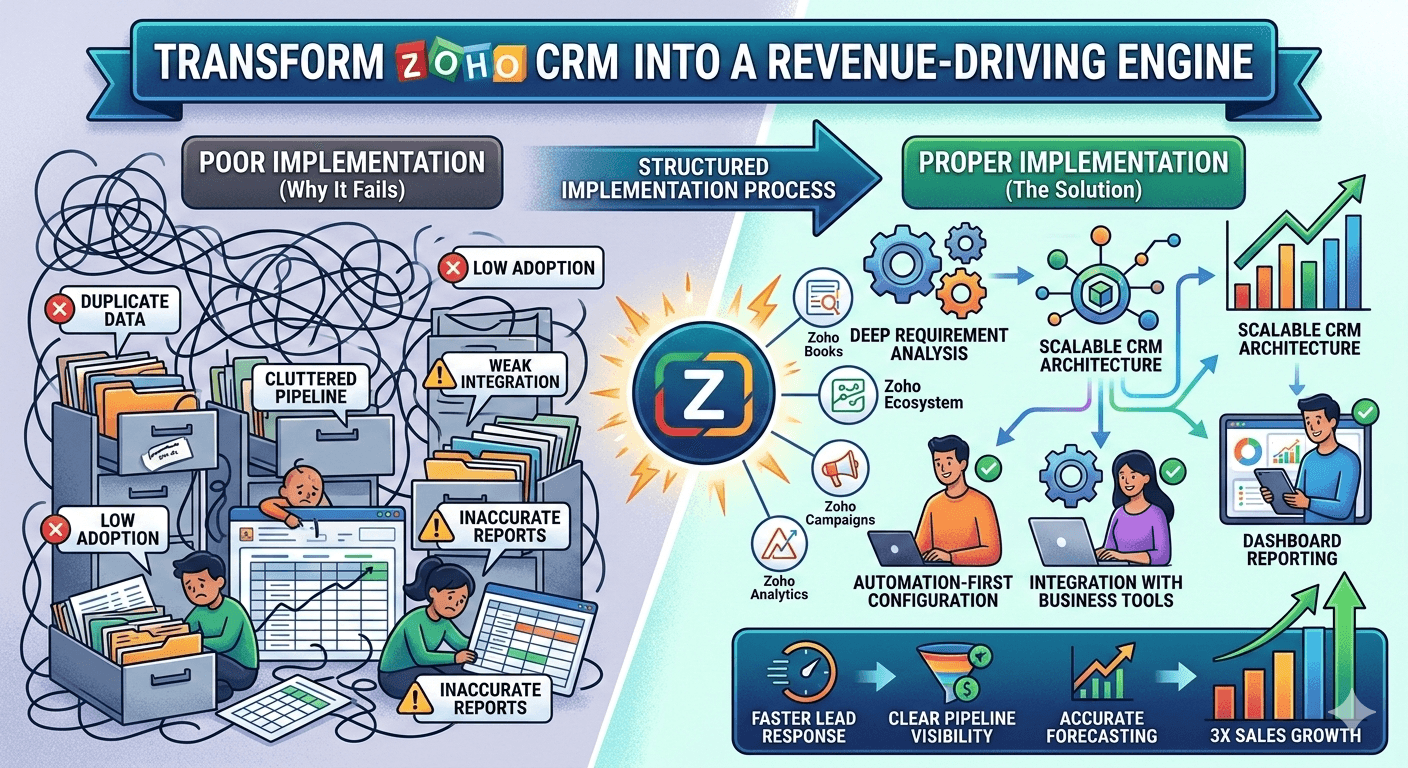
2025-01-22
Why Zoho CRM Fails for Most Businesses (And How Proper Implementation Drives 3X Sales Growth)
Discover why many Zoho CRM implementations fail and how a structured Zoho CRM implementation process, automation strategy, and integration framework can drive measurable sales growth and operational efficiency.
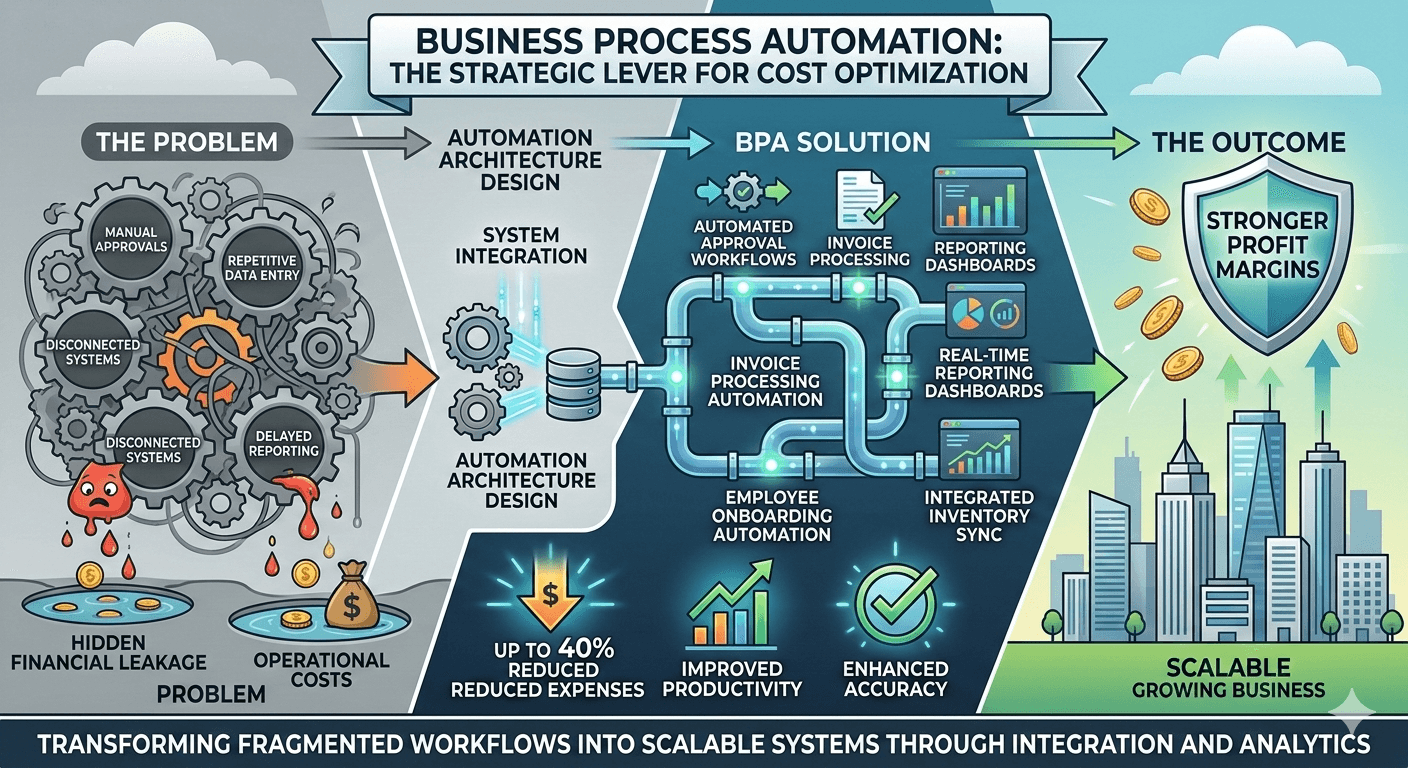
2025-01-30
How Business Process Automation Reduces Operational Cost by 40%: A Strategic Guide for Modern Enterprises
Discover how business process automation reduces operational costs by up to 40% through workflow automation, system integration, analytics-driven optimization, and digital transformation strategies.