Business Intelligence
BigQuery Performance Optimization Guide 2024: Advanced Strategies to Improve Query Speed and Reduce Cost
A complete 2024 BigQuery performance optimization guide covering partitioning, clustering, slot tuning, query plan analysis, materialized views, storage design, shuffle reduction, and cost control for enterprise analytics workloads.
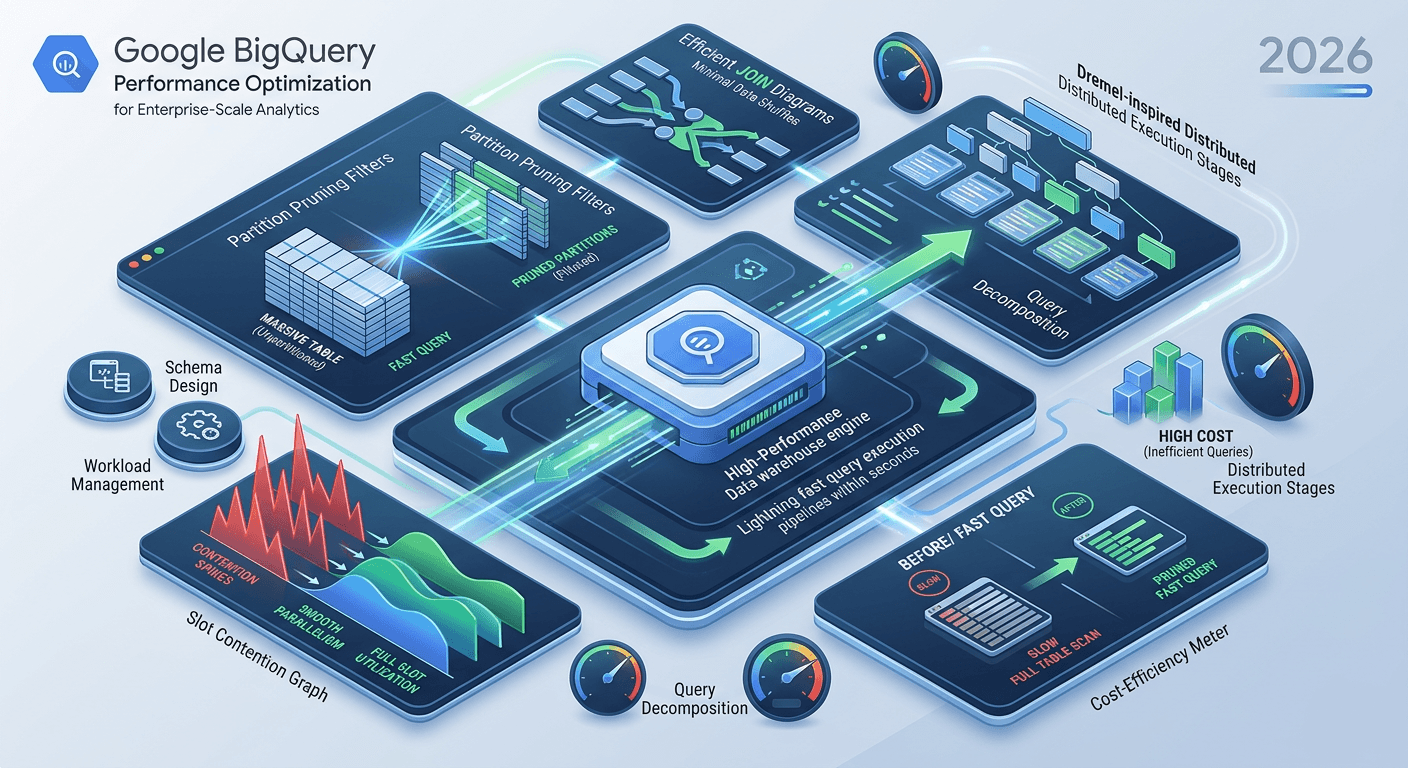
Google BigQuery is a serverless, distributed cloud data warehouse designed for high-performance analytics at massive scale. It enables organizations to process terabytes to petabytes of structured data in seconds. However, BigQuery performance optimization is not automatic. Query speed, cost efficiency, and scalability depend heavily on architectural discipline, schema design, and workload management.
Without structured optimization, enterprises often encounter slow dashboards, excessive data scanning, slot contention, and unpredictable cost spikes. This guide outlines advanced strategies to optimize BigQuery performance while reducing query cost in 2024.
Understanding BigQuery’s Distributed Execution Model
BigQuery operates on a distributed execution engine derived from Dremel architecture. Queries are decomposed into execution stages that run in parallel across compute slots.
Performance bottlenecks typically arise from:
- Full table scans without partition pruning
- Inefficient JOIN operations
- High shuffle volume between execution stages
- Slot resource contention
- Poor schema normalization strategy
Understanding how BigQuery executes queries is the foundation of effective optimization.
1. Strategic Partitioning and Clustering
Partitioning and clustering significantly reduce data scanned per query, directly impacting cost and performance.
Partitioning Best Practices
- Use column-based partitioning on DATE or TIMESTAMP fields
- Always include partition filters in WHERE clauses
- Implement partition expiration policies for historical data
Clustering Optimization
Cluster tables on frequently filtered, high-cardinality columns such as user_id, transaction_id, or region. Proper clustering reduces scan volume within partitions.
When partitioning and clustering are combined strategically, query performance improves dramatically.
2. Query Plan Analysis & Shuffle Reduction
Use EXPLAIN and EXPLAIN ANALYZE to inspect execution plans and identify inefficiencies.
Common optimization targets include:
- Large shuffle stages
- Data skew across JOIN keys
- Repeated subqueries
- Cross joins
Strategies to reduce shuffle include:
- Pre-aggregating datasets before joins
- Filtering early in subqueries
- Using APPROX functions when exact precision is unnecessary
Reducing shuffle minimizes inter-stage data transfer and improves query speed.
3. Eliminate SELECT * and Optimize Scan Volume
BigQuery pricing is based primarily on data scanned. Using SELECT * increases scan volume unnecessarily.
Best practices:
- Select only required columns
- Leverage column pruning
- Avoid nested repeated scans
- Pre-aggregate frequently accessed datasets
Even small reductions in scanned data significantly lower costs over time.
4. Materialized Views & Result Caching
Materialized views store precomputed results and refresh incrementally. They are ideal for dashboards and repetitive aggregation queries.
BigQuery also caches identical query results for 24 hours, eliminating compute charges for repeated executions.
Leveraging these capabilities improves dashboard responsiveness and reduces compute cost.
5. Slot Optimization and Workload Isolation
BigQuery uses slots for distributed compute execution. Inefficient slot management can create latency spikes and unpredictable performance.
Enterprise best practices include:
- Separating interactive and batch workloads
- Using slot reservations for critical pipelines
- Monitoring slot utilization continuously
- Implementing workload prioritization
Proper slot governance ensures stable performance during peak loads.
6. Schema Design & Denormalization Strategy
BigQuery performs best with denormalized schemas using nested and repeated fields.
- Reduce heavy JOIN operations
- Use STRUCT and ARRAY fields strategically
- Flatten data only when analytically required
Denormalization reduces shuffle operations and enhances distributed processing efficiency.
7. Cost Governance & Monitoring
Performance optimization must be continuous. Use INFORMATION_SCHEMA and audit logs to monitor query usage patterns.
Implement:
- Cost alerts and budgets
- Query quotas
- Partition expiration rules
- Usage dashboards for leadership visibility
Cost control is a governance function, not a one-time optimization task.
Impact on AI & Machine Learning Workloads
Optimized BigQuery environments improve feature engineering speed, reduce ML training latency, and enable cost-efficient model retraining cycles.
Performance optimization directly impacts enterprise AI scalability and data-driven decision systems.
Conclusion
BigQuery performance optimization is not merely about faster queries — it is about architectural discipline and cost governance. Strategic partitioning, clustering, shuffle reduction, slot tuning, and workload isolation ensure scalable analytics without uncontrolled spend.
Organizations that treat optimization as an ongoing engineering practice achieve sustainable cost reduction, improved dashboard performance, and enterprise-grade analytics reliability.
Need Enterprise BigQuery Optimization?
Syncverse Solutions helps enterprises design contract-first ETL pipelines, implement performance-optimized BigQuery architectures, reduce cloud analytics costs, and improve AI pipeline efficiency.
Contact us for a BigQuery performance audit and optimization roadmap.
Build a Scalable Data Strategy for Your Business
Transform raw data into strategic intelligence with structured analytics implementation.
Book a Free Strategy CallExplore More Insights
Continue learning with practical strategies, implementation guides, and expert perspectives on analytics, CRM, and digital growth.

2024-07-28
GCP vs AWS for AI Workloads in 2024: Enterprise Cloud Strategy, Cost, and MLOps Comparison
An in-depth 2024 enterprise comparison of GCP vs AWS for AI workloads. Explore Vertex AI vs SageMaker, TPU vs GPU infrastructure, AI cost optimization, scalability, MLOps maturity, and strategic cloud architecture decisions.

2024-07-20
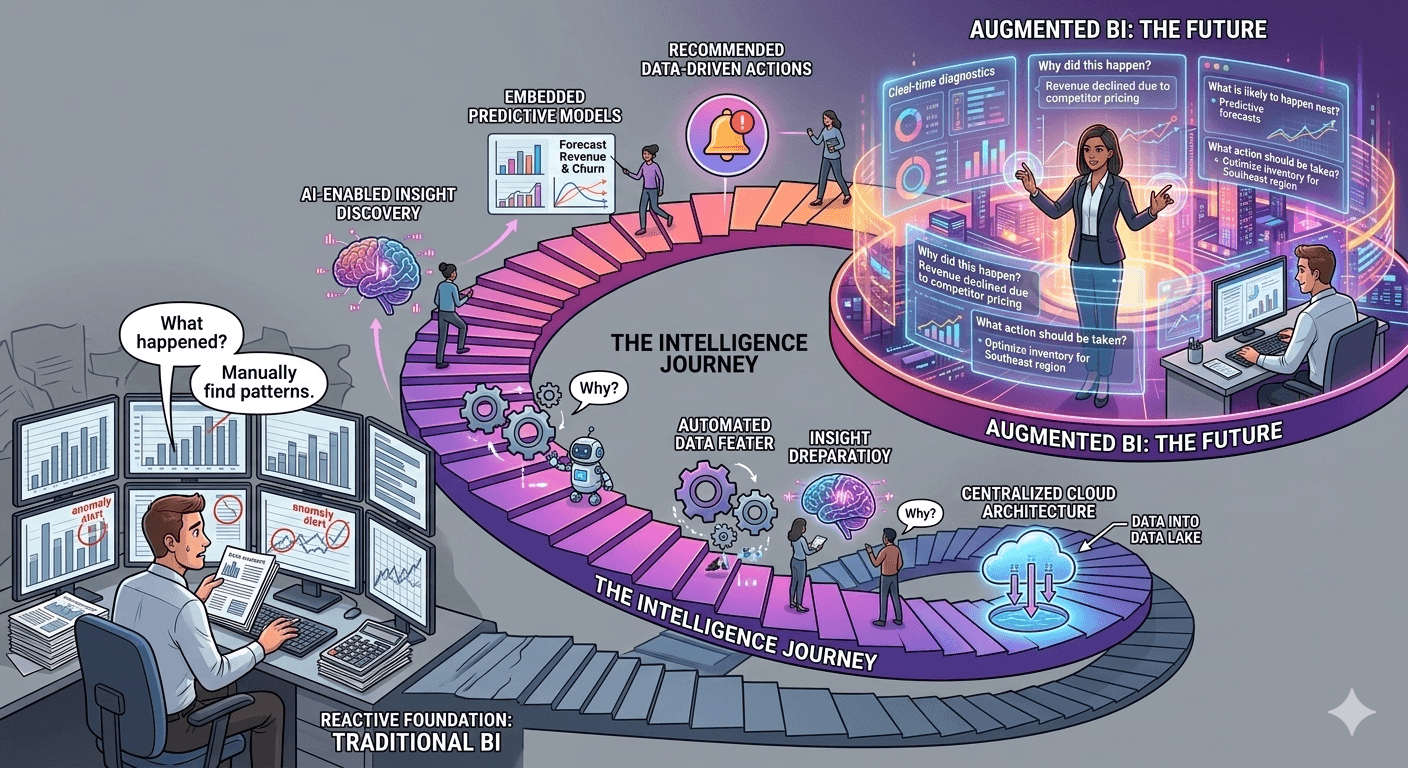
The Future of Business Intelligence is Augmented: AI-Powered Enterprise Analytics in 2024
Explore how augmented analytics is transforming business intelligence in 2024 with AI-powered insights, automated anomaly detection, predictive forecasting, NLP-driven dashboards, and enterprise data intelligence frameworks.
2024-07-30
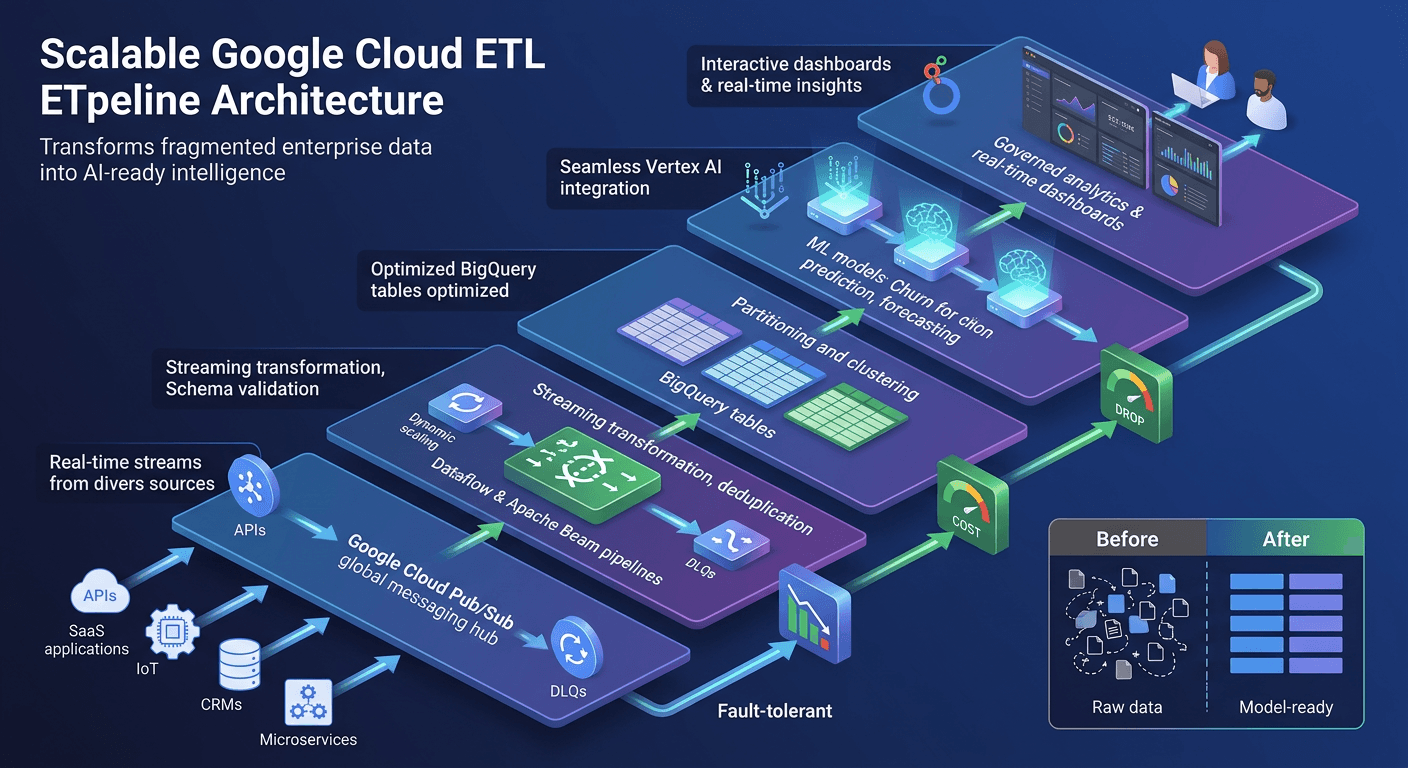
From Messy Data to Model-Ready Pipelines: Designing Scalable ETL Architecture on Google Cloud
A comprehensive guide to building modern ETL pipelines on Google Cloud using Pub/Sub, Dataflow, BigQuery, and Vertex AI to transform fragmented enterprise data into governed, analytics-ready, and AI-ready systems.
2025-02-15
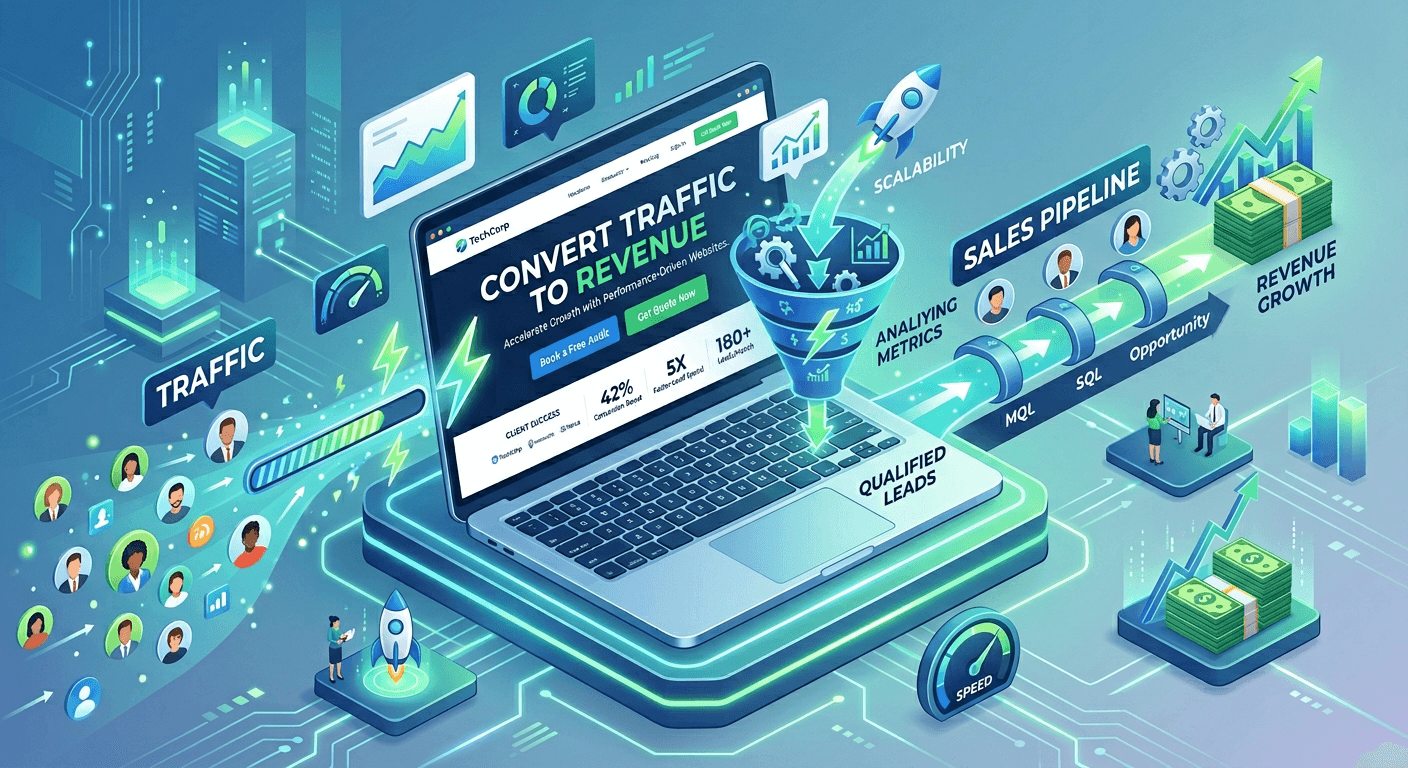
Why Most Business Websites Fail at Lead Generation (And How to Fix It in 2025)
Discover why most business websites fail at lead generation and learn the exact conversion architecture, UX strategy, analytics integration, and automation framework needed to turn traffic into qualified leads.
2025-01-10
The Importance of Data Visualization in Business Operations: Driving Smarter Decisions with Visual Intelligence
A comprehensive guide to understanding the importance of data visualization in business operations, covering executive dashboards, operational analytics, KPI monitoring, predictive visualization, and strategic decision-making frameworks.
2025-01-18
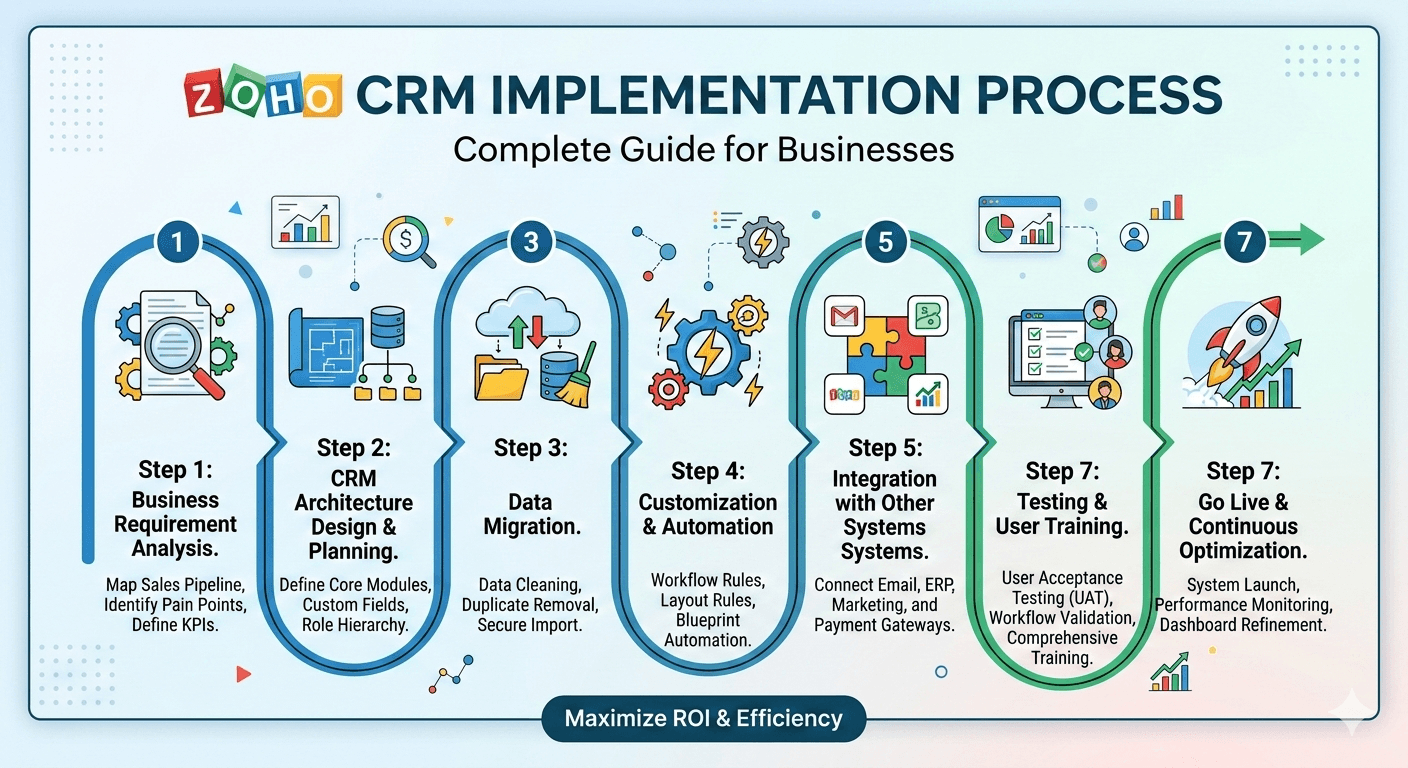
Zoho CRM Implementation Process for Businesses: Complete Step-by-Step Guide
A complete guide explaining the Zoho CRM implementation process for businesses, including setup, customization, automation, integration, and optimization strategies.

2025-02-10
How Data Analytics for Businesses in Dehradun Improves Decision-Making and Growth
A strategic guide explaining how data analytics for businesses in Dehradun enhances decision-making, operational efficiency, forecasting accuracy, customer insights, and long-term scalability.
2025-01-22
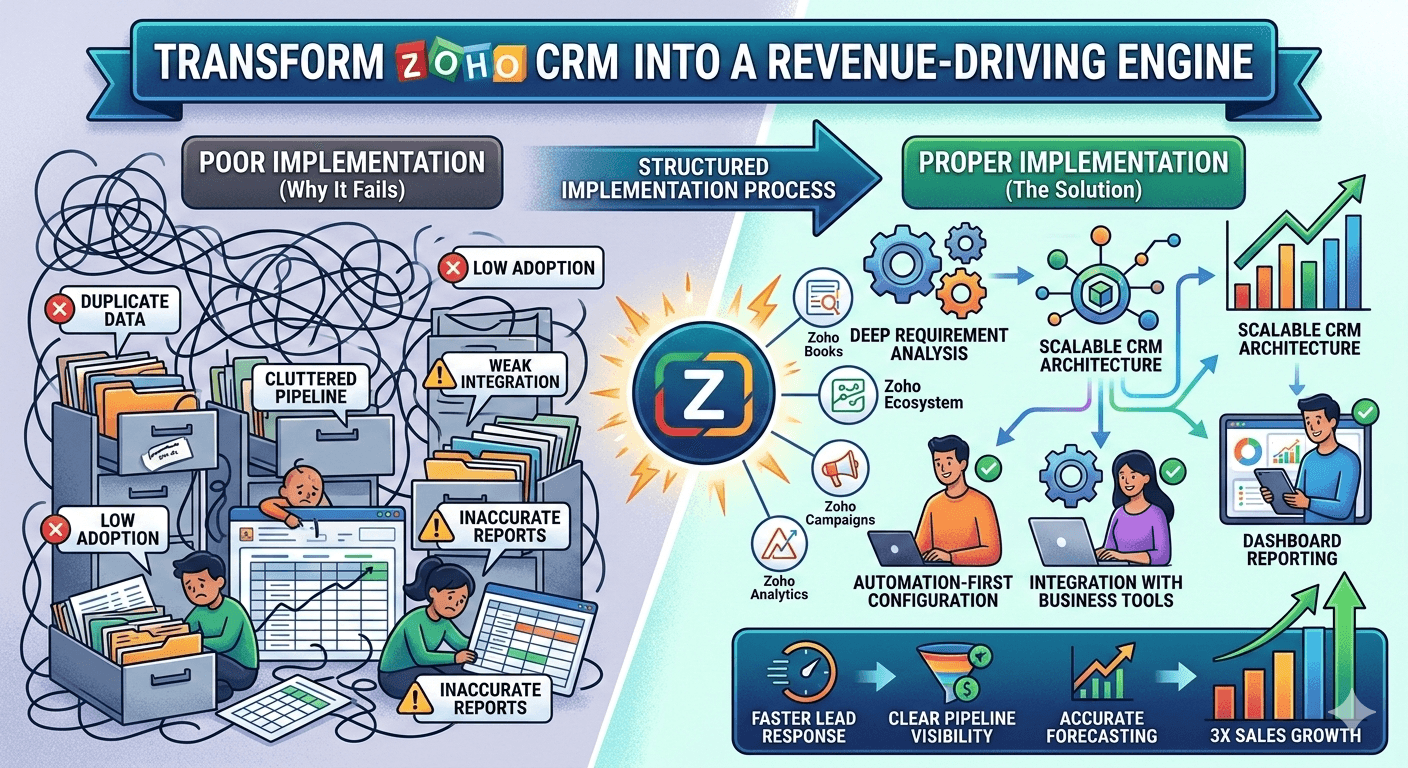
Why Zoho CRM Fails for Most Businesses (And How Proper Implementation Drives 3X Sales Growth)
Discover why many Zoho CRM implementations fail and how a structured Zoho CRM implementation process, automation strategy, and integration framework can drive measurable sales growth and operational efficiency.
2025-01-30
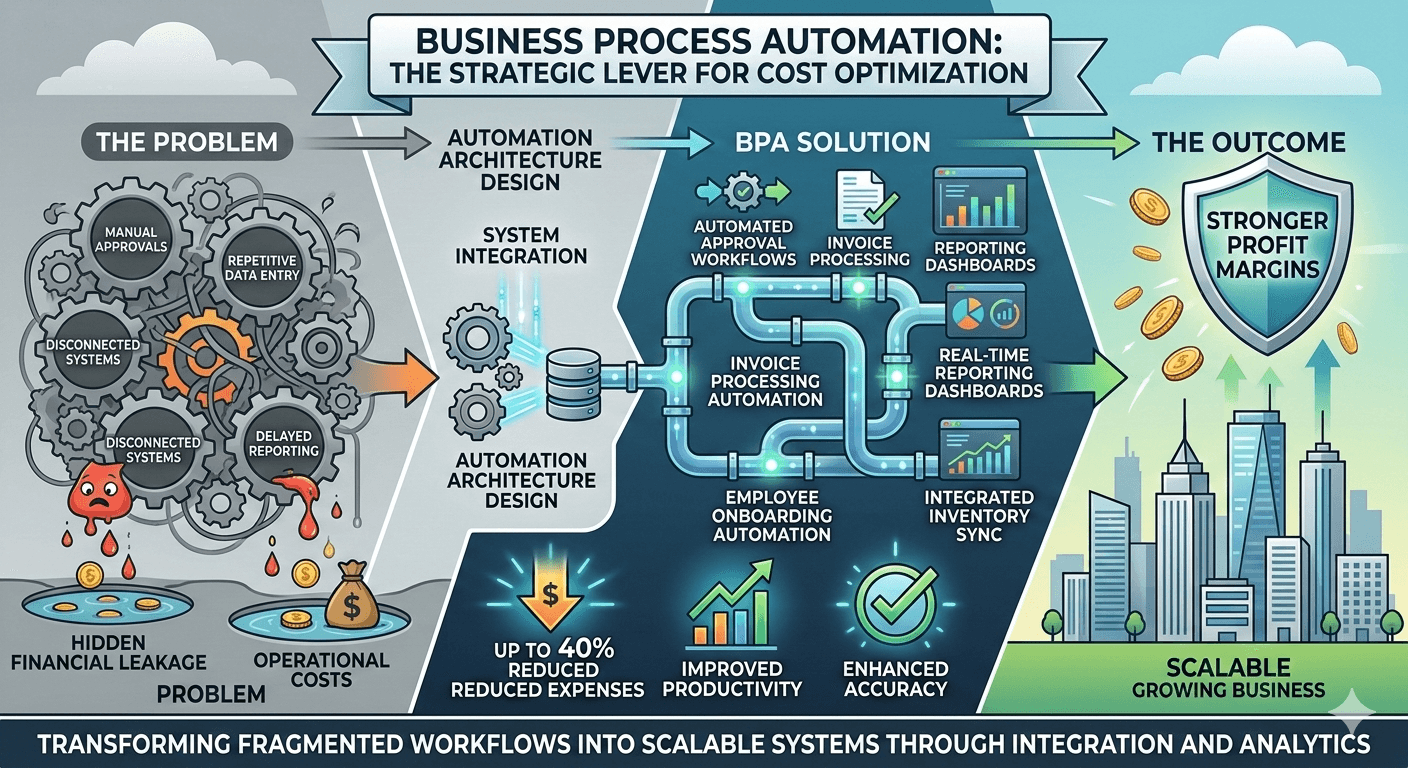
How Business Process Automation Reduces Operational Cost by 40%: A Strategic Guide for Modern Enterprises
Discover how business process automation reduces operational costs by up to 40% through workflow automation, system integration, analytics-driven optimization, and digital transformation strategies.